
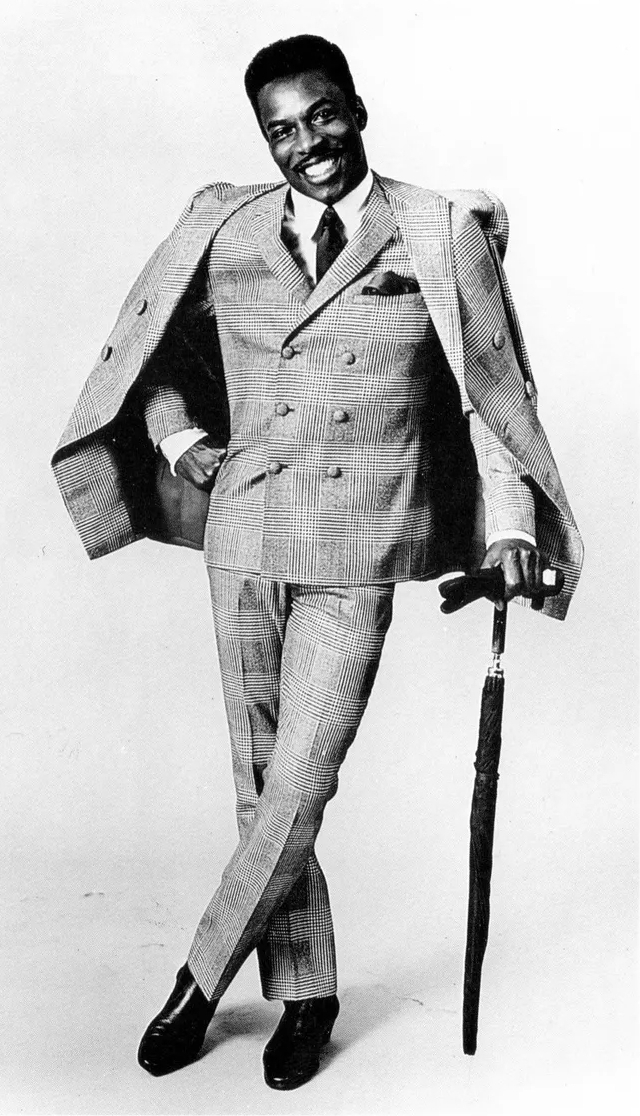
Wilson Pickett was born March 18, 1941, in Prattville, Alabama, and became one of the defining voices of 1960s soul music, recording hits including “In the Midnight Hour,” “Mustang Sally,” “Land of 1000 Dances,” and “Funky Broadway.” He was inducted into the Rock and Roll Hall of Fame in 1991. Pickett never lived in Louisville as a young man, but the city became his family’s home base once his career took off: in the mid-1970s he bought his mother a house in the Shawnee neighborhood, and siblings, and later his own son, settled in Louisville too.
Pickett visited often between tours, performed at Memorial Auditorium, and told his family for years that he wanted to be buried in the city. When he died in 2006, he was laid to rest at Evergreen Cemetery, next to his mother.
A Preacher’s Voice from Prattville, Alabama
Pickett was the fourth of eleven children, raised on gospel music and Baptist church choirs in rural Alabama. He dropped out of school at fourteen, and when his mother told him he couldn’t stay in her house if he wasn’t in school, he chose to leave for Detroit to live with his father instead, in 1955.
“He said, ‘when I come back, I will be a rich man.’ [When] he came back, he was a rich man.”
— Emily “Jeannie” Rochelle, Wilson Pickett’s sister, in a 2021 interview with WHAS11
In Detroit, Pickett sang with the gospel group the Violinaires for four years before joining the Falcons in 1959, a vocal group that helped bring gospel’s intensity into secular soul music.
From Gospel Quartets to the Falcons
Pickett co-wrote and sang lead on the Falcons’ “I Found a Love,” a modest hit that nonetheless launched his solo career. His bandmates in the Falcons at different points included Eddie Floyd and Mack Rice, both of whom went on to their own notable careers, and the group’s ranks briefly crossed paths with Joe Jackson, father of Michael Jackson.
Pickett’s sister, Emily “Jeannie” Rochelle, remembered exactly where she was the night she first heard him on the radio, singing lead on “I Found a Love.” A Detroit disc jockey introduced the record with a coded message to the family before playing it. “He said, ‘I don’t think nobody knows who this is but the “family” I’m talking about.’ When he started singing, I just fell out of the bed and started hollering,” Rochelle recalled.
Pickett’s first solo single, “If You Need Me,” was nearly given away: Atlantic Records producer Jerry Wexler passed the demo to label star Solomon Burke, whose version became a hit before Pickett’s own recording was even released. Pickett’s subsequent single, “It’s Too Late,” became his real solo breakthrough in 1963.In the Midnight Hour
Pickett’s career-defining moment came in 1965 at Stax Records’ studio in Memphis, where he recorded “In the Midnight Hour” with Stax house musicians Steve Cropper and Al Jackson. The song, which Pickett co-wrote, hit No. 1 on the R&B chart, sold more than a million copies, and earned Pickett his first Grammy nomination.
He returned to Stax for further sessions before producer Jerry Wexler moved him to Fame Studios in Muscle Shoals, Alabama, after Stax barred outside productions. It was at Fame that Pickett recorded some of his biggest hits.
Land of 1000 Dances and a String of Million-Sellers
At Fame Studios, Pickett recorded “Land of 1000 Dances,” his biggest pop hit and third R&B No. 1, along with remakes of “Mustang Sally” and “Funky Broadway” that both sold more than a million copies. Later sessions produced a hit version of the Beatles’ “Hey Jude,” featuring a young Duane Allman on guitar, and further Top 10 hits including “Engine No. 9” and “Don’t Knock My Love.”
In March 1971, Pickett headlined the Soul to Soul concert in Accra, Ghana, marking the country’s 14th independence anniversary alongside other American soul and gospel acts.
The Ghana concert was filmed and released as the documentary Soul to Soul, alongside a soundtrack album that reached the Top 10 on Billboard’s soul albums chart. It captured Pickett performing at the height of his commercial success, backed by an all-star lineup of American soul and gospel artists.
A Home in Louisville’s Shawnee Neighborhood
As Pickett’s wealth grew, he moved his mother, Lena, from Alabama to Louisville in the mid-1970s, buying her a large three-story house at 44th and Market Streets. Several of his siblings, including his sister Emily “Jeannie” Rochelle, followed her north and settled in the Shawnee neighborhood as well.
“My brother bought my mom a house right down the street at 44th and Market – right there. Big. It’s a big, three-story house.”
— Emily “Jeannie” Rochelle, in a 2021 interview with WHAS11
Louisville became the place Pickett returned to between tours rather than a city he lived in full time. He stayed with family when he was off the road and performed concerts at Louisville’s Memorial Auditorium.
Concerts, Family, and a Second Generation in Louisville
Pickett’s connection to Louisville outlasted his touring years. His son, Bernard Edwards, moved from Detroit to Louisville in 1987 to be closer to family, and has lived in the city ever since. Family gatherings there, Rochelle has said, often turned into informal singalongs of Pickett’s own catalog.
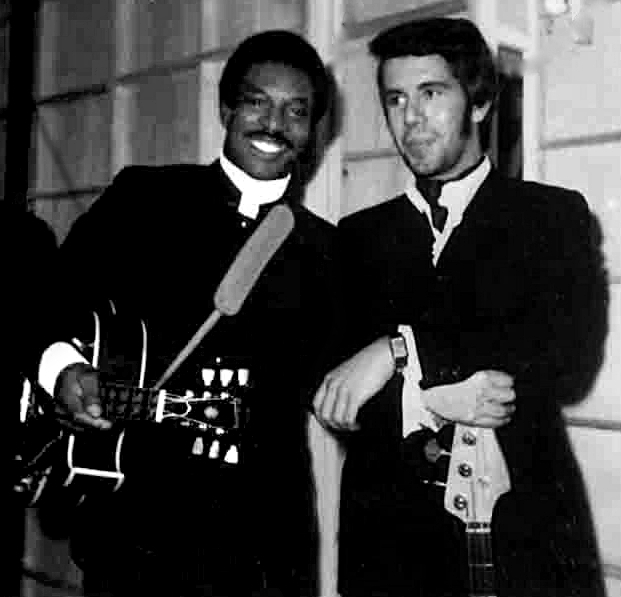
Pickett’s career slowed through the 1970s and 1980s as he moved between labels, including RCA and Motown, without repeating his earlier chart success, though his live shows and outsized stage presence kept him touring for decades.
Personal Struggles Behind the Wicked Pickett Persona
Pickett’s nickname, “Wicked Pickett,” reflected the same intensity offstage that made his records famous, and not always for the better. Alcoholism and cocaine addiction fueled a string of arrests in the 1990s, including a drunk-driving conviction after he struck a pedestrian with his car in New Jersey in 1992, and a domestic assault charge in 1996. The incidents strained his relationships with family and bandmates for years.
A Grammy-Nominated Comeback
In the late 1990s, Pickett returned to the studio for It’s Harder Now, which earned him a Grammy nomination and was named Comeback Blues Album of the Year and Soul/Blues Album of the Year by the Blues Foundation in Memphis. He continued performing dozens of concert dates a year until health problems forced him to slow down in late 2004.
Beyond the Rock and Roll Hall of Fame, Pickett received the Rhythm and Blues Foundation’s Pioneer Award in 1993, was inducted into the Michigan Rock and Roll Legends Hall of Fame in 2005, and was inducted into the National Rhythm & Blues Hall of Fame in 2015. In 2023, Rolling Stone ranked him 76th on its list of the 200 Greatest Singers of All Time.
Buried in Louisville, Next to His Mother
Pickett died of a heart attack on January 19, 2006, in Reston, Virginia, at sixty-four. His funeral was held at Canaan Christian Church, with his longtime friend Little Richard delivering the eulogy. As his family had always known he wanted, Pickett was buried at Evergreen Cemetery in Louisville, in a mausoleum beside his mother, Lena.
“He wanted to be buried here. He talked about it all the time.”
— Emily “Jeannie” Rochelle, in a 2021 interview with WHAS11
Pickett was born in Alabama and built his career in Detroit, Memphis, and Muscle Shoals, but it was Louisville, the city he chose for his mother, his siblings, and eventually his own son, that he asked to call home for good.