Lionel Hampton lived almost none of his ninety-four years in Louisville, Kentucky — his family left before he could form a single memory of the place. But he was born there, in 1908, to parents who had met and married in the city, and he said so himself, on the record, more than once.
The vibraphonist who would go on to play with Louis Armstrong, integrate a national radio audience alongside Benny Goodman, and lead one of the most influential big bands in American history never lived in Louisville again after infancy — yet he never stopped naming it as where his life began.
“Louisville Kentucky is where I was born,” Hampton told journalist Les Tomkins in a 1983 interview. “My father went to school there, and that was where he and my mother lived after they got married; so I started my life here.” It is a small, plain sentence from a man not given to sentimentality about his roots — but it is also the clearest statement Hampton ever made connecting himself to the city.
Born Where His Parents Met
Lionel Leo Hampton was born April 20, 1908, in Louisville, Jefferson County, Kentucky, to Charles Edward Hampton and Gertrude Morgan Hampton. His father had gone to school in Louisville, and it was there the couple settled after marrying — the only reason, by Hampton’s own account, that Louisville was where he “started his life.”
The family’s time in the city was brief. When the United States entered World War I, Charles Hampton went off to fight and was killed in the war. His widow, left with a young son, moved back to her own family’s home in Birmingham, Alabama — and Lionel Hampton would never again live in the city of his birth.
A Father Lost to War, a Family Uprooted
Raised largely by his grandmother, Louvenia Morgan, whom he called “Mama Louvenia,” Hampton got his earliest musical training in the Holiness Church she led. Around 1916 the family joined the Great Migration north, moving to Chicago in search of steadier work and better schools.
For a time, his grandmother sent him to a private school run by Dominican sisters in a small Wisconsin town, where he learned rudimentary drumming and the foundations of reading music. “This sister really taught me, boy, I’ll tell you,” Hampton recalled in 1983. “She had a whole lot of love for me — with her big shoes, if I didn’t do my lesson right!”
The Newsboys’ Band and a Foundation in Music
Back in Chicago, the teenage Hampton joined the Chicago Defender Newsboys’ Band, an ensemble organized by the Black newspaper for boys who sold its papers. Under bandleader Major N. Clark Smith, roughly ninety boys received free instruments and rigorous instruction in theory, harmony, and counterpoint — training Hampton credited for the rest of his career.
He played drums in the band’s military corps and xylophone in its concert ensemble, working out solos by Louis Armstrong and Coleman Hawkins note-for-note on a set of orchestra bells. By the time his family moved again, this time to California, Hampton had the musical foundation that would carry him through the University of Southern California’s School of Music.
California, the Cotton Club, and a New Instrument
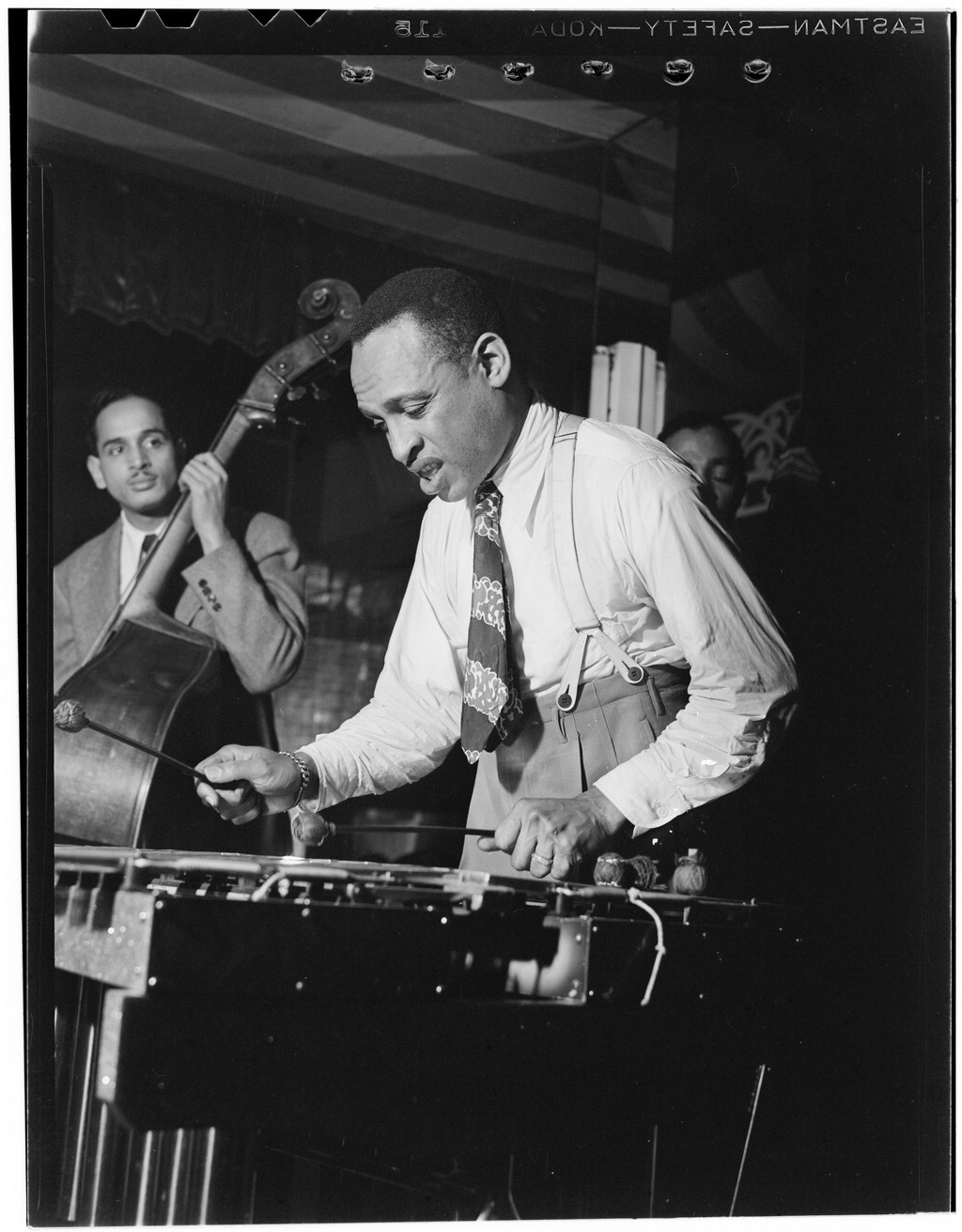
In Los Angeles, Hampton joined a teenage band led by saxophonist Les Hite, which won a regular engagement at Sebastian’s Cotton Club between Los Angeles and Culver City. When club owner Frank Sebastian brought Louis Armstrong out from New York to front the band in 1930, Hampton backed him — and it was Armstrong who put a set of vibraphone mallets in his hands for the first time.
“There was a set of vibes in the corner,” Hampton remembered. “Louis said, ‘Do you know how to play it?’ I said, ‘Yeah, I can play it.’ It had the same keyboard as the xylophone.” His vibraphone introduction on Armstrong’s recording of “Memories of You” launched a career that would help make the instrument a fixture of jazz.
Even before Goodman found him, Hampton had built a reputation as a showman as much as a musician. As a drummer he twirled and juggled multiple pairs of sticks without missing a beat, a trademark stunt that carried over into his vibraphone showmanship once he switched instruments for good.
Discovered by Benny Goodman
By the mid-1930s Hampton led his own small band at a Los Angeles beer garden, where in 1936 he was overheard by visiting bandleader Benny Goodman. Goodman invited him to record that same morning, then to join what became the Benny Goodman Quartet alongside pianist Teddy Wilson and drummer Gene Krupa — one of the first racially integrated jazz groups to perform before American audiences.
Hampton joined the Quartet on November 11, 1936, the same day he married his longtime business manager, Gladys Riddle. The group’s success, at a time when Black and white musicians rarely shared a bandstand in public, carried a significance Hampton understood well beyond music.
What he did in those days — and they were hard days in 1937 — made it possible for Negroes to have their chance in baseball and other fields.
— Lionel Hampton, on Benny Goodman
Flying Home and a Band of His Own
Hampton left Goodman on amicable terms in 1940 to form his own big band, which developed a devoted following through the 1940s and early 1950s. Its 1942 recording of “Flying Home,” featuring a tenor solo by Illinois Jacquet, is often cited as an early bridge between swing and rhythm and blues.
Hampton’s bandstand became a launching pad for major talent: bassist Charles Mingus, singer Dinah Washington, guitarist Wes Montgomery, and trumpeters Dizzy Gillespie, Clifford Brown, and Quincy Jones all passed through his orchestra early in their careers, alongside singer Betty Carter and saxophonist Johnny Griffin.
Beyond the Bandstand
Hampton used his fame for causes well outside music. In the 1960s he founded the Lionel Hampton Development Corporation and built the Lionel Hampton Houses, a public housing project in Harlem, with the backing of then-Governor Nelson Rockefeller; his wife Gladys built a companion project in her own name. In the 1950s he composed a “King David” suite and performed it in Israel with the Boston Pops, later receiving Israel’s Statehood Award.
A lifelong Republican and convention delegate who directed special events for Gerald Ford’s 1976 campaign, Hampton broke with the party in 1996 to endorse Bill Clinton, saying the GOP no longer represented moderates like himself. He received the National Medal of Arts from Clinton that same year, added to a shelf that already held a Hollywood Walk of Fame star and a 1968 Papal Medal from Pope Paul VI. In 1987, the University of Idaho renamed its music school for him — the first university music school ever named for a jazz musician.
By the time of his death, Hampton had collected an extraordinary run of honors: honorary doctorates from USC, Howard University, and half a dozen other schools, the NAACP’s Roy Wilkins Memorial Award, the National Endowment for the Arts’ Jazz Masters Fellowship, and, posthumously in 2021, a Grammy Lifetime Achievement Award.
A Final Bow
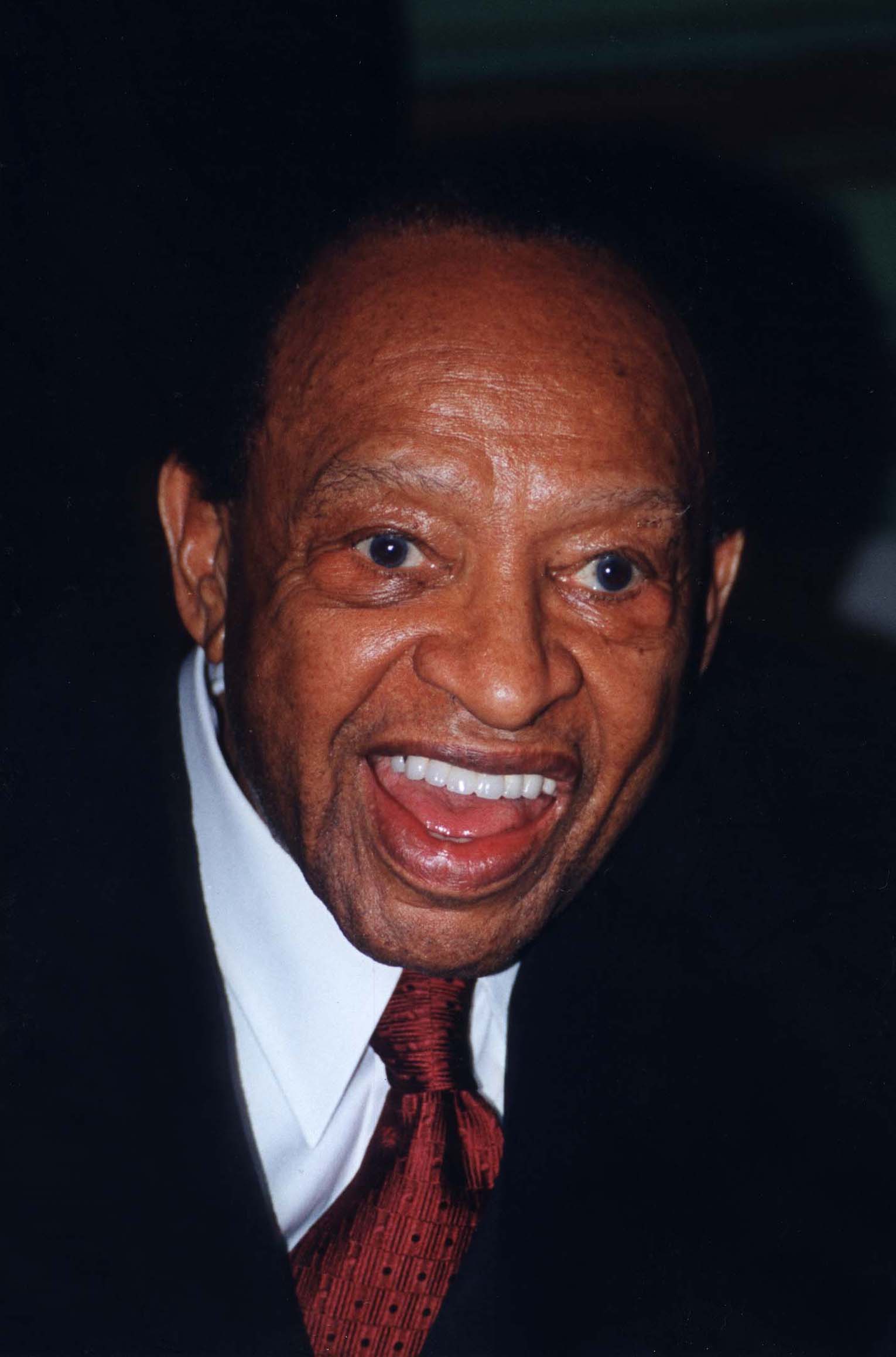
A stroke on stage in Paris in 1991, compounded by chronic arthritis, forced Hampton to cut back sharply on performing. He nonetheless kept playing into his nineties, appearing at the Smithsonian’s National Museum of American History in 2001. On April 15, 2002, the United States Congress passed a resolution extending its best wishes to Hampton on his 94th birthday.
Hampton died of congestive heart failure in New York City on August 31, 2002. His funeral procession began at the Cotton Club in Harlem before a service at Riverside Church featuring a performance by Wynton Marsalis; speakers included Congressmen Charles Rangel and John Conyers and former President George H.W. Bush. He was interred at Woodlawn Cemetery in the Bronx, nearly a thousand miles from the Louisville he had once called the place where his life began.
Hampton spent barely a year of his life in the city of his birth, and he built his legend everywhere else — Chicago, Los Angeles, New York, and stages around the world. But when a journalist finally asked him, late in his career, where his story started, his answer was immediate and unambiguous: Louisville, Kentucky, where his parents had married and where, as he put it simply, “I started my life.”