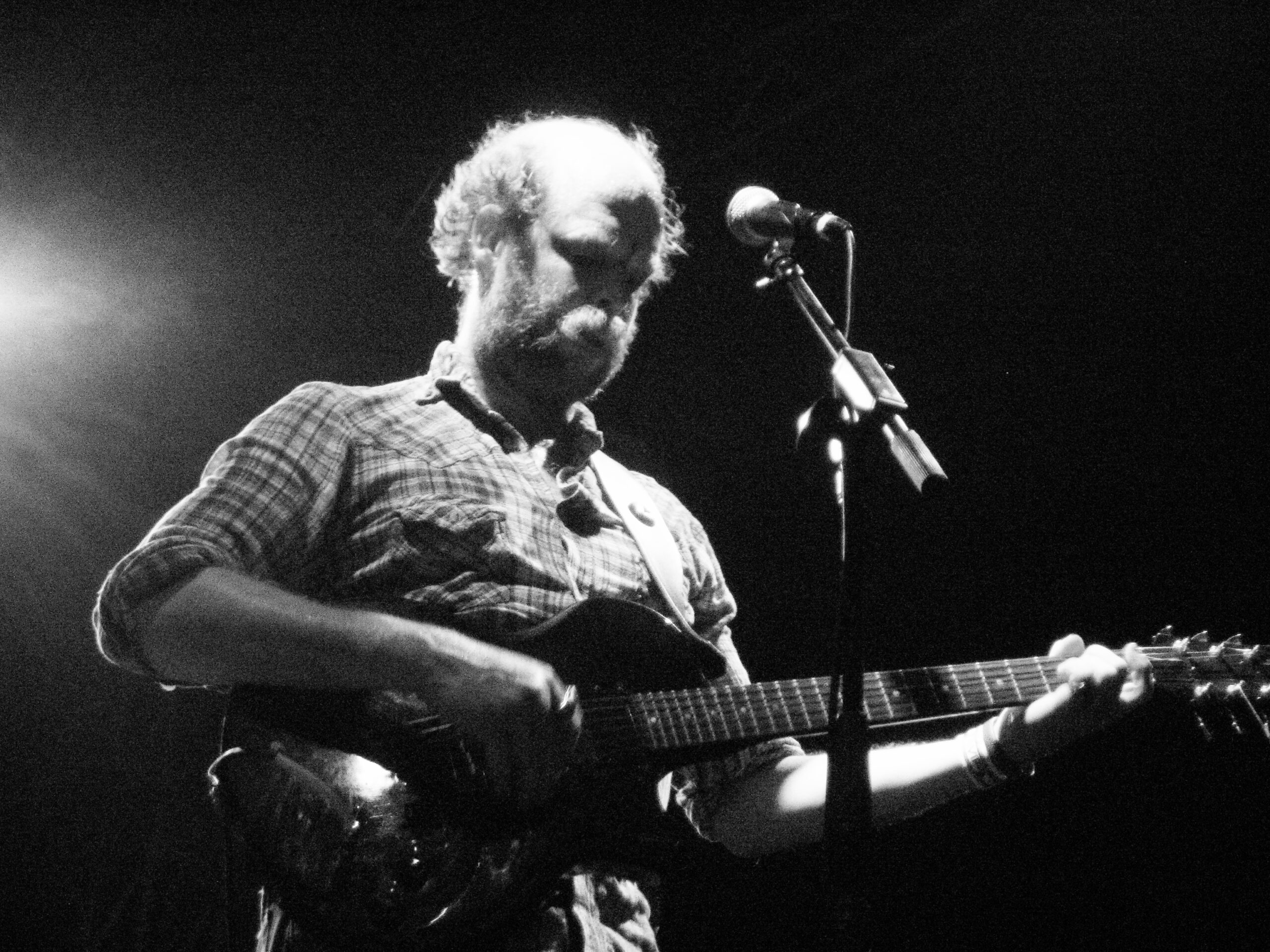
Joseph Will Oldham was born January 15, 1970, in Louisville, Kentucky, and has spent most of his life recording and performing under a rotating cast of stage names, the best known of which is Bonnie “Prince” Billy. Since his first solo album in 1993, he has released dozens of records blending country, folk, gothic Americana, and lo-fi rock, earning comparisons to Johnny Cash, whose 2000 cover of Oldham’s song I See a Darkness introduced his songwriting to a much wider audience.
He has also built a parallel career as a character actor, appearing in films by John Sayles, Kelly Reichardt, and David Lowery.
Unlike most musicians who leave a hometown behind once they find success, Oldham came back. He returned to Louisville in 2006 after his father’s sudden death, and has lived there ever since with his wife and daughter, drawing many of his later albums, including 2026’s We Are Together Again, directly from the city’s musicians, studios, and neighborhoods.
A Louisville Childhood
Oldham grew up in Louisville, the son of Joanne Lei Will Tafel Oldham, a teacher and artist, and Joseph Collins Oldham, an attorney and photographer. He graduated from the J. Graham Brown School, a Louisville college-preparatory school, in 1988. Acting came before music: at seventeen, Oldham was cast as a teenage preacher in John Sayles’s 1987 film Matewan, a drama about a 1920s coal miners’ strike in Appalachia.
The role sent him briefly toward Hollywood, where he appeared in the television film Everybody’s Baby: The Rescue of Jessica McClure and the drama Thousand Pieces of Gold before enrolling, on and off, at Brown University in Rhode Island. He began writing songs there almost by accident, originally as a project for his ethnomusicology professor, Jeff Todd Titon.
Louisville’s Post-Rock Underground
Before he released a note of his own music, Oldham was already a fixture of Louisville’s tightly knit underground scene, largely through his connection to the influential band Slint. He appears, face obscured by a motorcycle helmet, on the cover of the band’s 1989 debut, Tweez, and took the now-iconic photograph of the band swimming in a quarry that became the cover of their 1991 follow-up, Spiderland, one of the most influential post-rock albums ever recorded.
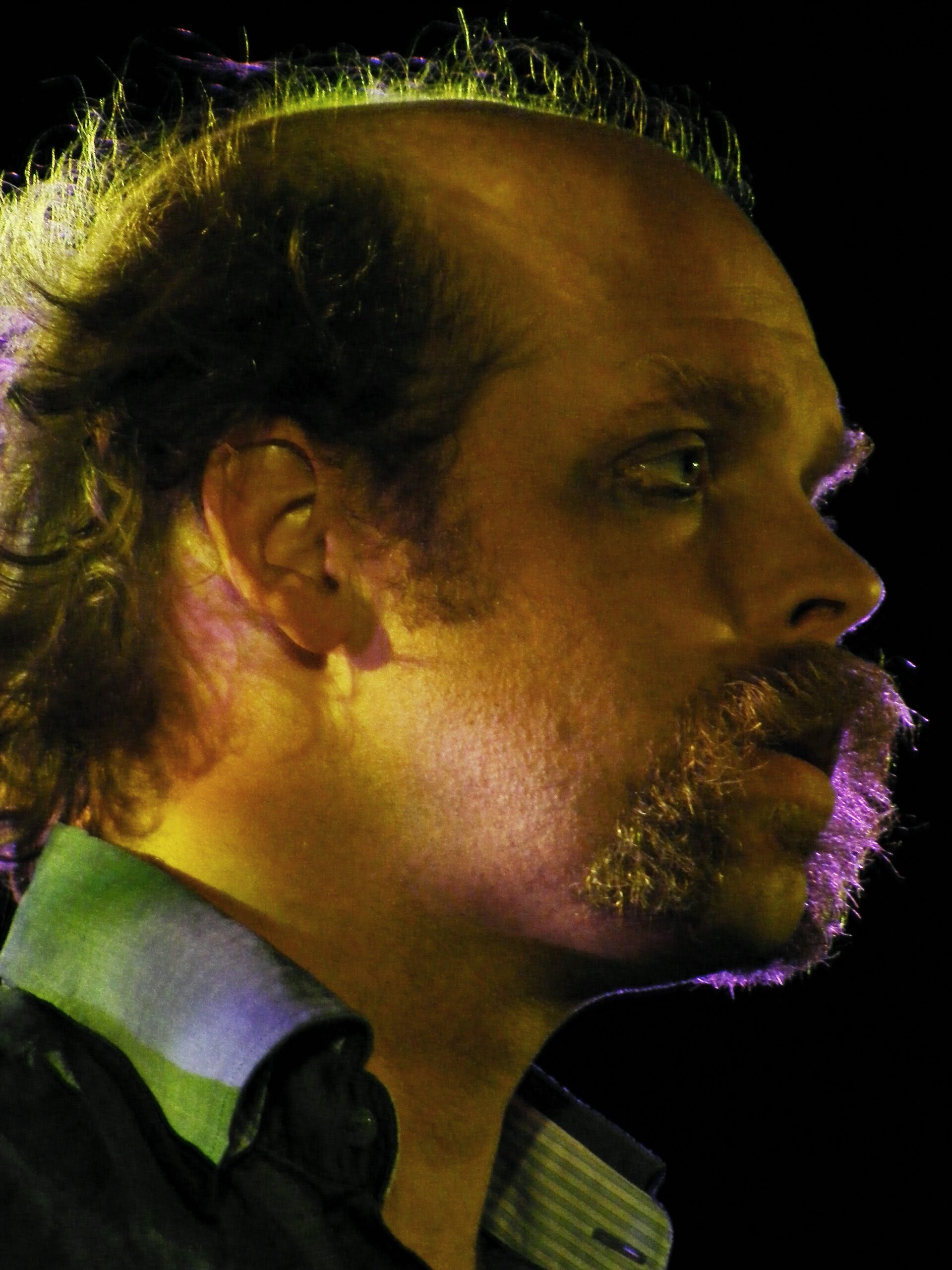
Louisville’s small, overlapping scene of hardcore, art-punk, and DIY musicians in the late 1980s shaped how Oldham would go on to make records himself: quickly, with rotating collaborators, and largely outside the conventional music industry.
From Palace to Bonnie “Prince” Billy
Oldham began releasing his own music in 1993, using a shifting series of names, Palace Brothers, Palace Songs, Palace Music, and simply Palace, for records that each involved different musicians and different sounds.
“I guess the idea is that when you have a name of a group or an artist, then you expect that the next record, if it has the same name, should be the same group of people playing on it. And I just thought we were making a different kind of record each time, with different people, and different themes, and different sounds. So I thought it was important to call it something different so that people would be aware of the differences.”
— Will Oldham, in a 2003 interview with The Phoenix
In 1998, after briefly recording under his own name, Oldham adopted the name Bonnie “Prince” Billy, a title he has said drew on Bonnie Prince Charlie, Nat King Cole, and the outlaw Billy the Kid. He has used it for most of his work ever since.
I See a Darkness, and a Song Johnny Cash Made Famous
Oldham’s 1999 album I See a Darkness, his first released under the Bonnie “Prince” Billy name, became one of his most acclaimed records. Its title track reached a far larger audience the following year when Johnny Cash recorded his own version for American III: Solitary Man, with Oldham singing backing vocals alongside him.
The song has since been covered by artists across genres, including Spanish singer Rosalía, English singer Marianne Faithfull, and members of the metal band Katatonia. Oldham has continued to release albums at a steady pace ever since, moving between solo records and full-band collaborations with musicians including guitarist Matt Sweeney and the band Tortoise.
Acting Between Albums
Alongside his music, Oldham built a parallel career as a character actor. He played the lead role of a man reconnecting with an old friend in Kelly Reichardt’s Old Joy (2006), appeared in her later film Wendy and Lucy (2008), and took the role of a sheet-covered spirit known only as the Prognosticator in David Lowery’s A Ghost Story (2017).
He has also turned up in less expected places: dancing alongside Zach Galifianakis in Kanye West’s 2007 music video for “Can’t Tell Me Nothing,” playing a gorilla trainer in Jackass 3D (2010), and appearing as a bartender in The Bikeriders (2023).
Coming Home After His Father’s Death
After years of moving among Brooklyn, Los Angeles, and Bloomington, Indiana, Oldham returned to Louisville in 2006 following his father’s sudden death, to look after his mother. He has lived in the city ever since, now with his wife of ten years, textile artist Elsa Hansen, and their young daughter.
“It’s only here because boat traffic had to stop at a certain point, because the river was non-navigable, before the canals and locks were built in the late 1800s. I’ve started to think about just the general psychology of a city that exists because people had to stop and unload, and how a city serves people from upstream and people downstream, how our identity is almost this as this conduit, or this nourisher, or as this service between other cultures and other communities.”
— Will Oldham, in a 2026 interview
Louisville itself became a recurring subject of his later work. He narrated Music Makes a City (2010), a documentary about the Louisville Orchestra, and lent his voice, and his likeness, to the character Will in the video game Kentucky Route Zero (2013), set along a fictional stretch of the Bluegrass State.
A New Album Built From Louisville
Oldham’s 2026 album, We Are Together Again, was recorded almost entirely with Louisville musicians at End of an Ear, a studio in the city’s historic Portland neighborhood run by Jim Marlowe.
“You enter this decrepit industrial warehouse complex with a two story high sliding gate with barbed razor wire on top in the oldest neighborhood in Louisville, called Portland. It feels very Mad Max when you enter it – it’s got an animal rescue shelter, a haunted house for Halloween, where artists are making all these sculptures and effects, then the studio with these cosy two tracking rooms, and the soundboard room.”
— Will Oldham, in a 2026 interview
He has said the strangeness of the setting suits the way he wants his music to exist: “both real and it’s not real, like the place where this music is going to exist, just inside of people’s brains.”
Louisville, Still Home
Two decades after moving back, Oldham has said Louisville’s jazz, blues, and gospel history, once centered along a stretch of 4th Street downtown, has shaped his music as much as anything he encountered on the road. He has also pointed to something less measurable: a civic warmth he says has only grown more visible in recent years.
“There’s this feeling of dread and fear, and then you walk around Louisville, and you almost can sense this uptick in proactive human connection, which is really, really necessary, but also very, very comforting.”
— Will Oldham, in a 2026 interview
More than thirty-five years after he first appeared, helmeted and anonymous, on a Slint album cover shot in his hometown, Oldham remains one of Louisville’s most quietly devoted residents, still making records that could, by his own account, have been made almost nowhere else.