Louisville has torn down plenty of its own history, but a handful of hotels survived the wrecking ball and kept doing what they’ve always done: putting up travelers. A Gilded Age mansion, a riverboat-era inn rebuilt into a modern tower, and two grand downtown hotels that have hosted a century of presidents, gangsters, and Derby crowds between them — these are the four worth booking for the history alone. This page contains affiliate links. For flights, start here, and for hotels, here.
DuPont Mansion Bed & Breakfast
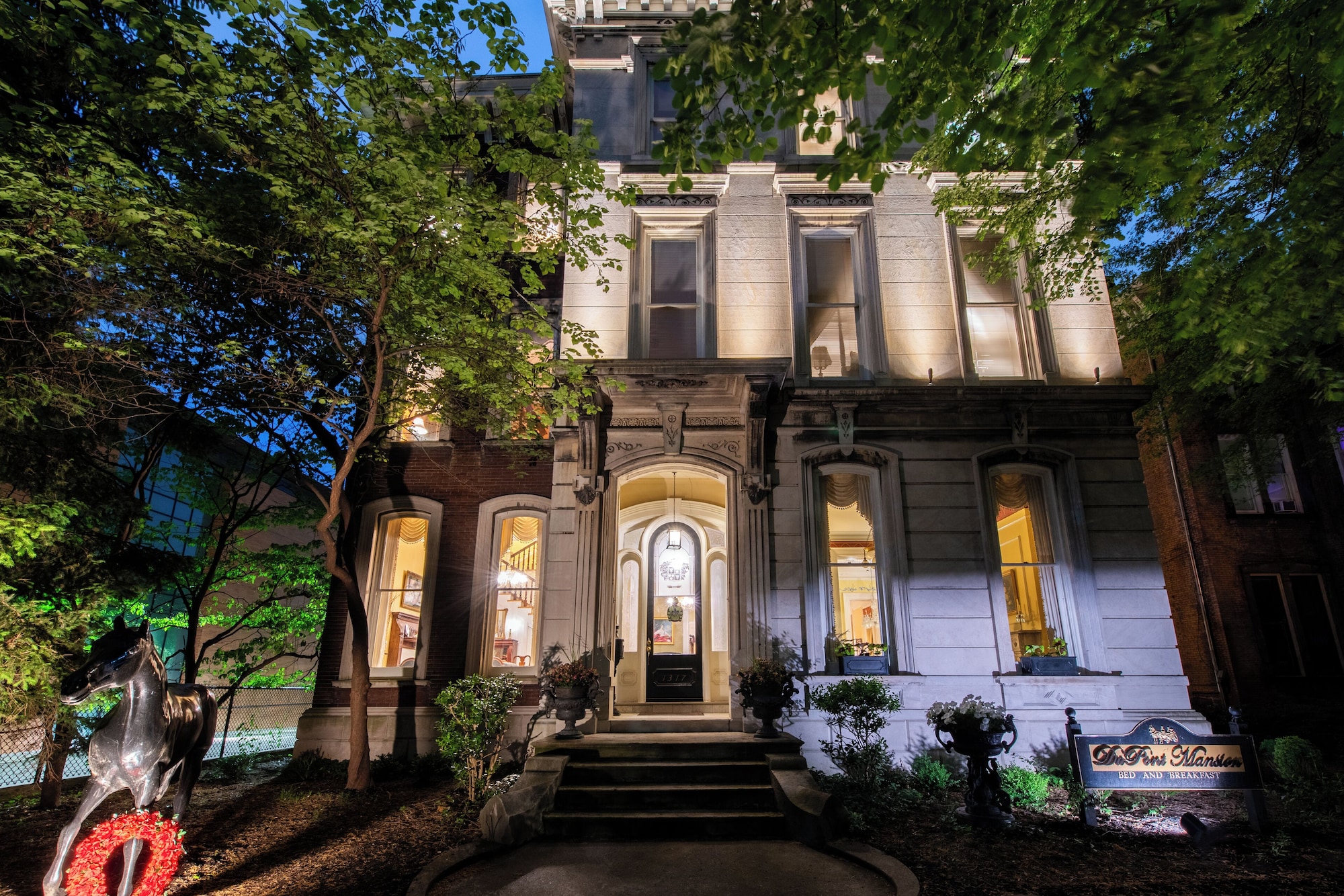
Built in 1879 in the Italianate and Renaissance Revival styles, the DuPont Mansion went up for the Du Pont family in what’s now Old Louisville, then one of the wealthiest neighborhoods in America. The original stained glass, ornate woodwork, and period furnishings are all still in place, kept up rather than restored from scratch.
It’s operated as a bed and breakfast since 2001, which means guests get the run of rooms that were built for a single Gilded Age household rather than a hotel chain. Staying here reads less like a hotel visit and more like borrowing a wealthy relative’s house for the weekend.
Check rates for DuPont Mansion Bed & Breakfast
The Brown Hotel
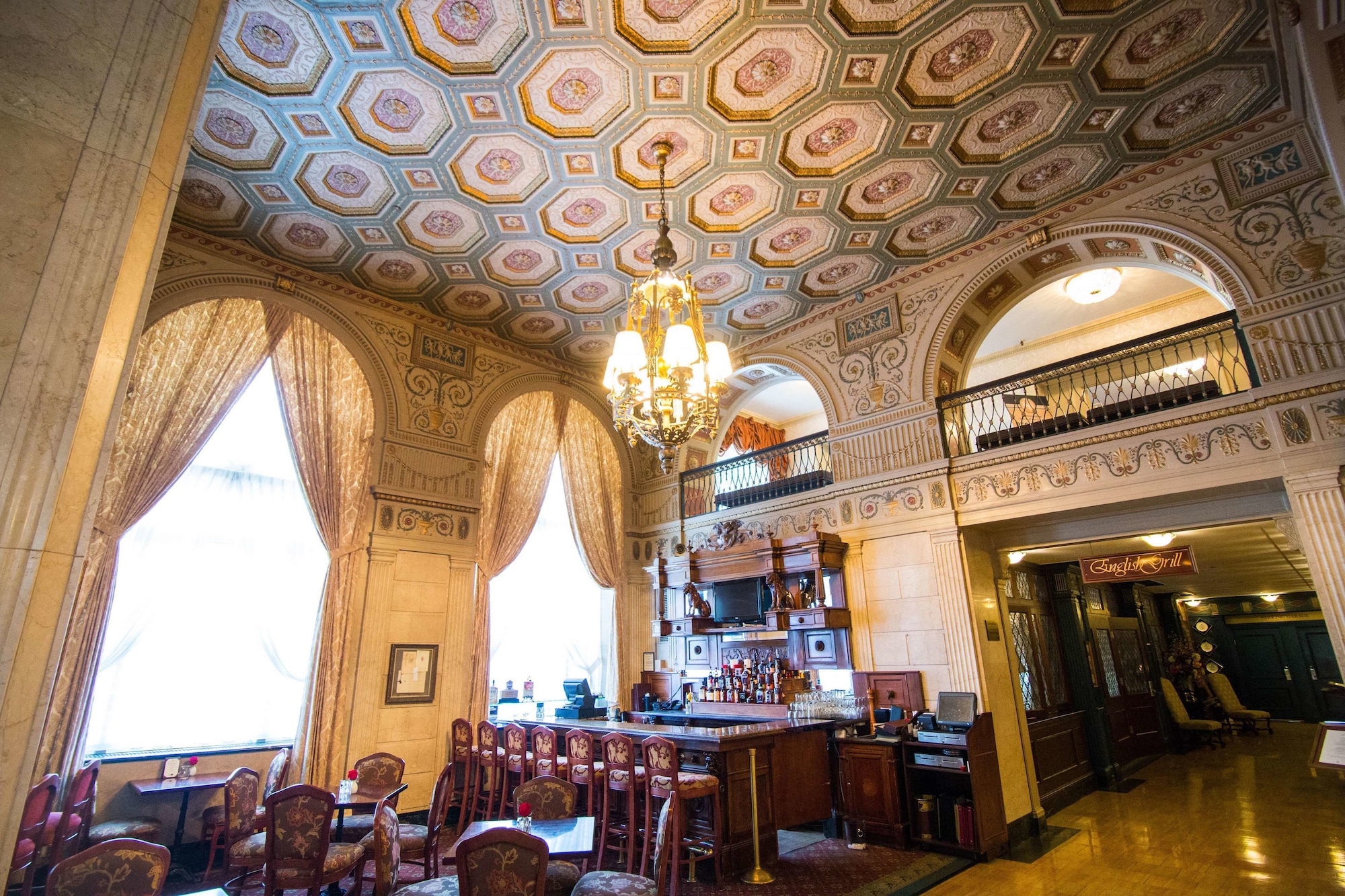
When businessman James Graham Brown opened his sixteen-story hotel in 1923, it was the largest in Kentucky, designed by architect Preston J. Bradshaw with a two-story lobby meant to announce that Louisville had arrived. It closed for a stretch in the early 1970s before a 1985 restoration brought it back, and it’s hosted presidents, celebrities, and generations of Derby guests along the way.
The building itself is the draw here as much as any single amenity — the lobby’s coffered ceiling and brass detailing look the way a 1920s downtown hotel is supposed to look, because it’s one of the few that never got gutted to prove it.
Check rates for The Brown Hotel
Galt House Hotel Trademark Collection by Wyndham
The name Galt House has been attached to a Louisville hotel since 1835, when the original inn stood at Main and Second and welcomed steamboat travelers off the Ohio River, including Charles Dickens on his 1842 American tour. That building burned in 1865 and was rebuilt, and the name eventually moved to the riverfront tower that carries it today.
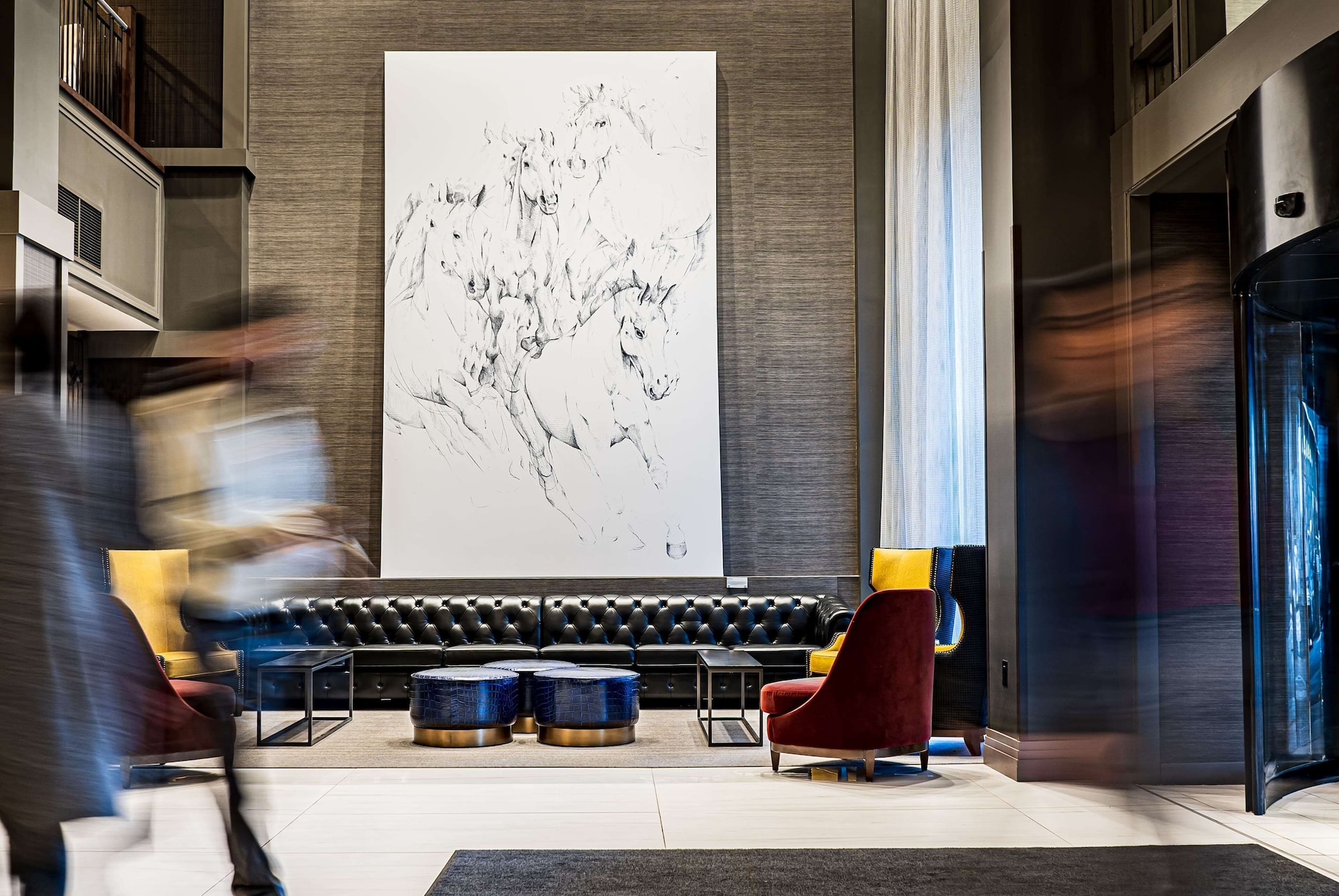
The current Galt House opened in 1972 and leans into its river-town inheritance with panoramic views over the Ohio. It’s still where Derby crowds and conventions land, and its interiors have a frozen-in-amber quality that feels intentional rather than dated.
Check rates for the Galt House
Seelbach Hilton Louisville Downtown
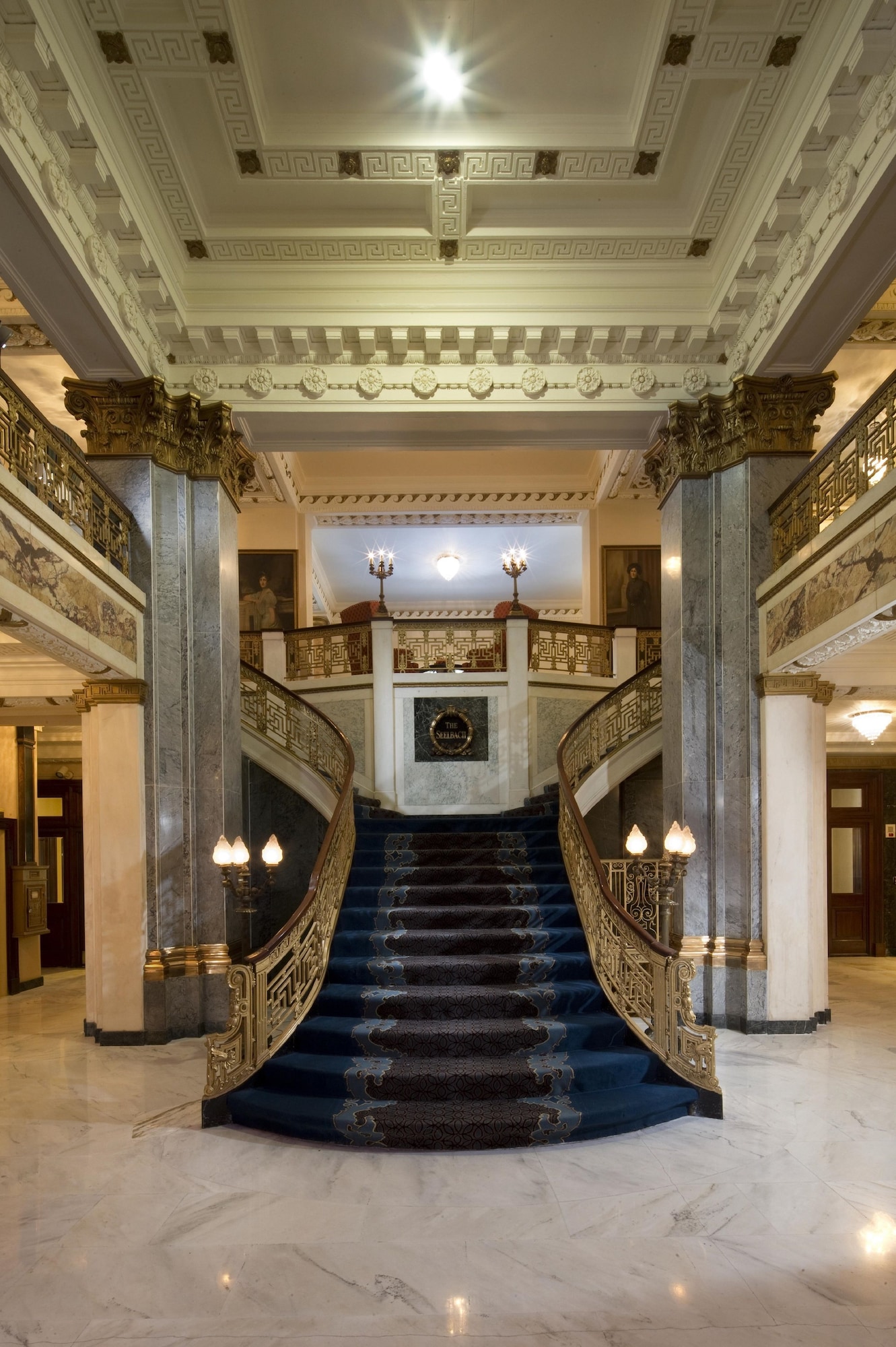
The Seelbach opened in 1905 with Beaux-Arts interiors so lavish they’ve barely needed updating since, and its guest list over the decades has run from sitting presidents to Al Capone, who reportedly ran card games in a room now named for him. F. Scott Fitzgerald stayed here while stationed nearby during World War I, and the hotel’s ballroom is widely believed to have inspired the wedding scenes in The Great Gatsby — a connection explored in more detail on our page about Daisy Buchanan.
Restored rather than modernized, the lobby’s marble and murals still look the way they did when Fitzgerald walked through them, which is most of the reason to stay here over a newer downtown option.
Check rates for the Seelbach Hilton
Planning the Trip
All four of these sit within a short walk or drive of downtown Louisville’s other historic sites, so a single stay makes a good home base for exploring the rest. Compare flights into Louisville and browse the full list of Louisville hotels to start planning.
Sources and further reading
- Hotel details — Expedia Travel Shops
- The Brown Hotel and Galt House history — The Brown Hotel, Galt House, and published Louisville hotel histories
- Seelbach Hilton history and its F. Scott Fitzgerald connection — Seelbach Hilton and F. Scott Fitzgerald biographical sources
- This page contains affiliate links
More from Louisville
Historical Timeline of Louisville
The fuller history behind the Gilded Age hotels still taking guests today.
The Great Flood of 1937: Rising Waters, Soaring Spirits
The disaster several of these historic hotels survived and still reference in their own histories.
Muhammad Ali
Louisville’s most famous son, who passed through some of these same hotel lobbies.