
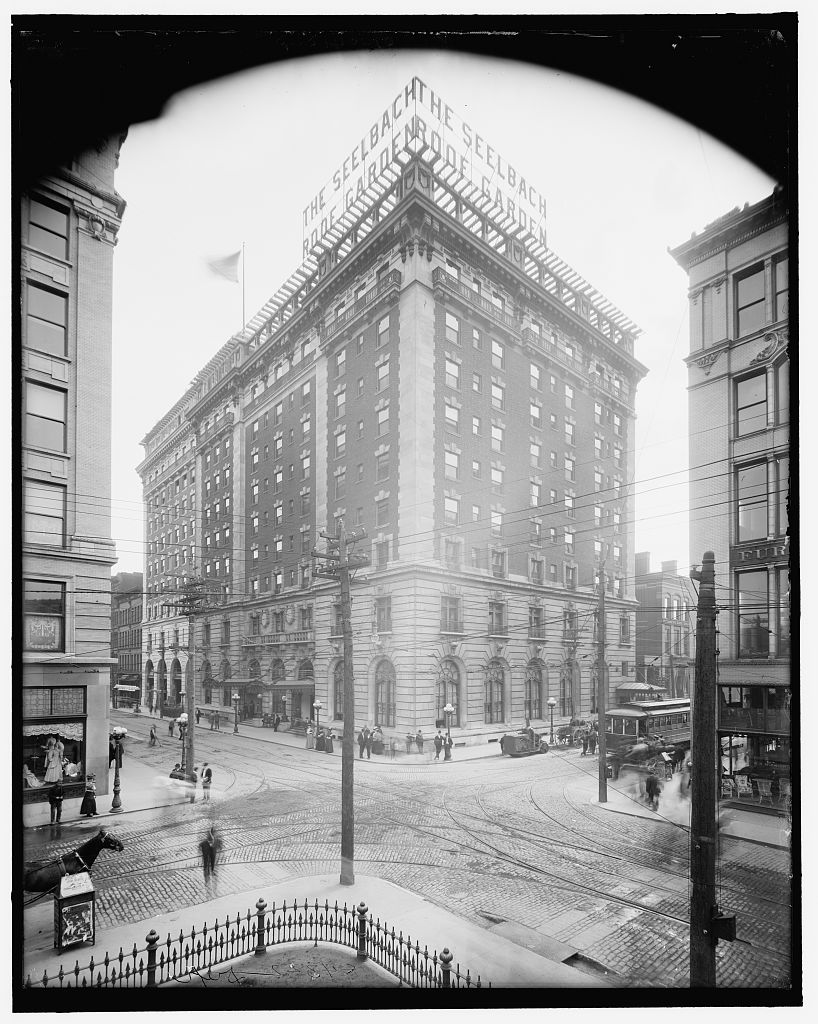
Daisy Buchanan never existed, but the Louisville that shaped her did. F. Scott Fitzgerald invented her as a Kentucky debutante with a voice “full of money,” yet he built her out of a single month he actually spent in the city in the spring of 1918, training at Camp Zachary Taylor before a war he never reached. Louisville’s grandest hotel, its wartime rush of young officers, and its debutante culture all turn up, thinly disguised, inside The Great Gatsby’s most famous romance.
The Belle of Louisville
Fitzgerald never gives Daisy’s Louisville girlhood to Nick Carraway directly. He hands it to Jordan Baker, who narrates it from a tea-garden at the Plaza Hotel years later, remembering the largest lawn and the largest red-white-and-blue banner in town belonging to eighteen-year-old Daisy Fay, the most popular girl among all the young women in the city.
“She dressed in white, and had a little white roadster, and all day long the telephone rang in her house and excited young officers from Camp Taylor demanded the privilege of monopolizing her that night. ‘Anyways, for an hour!'”
— F. Scott Fitzgerald, The Great Gatsby, Chapter 4
An Officer Named Jay Gatsby
Jordan recalls walking past Daisy’s house one October morning in 1917 and finding her in the white roadster with a lieutenant she had never introduced before. Daisy called her over to ask a small favor about a Red Cross shift, and Jordan lingered just long enough to notice how the officer looked at her.
“The officer looked at Daisy while she was speaking, in a way that every young girl wants to be looked at sometime, and because it seemed romantic to me I have remembered the incident ever since. His name was Jay Gatsby, and I didn’t lay eyes on him again for over four years.”
— F. Scott Fitzgerald, The Great Gatsby, Chapter 4
Camp Zachary Taylor, 1918
The camp behind that fictional romance was real. Camp Zachary Taylor opened south of Louisville in 1917, one of sixteen national army training camps built for the First World War, and in March 1918 it received an unpublished twenty-one-year-old second lieutenant named F. Scott Fitzgerald. His own account ledger, later archived by the University of South Carolina, records the month tersely: officers’ names, his mother visiting Louisville, and hotels jammed with soldiers.
Fitzgerald spent barely a month at the camp before his unit moved on, but on weekend passes he frequented the Seelbach Hotel downtown, taking in its Grand Ballroom and its below-ground Rathskeller Room, an ornate German-style hall built almost entirely of Rookwood pottery. There he reportedly crossed paths with George Remus, a Cincinnati bootlegger of such theatrical wealth that Fitzgerald later drew on him while inventing Jay Gatsby.
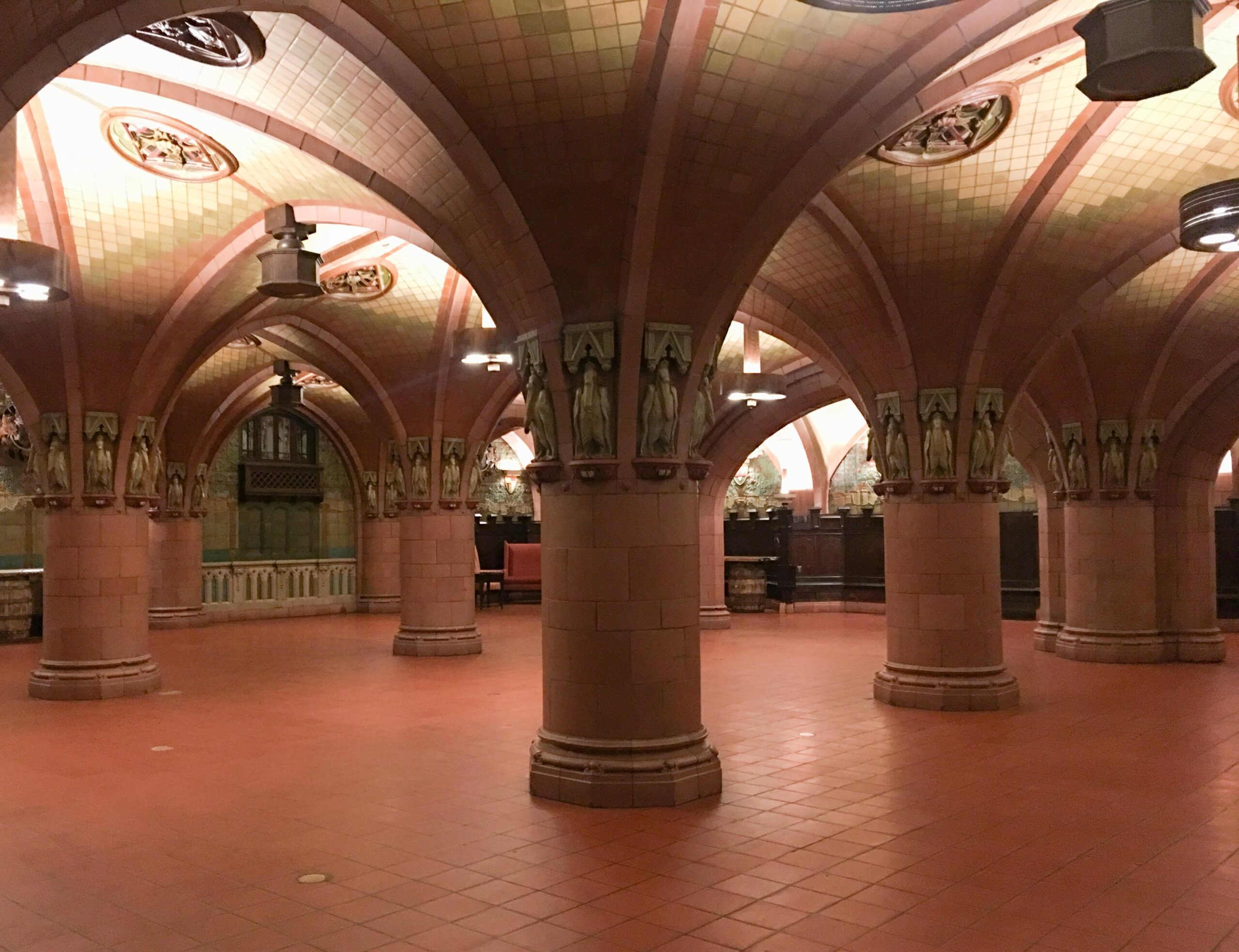
One month in uniform was all Louisville ever got of Fitzgerald, and the war ended before his division shipped overseas. But the city had already lodged itself in his imagination as the home of an unattainable, wealthy young woman, exactly the role Daisy Fay would play for a fictional soldier named Gatsby seven years later.
A Wedding Louisville Never Forgot
In the novel, Daisy waits for Gatsby through his slow return from the war and then, in June 1919, marries the wealthy, unfaithful Tom Buchanan instead, in a wedding staged to overwhelm the city that raised her. Fitzgerald’s first edition famously misprinted the hotel’s name as the fictional “Muhlbach”; Fitzgerald himself later corrected his own copy to read “Seelbach,” matching the real Louisville hotel he had visited as a soldier.
“In June she married Tom Buchanan of Chicago, with more pomp and circumstance than Louisville ever knew before. He came down with a hundred people in four private cars, and hired a whole floor of the Seelbach Hotel, and the day before the wedding he gave her a string of pearls valued at three hundred and fifty thousand dollars.”
— F. Scott Fitzgerald, The Great Gatsby, Chapter 4
The Bride Who Wouldn’t Stop Crying
Jordan, a bridesmaid, found Daisy an hour before the rehearsal dinner lying on her bed, drunk for the first time in her life, clutching a bottle of Sauterne in one hand and a letter, presumably from Gatsby, in the other. Daisy tried to give away the three-hundred-and-fifty-thousand-dollar pearls Tom had just given her, sobbing that she had changed her mind, before Jordan and her mother’s maid got her into a cold bath and back into her dress.
“‘Gratulate me,’ she muttered. ‘Never had a drink before, but oh how I do enjoy it.’ … ‘Take ’em downstairs and give ’em back to whoever they belong to. Tell ’em all Daisy’s change’ her mine.'”
— Daisy Buchanan, in The Great Gatsby, Chapter 4
By the next afternoon the pearls were back around her neck and, in Jordan’s telling, the incident was over. Daisy married Tom Buchanan without so much as a shiver and left for a three-month honeymoon in the South Seas, the same practiced composure she would later use to survive Gatsby’s return into her life.
The House No One Can Find
Fitzgerald never names a street. He describes only a large, expensive house with a wide lawn, sidewalks out front, and upstairs bedrooms Gatsby could only imagine, in a neighborhood most Louisvillians associate with the Cherokee Triangle, developed just as Fitzgerald would have seen it. Local tour guides and English teachers have proposed several real candidates over the decades, among them the Hilliard House on Cherokee Road near Grinstead Avenue, a wide-porched home at 1400 Cherokee Road, and 2427 Cherokee Parkway, without ever settling the question.
“He had never been in such a beautiful house before. But what gave it an air of breathless intensity was that Daisy lived there … there was a ripe mystery about it.”
— F. Scott Fitzgerald, The Great Gatsby, Chapter 8
Gatsby’s Pilgrimage Back
Late in the novel, Gatsby tells Nick what he did after the armistice, once he learned Tom and Daisy were already married and on their honeymoon. Broke and discharged, he spent the last of his army pay on a train ticket back to the one city that still held her trace, and stayed a week walking streets that no longer had any claim on her.
“He came back from France when Tom and Daisy were still on their wedding trip, and made a miserable but irresistible journey to Louisville on the last of his army pay. He stayed there a week, walking the streets where their footsteps had clicked together through the November night … Just as Daisy’s house had always seemed to him more mysterious and gay than other houses, so his idea of the city itself, even though she was gone from it, was pervaded with a melancholy beauty.”
— F. Scott Fitzgerald, The Great Gatsby, Chapter 8
He left, Fitzgerald writes, feeling that if he had searched harder he might have found her, watching the city recede behind a departing train until he had lost, in his own blurred view, the freshest and best part of what Louisville had once given him.
Legacy
The Great Gatsby turned one hundred in 2025, and Louisville marked the anniversary as its own, with the Seelbach Hilton unveiling a redesigned Gatsby suite and offering tours of the Grand Ballroom and Rathskeller Room where Fitzgerald once drank on weekend leave. Louisville Tourism built an entire Guide to Gatsby’s Louisville around the hotel, Union Station, and Whiskey Row, sites tied to the month the aspiring author spent in the city.
No one will ever locate Daisy Fay’s actual bedroom window, because it never existed outside Fitzgerald’s pages. But the hotel where he watched real Louisville society at play, the training camp that put him in uniform, and the debutante culture that produced dozens of real Daisys gave him everything he needed, and the city has never stopped claiming her as one of its own.
Sources and further reading
- Sources and further reading: The Great Gatsby, Chapter 4, Owl Eyes
- The Great Gatsby, Chapter 8, Owl Eyes
- “Louisville’s link to The Great Gatsby,” Kentucky Living
- “The Great Louisville Gatsby Mystery: Where Is Daisy’s House?,” Louisville Public Media
- Daisy Buchanan, Wikipedia
- Read the novel — The Great Gatsby: The Only Authorized Edition (Scribner)