Phil Simms threw the most efficient passing performance in Super Bowl history while playing quarterback for a team more than 700 miles from where he grew up, but the road there ran straight through Louisville. Simms spent his formative football years at Southern High School, on the city’s south side, before an unheralded path through a small college program in eastern Kentucky landed him, improbably, in the first round of the NFL Draft.
A Farm, Then a City
Phillip Martin Simms was born November 3, 1955, in Springfield, Kentucky, on his grandfather’s farm in Washington County, a property that today operates as Maple Hill Manor. His family later moved to Louisville while he was in grade school, and Simms grew up playing football for Southern High School’s Trojans, graduating in 1974 as a talented but not especially recruited quarterback prospect.
Rather than a major program, Simms landed at Morehead State University, a Division I FCS school in the Ohio Valley Conference far from the recruiting spotlight of the SEC or Big Ten programs that dominated national college football at the time. It was an unglamorous starting point for a player who would eventually be drafted into the NFL’s first round.
The lack of major-program interest wasn’t necessarily a reflection of Simms’s talent so much as the limited scouting reach of the recruiting apparatus at the time, which tended to funnel attention toward a handful of traditional powerhouse programs and away from smaller Kentucky high schools regardless of individual performance. Simms’s arm strength and decision-making stood out enough at Morehead State that professional scouts eventually found him anyway, even if major college programs hadn’t.
Morehead State to the First Round
Simms developed into a standout at Morehead State, earning Ohio Valley Conference Player of the Year honors in 1977. His performance was strong enough to draw NFL scouting attention despite the small-school competition level, and the New York Giants selected him seventh overall in the 1979 NFL Draft, a first-round pick that many Giants fans at the time greeted with confusion or outright boos, since Simms was a virtual unknown coming out of a program most casual football fans had never heard of.
“Nobody knew who I was. I understood the reaction.”
— Phil Simms, recalling the Giants fans’ response to his 1979 draft selection
The skepticism did not last. Simms went on to start at quarterback for the Giants for 15 seasons, becoming one of the more durable and productive quarterbacks of his era despite injuries that cost him significant playing time in several seasons during the 1980s.
Simms’s early years in New York were rocky, marked by inconsistent play and a series of injuries, including multiple shoulder separations and a knee injury, that repeatedly interrupted his development and fueled doubts among fans and media about whether the unheralded small-school pick would ever live up to a first-round selection. He missed significant portions of several seasons in the early-to-mid 1980s, and it wasn’t until head coach Bill Parcells settled on Simms as his unquestioned starter later in the decade that the payoff on the Giants’ original draft gamble became fully apparent.
Two Super Bowls, One Record Performance
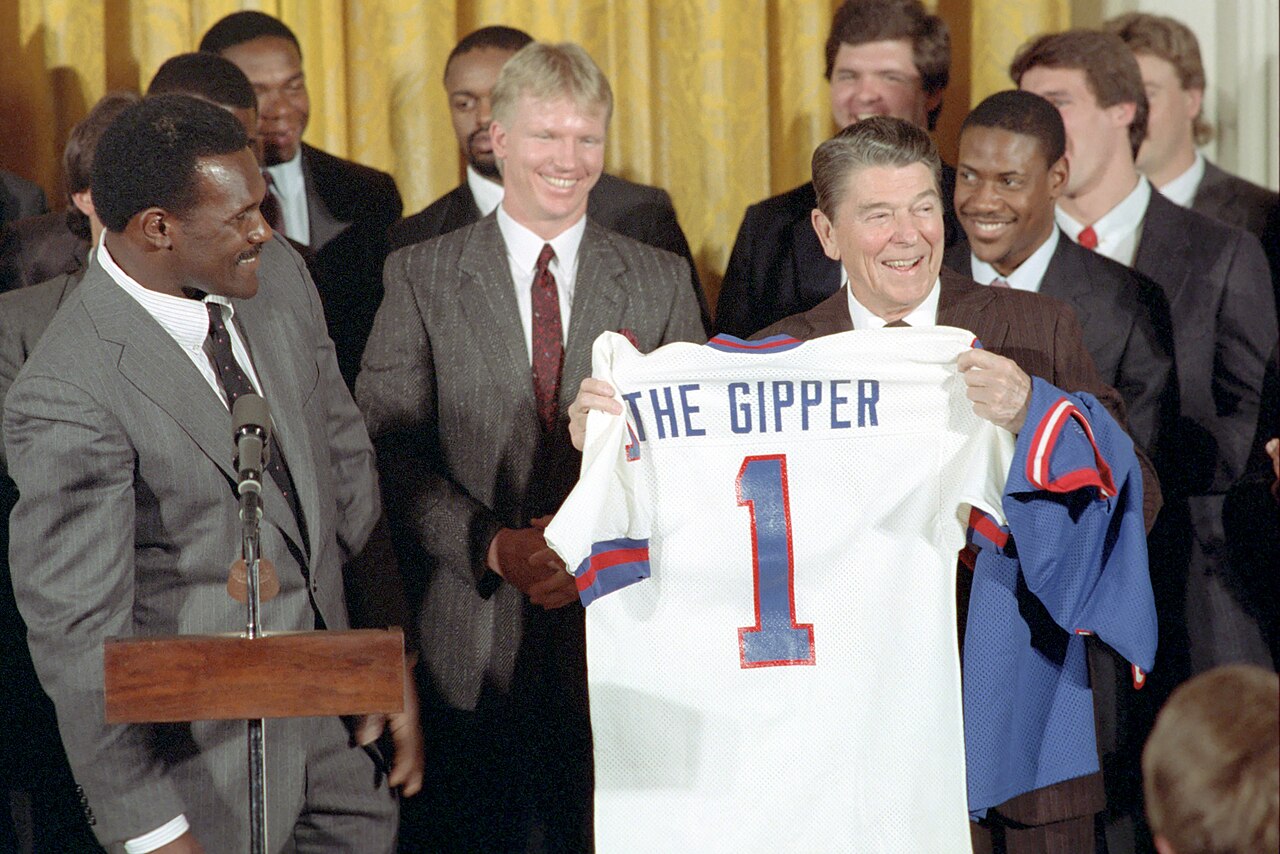
Simms led the Giants to two Super Bowl titles, winning Super Bowl XXI following the 1986 season and Super Bowl XXV following the 1990 season. He earned Pro Bowl selections for his 1985 and 1993 seasons and finished his career with 33,462 passing yards, numbers that placed him among the most productive quarterbacks of his generation despite never quite receiving the national attention given to some of his contemporaries at other franchises.
His signature performance came in Super Bowl XXI, when the Giants defeated the Denver Broncos 39-20. Simms completed 22 of 25 pass attempts, an 88 percent completion rate, and posted a passer rating of 150.9, both marks that remain Super Bowl records decades later. He was named the game’s Most Valuable Player, cementing a performance still cited as one of the most efficient in the history of the championship game.
What made the performance especially notable was its context: Simms didn’t just complete an unusually high share of his throws, he did so pushing the ball down the field against a Broncos defense that entered the game as one of the better units in the league that season. Analysts have periodically revisited the box score over the following decades, noting that no other Super Bowl-winning quarterback has combined that completion percentage with that passer rating in a single game, a distinction that has held even as passing offenses have become far more pass-heavy and efficient across the NFL in the decades since.
Four years later, Simms helped anchor the Giants’ Super Bowl XXV run as well, though a foot injury late in that season sidelined him for the playoffs and the championship game itself, with backup Jeff Hostetler leading the team to the title instead. Simms’s overall body of work across both championship runs, as the starter who built the roster’s identity during the regular season even when injuries occasionally kept him off the field for the biggest moments, is part of why Giants fans and franchise historians still rank him among the most important quarterbacks in team history.
A Kentucky Football Family
Simms’s path from a Springfield farm to a Louisville high school to a small college in Morehead to two Super Bowl rings has made him a recurring reference point in Kentucky sports history, a reminder that elite NFL talent occasionally comes from programs nobody outside the state was watching. He has been recognized by the Kentucky Pro Football Hall of Fame and, more recently, inducted into the New Jersey Hall of Fame in 2024, reflecting both his Kentucky roots and the two decades he spent as the face of the Giants franchise.
After retiring as a player, Simms moved directly into broadcasting, working first as an ESPN analyst before becoming a lead NFL color commentator for NBC and later CBS, a second career in football media that has now stretched longer than his playing days. Morehead State’s athletics program has continued to claim him as its most famous alumnus, inducting him into its athletics hall of fame and regularly citing his career as evidence that a Division I FCS program can still produce a Super Bowl MVP.
Louisville, for its part, still counts Simms among the city’s notable athletic exports, even though his football rise happened almost entirely outside the state after he left Southern High School, a common pattern among Louisville-raised professional athletes whose biggest moments came on national stages far from home.
Simms’s son, Chris Simms, went on to his own NFL playing career and later a broadcasting career, extending the family’s presence in professional football media into a second generation. Between his own playing accolades, his broadcasting longevity, and his son’s continued career in the sport, Phil Simms has remained a visible figure in NFL coverage for close to five decades, a run that started on a football field in Louisville and has never really stopped.
Sources and further reading
- Childhood, Springfield birthplace, and Southern High School career — Wikipedia and the Kentucky Pro Football Hall of Fame (kyprofootballhof.org)
- Morehead State career and 1979 NFL Draft — profootballhistory.com and Morehead State University Athletics Hall of Fame
- Super Bowl XXI and XXV results and passing records — Wikipedia and giants.com
- New Jersey Hall of Fame induction — njhalloffame.org’s 2024 inductee announcement