Drive anywhere in Louisville and you’re driving through a history lesson. Our streets are named after mayors, developers, soldiers, an editor, a congressman, and a Supreme Court justice.
Here are the names of some of Louisville’s streets and avenues (and an expressway) and the people who earned their place on our maps.
Muhammad Ali Boulevard
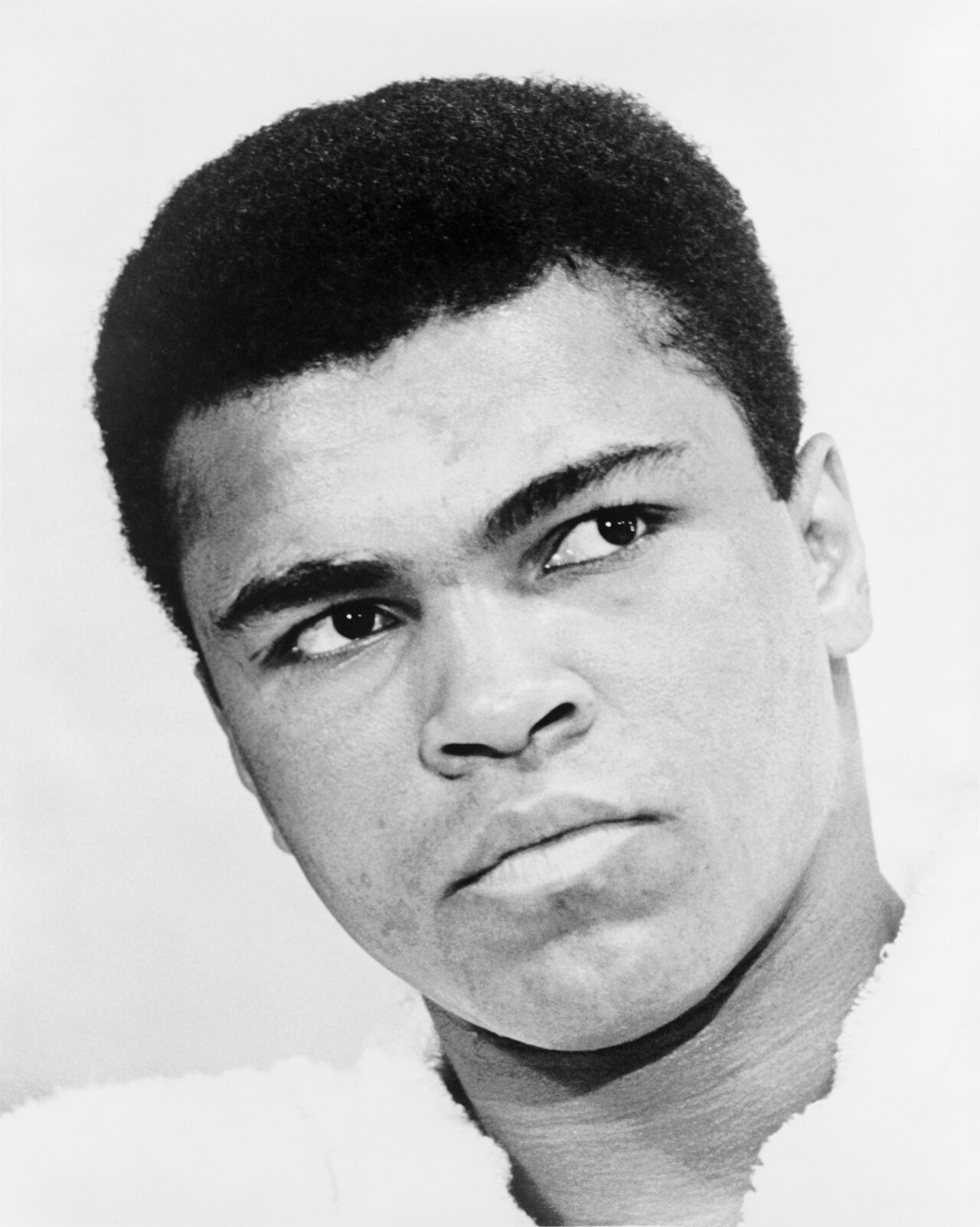
Muhammad Ali, boxer, three-time heavyweight champion
Muhammad Ali Boulevard runs through downtown Louisville along what used to be st, historically the center of the city’s Black business district and close to Ali’s boyhood neighborhood in the West End.
Mayor William Stansbury renamed the street in 1978, honoring the newly crowned three-time heavyweight champion while Ali was still fighting professionally.
Cassius Marcellus Clay Jr. was born in Louisville in 1942, won Olympic gold in Rome in 1960, and turned professional back home before changing his name to Muhammad Ali in 1964. He returned to Louisville throughout his life, and the city eventually built the Muhammad Ali Center on the downtown riverfront to house his legacy.
In 2024, the city lined the boulevard with banners of his image, and Louisville’s international airport carries his name too, keeping him attached to nearly every route in and out of downtown.
Brandeis Avenue
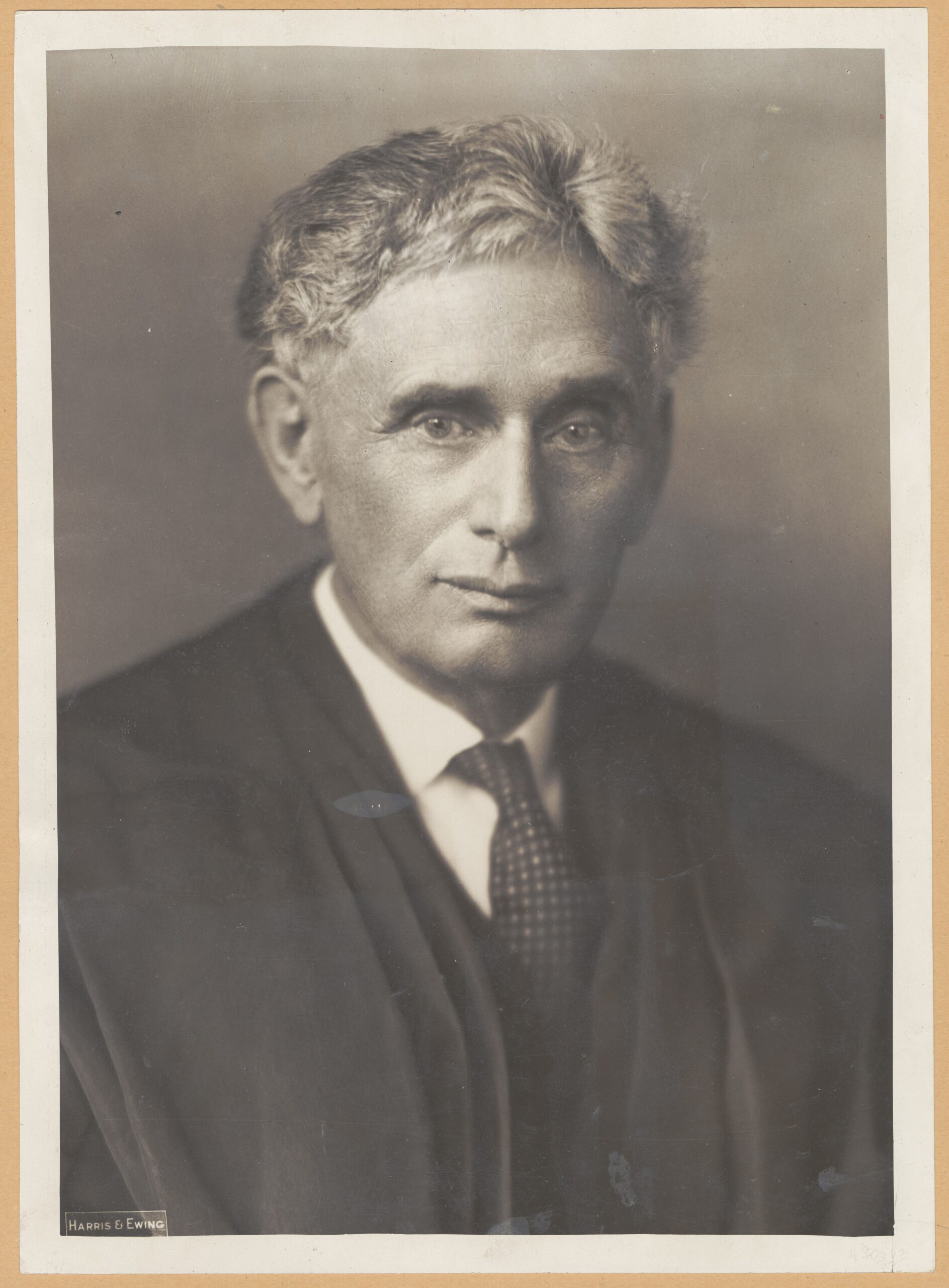
Louis D. Brandeis, U.S. Supreme Court justice, 1856–1941
Brandeis Avenue carries the name of Louisville’s most famous legal mind. Louis Dembitz Brandeis was born in 1856 in a house on East Broadway and educated at Male High School before heading to Harvard Law School, where he graduated first in his class.
He built a career in Boston as a prominent attorney known for his pro bono advocacy work, earning the nickname “the People’s Lawyer,” before President Woodrow Wilson nominated him to the U.S. Supreme Court in 1916.
His confirmation fight was bitter and openly antisemitic at times, but he won it and became the first Jewish justice in the Court’s history, serving until 1939. Louisville has kept his name close ever since.
The University of Louisville’s law school became the Louis D. Brandeis School of Law in 1997, his boyhood home carries a state historical marker, and Brandeis Avenue runs through the city that shaped him, not far from Albert S. Brandeis Elementary School, named for a cousin who helped found Louisville’s school board.
Baxter Avenue
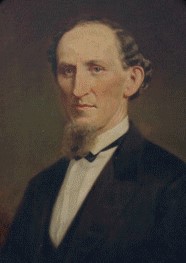
John G. Baxter, mayor of Louisville, 1870–72 and 1879–81
John George Baxter built a successful stove manufacturing company in Louisville before entering politics, serving on the city council and Board of Aldermen ahead of his first mayoral term in 1870. His administration built a new city hall, city hospital, and almshouse. Barred by the charter from immediately seeking a second term, he lost a comeback bid to Charles Donald Jacob in 1875 before finally winning a second, nonconsecutive term in 1879.
Baxter also served as a director of the Louisville & Nashville Railroad and later became president of the Louisville Gas Company, a post he held until his death in 1885. Baxter Avenue, one of the busiest streets in the Highlands, carries his name today, as does Baxter Square Park nearby, Louisville’s first public park.
Grinstead Drive
James F. Grinstead, mayor of Louisville, 1907–09
James Fontleroy Grinstead moved to Louisville from Barren County as a young man to work in the wholesale grocery trade, eventually building his own firm.
Approached to run for mayor in 1897, he declined, then won the Republican nomination in 1901 only to give it up after learning his own backer had used underhanded tactics to round up votes, a decision that earned him the nickname “Honest Jim.”
He finally took office in 1907 to complete the term of Paul Barth, whose election had been thrown out by the Kentucky Court of Appeals, becoming the first Republican mayor elected by Louisville’s general public rather than the City Council. He lost his re-election bid in 1909 and died in 1921.
Grinstead Drive, which runs alongside Cave Hill Cemetery, had already gone through two names, Transit Avenue and then Daisy Lane, before it was renamed in his honor.
Speed Avenue
Josiah S. Speed, real estate developer
Speed Avenue, one of the boundary streets of the Bonnycastle neighborhood, takes its name from Josiah S. Speed, a member of Louisville’s prominent Speed family who partnered with fellow realtor James W. Henning to build one of the city’s earliest streetcar suburbs.
In 1869, Henning and Speed bought 125 acres from landowner George Douglass for $135,000 and laid out the Highland Addition the following year, a modest first subdivision of 150 lots that grew into today’s Cherokee Triangle neighborhood.
The two developers sold lots briskly until the Panic of 1873 stalled the market for a decade, and the area didn’t take off in earnest until Cherokee Park opened in 1891 and streetcar lines reached out Bardstown Road.
Speed’s extended family left an even bigger mark on Louisville elsewhere. Family money funded the Speed Art Museum and the University of Louisville’s J.B. Speed School of Engineering, both far better known citywide today than the street that carries the family name.
Henry Watterson Expressway
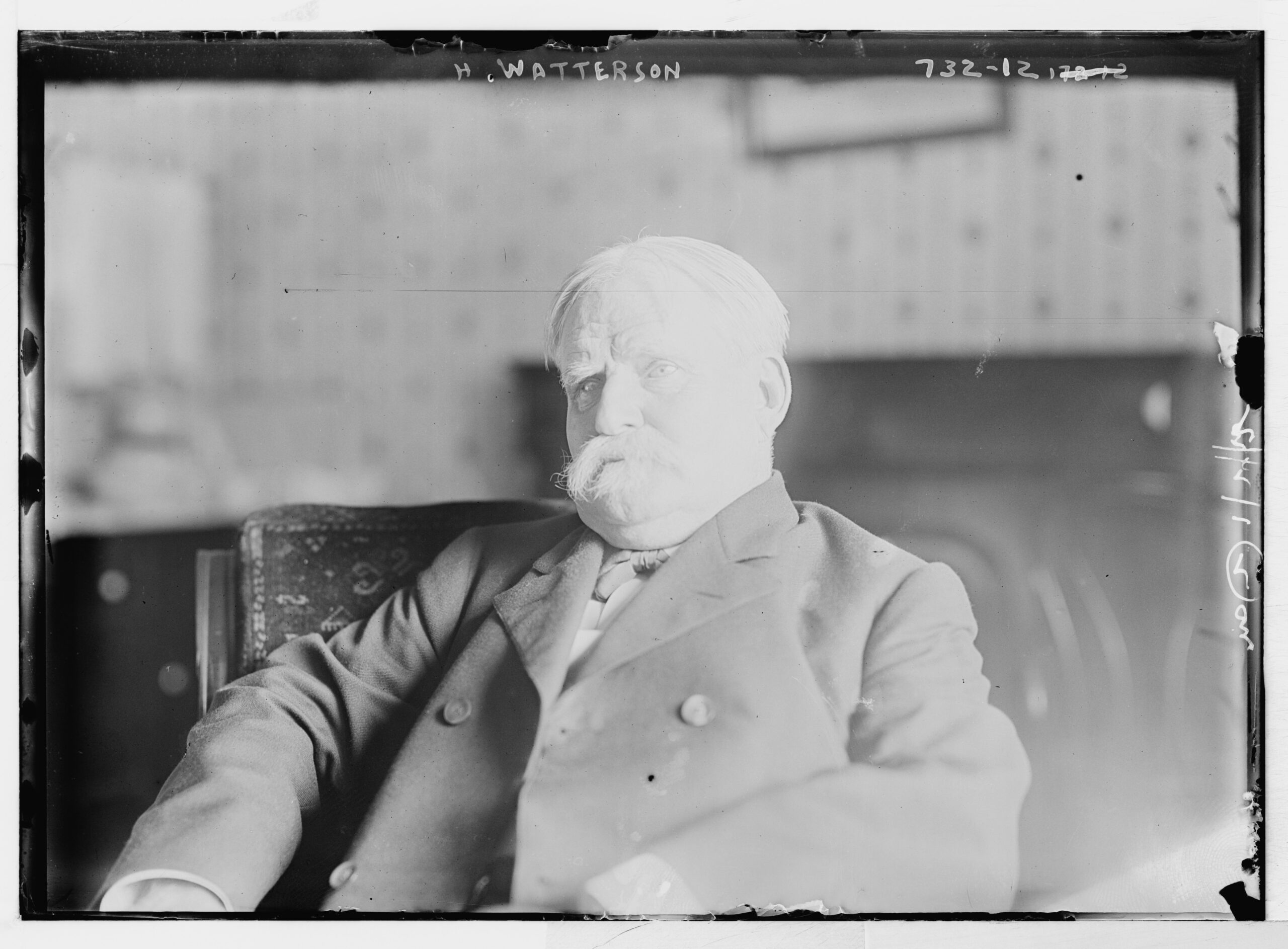
Henry Watterson, newspaper editor, 1840–1921
For five decades after the Civil War, Henry Watterson ran the editorial page of the Louisville Courier-Journal, the paper formed when he merged two competing Louisville dailies shortly after the war ended. His editorials carried real national weight.
He won the 1918 Pulitzer Prize for Editorial Writing for two 1917 editorials urging the country to enter World War I, and he was one of the most quoted newspaper editors in the country during his lifetime.
The expressway that circles Louisville’s southern and eastern edges was built in stages starting in the 1940s and officially named for him in 1952.
It is the oldest expressway in the city, predating the interstate highway system itself. It was officially designated as I-264 a few years later on November 10, 1958. Locals simply call it “The Watterson.”
Gene Snyder Freeway
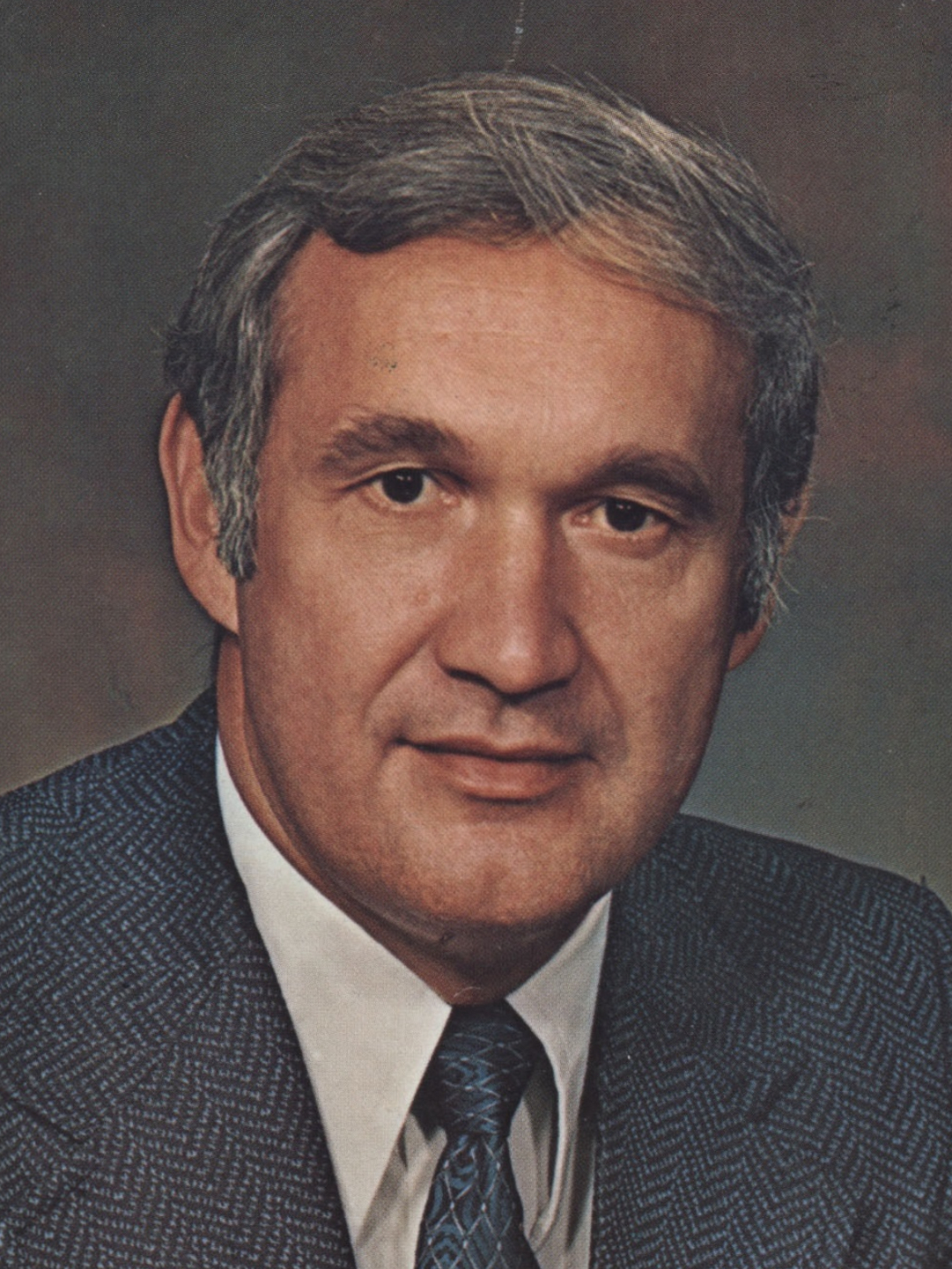
Gene Snyder, U.S. Congressman, 1963–65 and 1967–87
Marion Gene Snyder was born in Louisville in 1928, practiced law in the city, and served as Jeffersontown’s city attorney and a Jefferson County magistrate before winning a seat in the U.S. House in 1962. Though he lost his first re-election bid, he came back and won two years later. That started a winning streak and he went on to represent Louisville’s suburbs in Congress for two more decades, retiring in 1987.
Snyder used his seniority in Congress to secure roughly $52 million in federal funding to finish a long-stalled outer beltway around Louisville, originally planned as the Jefferson Freeway.
The highway was renamed in his honor in 1982, while he was still in Congress, and finally opened to traffic in 1987 as Interstate 265. Together with the East End Bridge, it now forms most of a three-quarter loop around the Louisville metro area.
Barret Avenue
The Barret family, including Judge Alex G. Barret
Barret Avenue takes its name from one of Louisville’s prominent 19th-century families, whose members included local judge and politician Alex G. Barret. The family’s name also lives on at Barret Middle School in the Original Highlands, not far from the street itself.
The stretch of Barret between Baxter Avenue and Broadway was originally called Underhill Street, one of many small Highlands streets renamed in the early 20th century as the neighborhood grew and its street grid needed straightening out.
It became Barret Avenue in 1923, tying the family’s name permanently to one of the busier commercial corridors running through the Highlands today.
Story Avenue
John W. Story, carpenter and civic leader
Story Avenue runs through Butchertown, the Louisville neighborhood built around the slaughterhouses and meatpacking businesses that gave it its name. The street itself honors John W. Story, a 19th-century carpenter who became a civic leader and owned a significant amount of land in the neighborhood during its early development.
The Vernon Lanes bowling alley on Story Avenue (one of the oldest bowling alleys in America!) took its own name from Mount Vernon, George Washington’s home, a small reminder of how many Butchertown streets nearby carry Founding Father names of their own, from Washington Street to Adams and Franklin.
Cowan Street
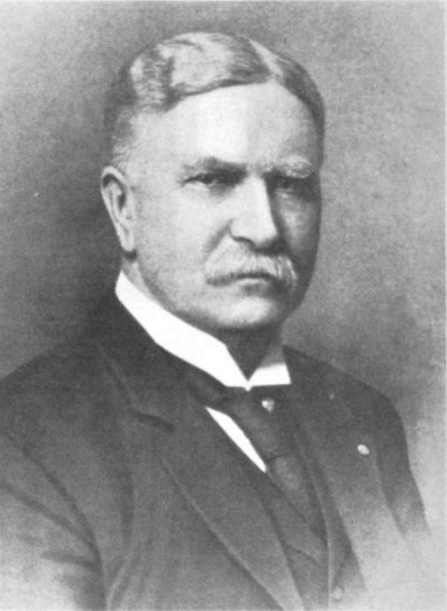
Andrew Cowan, Union Army officer and park system founder
Andrew Cowan was born in Scotland in 1841 and came to the United States as a child. When the Civil War broke out he joined a New York artillery unit, and at Gettysburg his battery helped repel Pickett’s Charge on July 3, 1863, one of the more consequential Union stands of the battle. He was present at Appomattox in 1865 for Robert E. Lee’s surrender.
After the war, Cowan settled in Louisville as a leather merchant, an uneasy fit at first in a postwar city still dominated by ex-Confederates. He’s the real, lesser-credited force behind Louisville’s park system: he proposed it in an 1887 newspaper essay and lobbied the state legislature to create a Louisville Park Commission.
Cowan personally invited landscape architect Frederick Law Olmsted to the city in 1891, guiding him around the sites that became Cherokee, Iroquois, and Shawnee parks. Cowan Street in Butchertown carries his name today.
Campbell Street
John Campbell, early Louisville landowner
Campbell Street honors John Campbell, a land speculator and businessman who helped found both Louisville and Pittsburgh in the 18th century.
In 1783, Campbell opened a tobacco warehouse at Shippingport at the western edge of the Falls of the Ohio, marking the start of Louisville’s tobacco trade, and two years later he began operating the city’s first public ferries across the Ohio River.
Campbell also served as a trustee of Transylvania Seminary, Kentucky’s first institution of higher learning, and went on to a career in state politics. He served in the Kentucky legislature and became Speaker of the state Senate in 1798.
His name now marks a street in Butchertown, part of a small cluster of streets there honoring the landowners and proprietors who shaped Louisville before it was much more than a river landing.
Chenoweth Lane
Captain Richard Chenoweth, Louisville pioneer
Chenoweth Lane in St. Matthews is named for Captain Richard Chenoweth, one of the small group of settlers who founded Louisville alongside George Rogers Clark’s expedition in 1778. The state of Virginia contracted Chenoweth to build Fort Nelson, the log fortification that once stood near what is now Fort Nelson Park downtown.
He went on to serve as Jefferson County’s first sheriff starting in 1781 and as a justice of the peace on the county court from 1783. Chenoweth was never fully paid for his work on the fort, and financial trouble followed him for years.
Tragedy followed too. His family was attacked in 1789 in what’s remembered as the Chenoweth Massacre. He died in debt in 1802, but his name endures on Chenoweth Lane and the Chenoweth Square shopping center that sits along it today.
Bonnycastle Avenue
John Bonnycastle, landowner
Bonnycastle Avenue and the neighborhood around it take their name from John Bonnycastle, who married into one of the Highlands’ founding families.
Merchant Isaac Everett had purchased a 158-acre farm in the area in 1848 and built a mansion called Walnut Grove there in 1863. His daughter Harriet married Bonnycastle, and the couple inherited the estate and moved in together in 1868, raising nine children on the property.
After Bonnycastle’s death, the southern portion of the estate was subdivided and platted as “Bonnycastle’s Addition” in his honor.
The neighborhood grew slowly until Cherokee Park opened in 1891. A streetcar line extended out Bardstown Road in the 1890s, drawing new residents to what had been farmland just decades earlier.
Zorn Avenue
Sebastian Zorn, Louisville Water Company president
Zorn Avenue in northeast Louisville was originally known as Pipeline Road, a plain, functional name for a street that ran alongside the Louisville Water Company’s pipeline.
It was renamed for Sebastian Zorn, who served as the water company’s president around the turn of the 20th century, a fitting tribute given the street’s original purpose.
Residential development along the corridor began in earnest around 1911, and the road grew into one of the main routes connecting northeast Louisville neighborhoods to the rest of the city.
The Louisville VA Medical Center now sits along Zorn Avenue, a modern institution on a street still named for the utility executive who once kept the city’s water flowing.
Douglass Boulevard
George Douglass, businessman and landowner
Douglass Boulevard, a main artery through the Highlands-Douglass neighborhood, is named for George Douglass, a 19th-century businessman who served as president of Western Union.
Louisville lore likes to point out that Douglass once fired a young telegraph operator named Thomas Edison, years before Edison became one of the most famous inventors in the country.
In 1863, Douglass bought a large tract of land in what’s now the Cherokee Triangle and Douglass Boulevard area, building a home near what became Cave Hill Cemetery.
After his death the land passed to his daughter and was eventually subdivided for development, a process that picked up speed once Cherokee Park opened in 1891. The Douglass family donated several acres of their land to help create the park, in exchange for the right to connect their new subdivisions directly to it.
Preston Street
Colonel William Preston, surveyor
Preston Street and Preston Highway, which together run for miles through the heart of Louisville and its southern suburbs, take their name from Colonel William Preston, a Virginia military officer and surveyor. Unfortunately, he never lived to see the city grow up around the road bearing his name.
Preston served as county lieutenant, sheriff, and surveyor of Fincastle County, Virginia, from 1772 to 1776, a sprawling frontier county that included all of present-day Kentucky.
In that role, Preston authorized and organized many of the earliest land surveys around the Falls of the Ohio, the surveying work that made organized settlement, and eventually Louisville itself, possible.
Preston died in 1783, just three years after the Virginia legislature chartered Louisville as a town, but his descendants remained prominent in Kentucky and Louisville society for generations after him.