In this proposed Institute for Advanced Study I shall smash precedents freely, and nobody will stop me.
— Abraham Flexner, in an 1932 letter to fellow Louisville native Justice Louis Brandeis
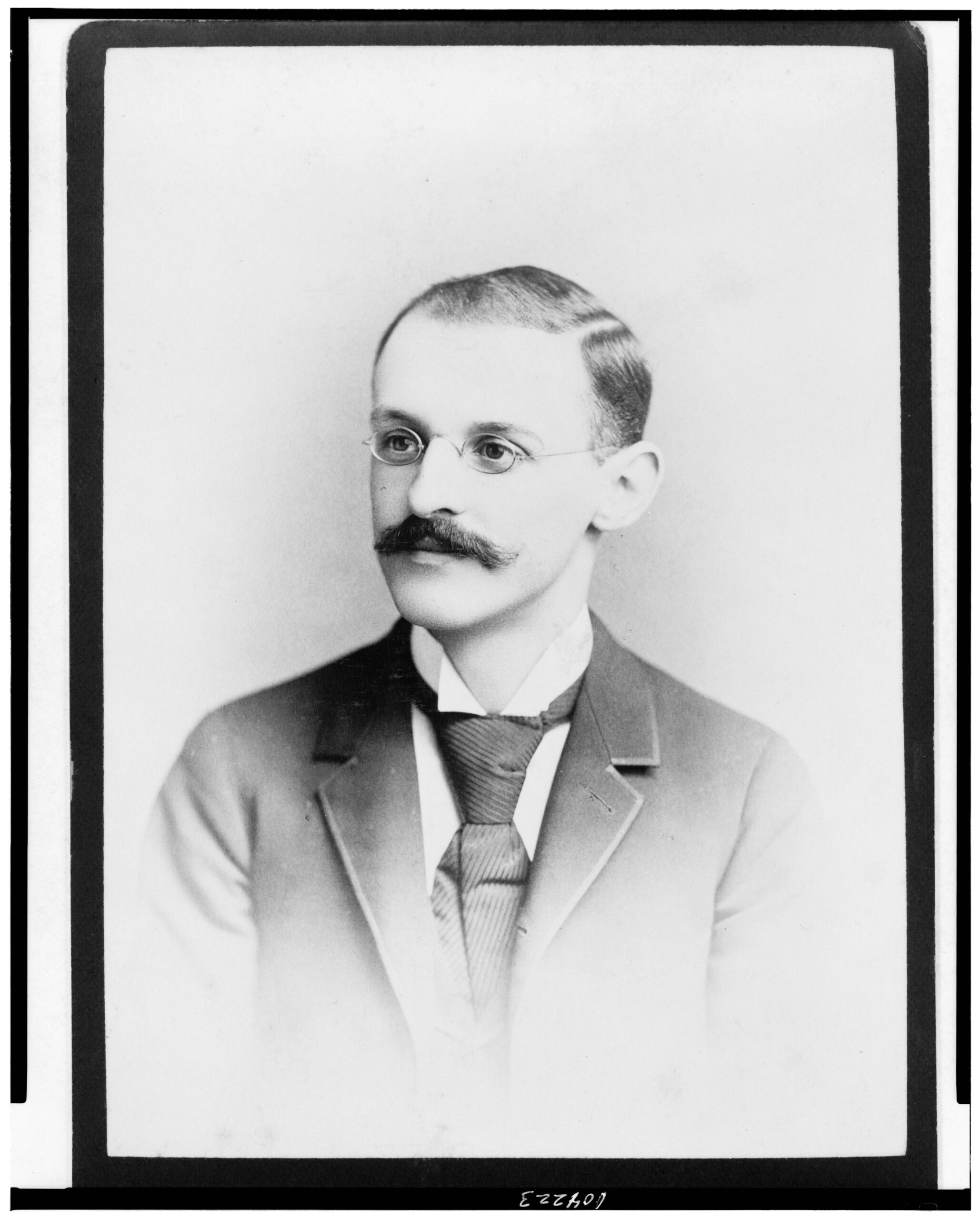
Abraham Flexner was born in Louisville, Kentucky, in 1866, the sixth of nine children of Jewish immigrant parents who could not afford to send most of their sons to college. He became one of the most consequential figures in American education anyway, first as a schoolteacher who ran his own experimental academy in Louisville, then as the author of a 1910 report that reshaped medical education across the country, and finally as the founder of the Institute for Advanced Study in Princeton, the research haven that lured Albert Einstein to the United States.
Flexner never practiced medicine and never held a university professorship of his own, yet he helped close dozens of substandard medical schools, channeled hundreds of millions of philanthropic dollars into higher education, and built an institution designed around the radical idea that scholars needed freedom from teaching, grades, and deadlines to do their best work.
A Louisville Childhood of Modest Means
Flexner’s father, Moritz, was a hat merchant who had immigrated from Bohemia, and his mother, Esther, was a seamstress; the family’s finances never fully recovered from the financial panic of 1873. Abraham attended Louisville Male High School, and rather than spend his free time on typical boyhood pursuits, he read voraciously at the Louisville Library, absorbing the discussions of the city’s intellectual class who gathered there.
With financial help from his older brother Jacob, who ran a Louisville pharmacy, Flexner enrolled at Johns Hopkins University in 1884 at age seventeen. He later called that decision “the turning point in the history of our family.” He completed his bachelor’s degree in classics in just two years, returning to Louisville in 1886 to teach Latin and Greek at his old high school.
Mr. Flexner’s School
In 1890, at the urging of a local attorney seeking better preparation for his son’s college applications, Flexner opened his own private school with five students. Mr. Flexner’s School abandoned nearly every convention of the era’s classrooms.
The school’s unorthodox, individualized approach built Flexner’s reputation as an educational theorist and gave him the financial security to support his brother Simon, who went on to attend Johns Hopkins and eventually became director of the Rockefeller Institute for Medical Research. After nineteen years running the school, Flexner sold it in 1905, writing to his wife that he wanted “to influence in some measure the life of my time in so far as that can be done through education.”
The school operated without rules, without examinations, without records, and without reports.
— Abraham Flexner, describing his Louisville school
The Report That Remade Medical Schools
After earning a master’s degree at Harvard and studying in Berlin, Flexner was recruited by the Carnegie Foundation for the Advancement of Teaching to survey medical education across the United States and Canada. Over sixteen months, following what he called his personal maxim, ambulando discimus, “we learn by going about,” Flexner visited 155 medical schools by horse, buggy, train, and automobile.
His 1910 report, formally titled Medical Education in the United States and Canada, described the state of many schools in blistering terms and concluded that only a fraction were fit to continue operating.
The findings, implemented through Rockefeller Foundation funding that Flexner himself helped direct, hastened the closure of dozens of for-profit “diploma mill” medical schools and pushed the survivors toward university affiliation, laboratory science, and standardized curricula. Physician and writer Hans Zinsser later called Flexner, only half-jokingly, “the father, or better, the uncle of modern medical education in America.”
A Letter to a Fellow Louisvillian
As secretary of the Rockefeller Foundation’s General Education Board from 1913 to 1928, Flexner helped direct more than half a billion dollars toward American universities, including Johns Hopkins, Vanderbilt, Yale, and Howard, transforming physical facilities, laboratories, and faculties across the country.
In 1930, he used an $8 million bequest from department store magnate Louis Bamberger to found the Institute for Advanced Study in Princeton, New Jersey, a research center with no classes, no degrees, and no fixed curriculum.
Recruiting Einstein
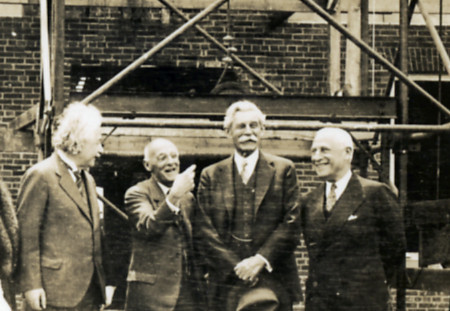
As the Institute’s first director, Flexner personally recruited its earliest and most famous faculty member, Albert Einstein, who arrived in 1933 after fleeing Nazi Germany.
Flexner described his vision for the Institute as “a haven where scholars and scientists may regard the world and its phenomena as their laboratory without being carried off in the maelstrom of the immediate,” a description that captured his lifelong belief that great thinking required freedom from institutional pressure.
A Family of Achievers
Flexner married Anne Crawford, a former pupil at his Louisville school and a Vassar College graduate, in 1898. Anne later found success as a playwright, and the earnings from her Broadway production of Mrs. Wiggs of the Cabbage Patch helped fund Flexner’s graduate studies at Harvard and in Europe.
The couple had two daughters: Jean, an early employee of the federal Division of Labor Standards, and Eleanor, who became a pioneering historian of American women’s rights and labor history.
“I was nothing but an industrious and perhaps intelligent thief, all my ideas having been taken from others and I deserving at most the credit of getting them and putting them together.”
— Abraham Flexner, in his autobiography
Flexner’s success also lifted his siblings. He helped his brother Simon attend Johns Hopkins, where Simon trained as a pathologist before becoming director of the Rockefeller Institute for Medical Research, and he helped his sister Mary attend Bryn Mawr College. What began as one immigrant family’s struggle in Louisville produced, within a single generation, a slate of nationally recognized scientists, scholars, and reformers.
A Modest Reckoning and a Return to Louisville
Flexner retired from the Institute in 1939 and spent his later years writing, including two autobiographies, I Remember and a revised edition published after his death. Despite decades of acclaim, he remained characteristically self-deprecating about his own role in reforming American education.
Flexner died on September 21, 1959, at the age of ninety-two, and was buried beside his wife in Louisville’s Cave Hill Cemetery, in the city where his story, and his family’s transformation from immigrant hardship to national influence, had begun more than ninety years earlier.