Ed Hamilton has spent most of his career sculpting people history tried to leave out of the story. His bronze figures now stand in Washington, D.C., and along Louisville’s own riverfront, giving physical, permanent form to people who for a long time got none at all.
From Painter to Sculptor
Edward Norton Hamilton Jr. was born in Cincinnati in 1947 and raised in Louisville, graduating from Shawnee High School in 1965 before studying at Louisville’s Art Center and later the Louisville School of Art, graduating in 1969. He started out as a painter, not a sculptor, and spent several years teaching art at Iroquois High School while continuing his own training at Spalding University.
A chance meeting changed the direction of his career. Louisville sculptor Barney Bright, known for the city’s Derby Clock and River Horse statue, took Hamilton on as an apprentice, giving him studio space and eight years of hands-on training in the craft of public sculpture, a field Hamilton had never formally studied. That apprenticeship, more than any classroom, taught him how to plan, cast, and install work built to stand outdoors for generations.
The Spirit of Freedom
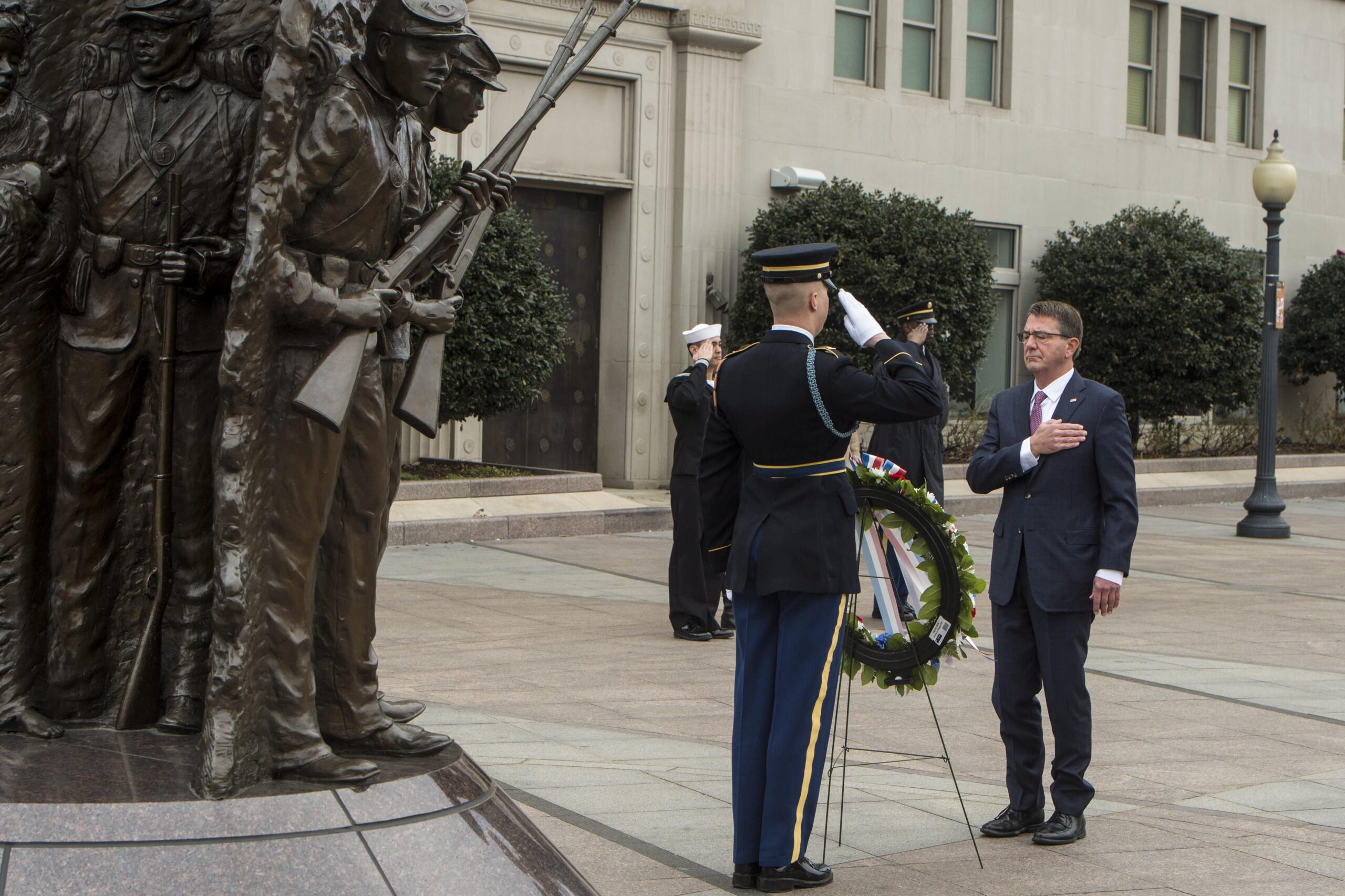
Hamilton’s best-known work, The Spirit of Freedom, memorializes the roughly 209,000 Black soldiers and sailors who served the Union during the Civil War. It stands in Washington, D.C.’s Shaw neighborhood, near Howard University, and remains one of the most significant monuments to Black military service anywhere in the country. Hamilton has said the project required years of historical research before he ever touched clay, a research-first approach that has defined nearly all of his major commissions since.
Bringing the Work Home to Louisville
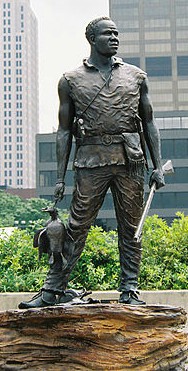
Hamilton has placed several major works in his adopted hometown. His statue of York, the enslaved man who traveled with the Lewis and Clark Expedition, stands on Louisville’s riverfront, giving a long-overlooked figure of the expedition a physical presence in the city he set out from.
In 2009, Hamilton completed a memorial statue of Abraham Lincoln near the Big Four Bridge at Louisville’s Waterfront Park, a piece that shows Lincoln seated and approachable rather than distant and monumental, a deliberate choice on Hamilton’s part.
His other major commissions include monuments to Booker T. Washington and boxer Joe Louis, and a memorial to the enslaved people who revolted aboard the ship La Amistad. Taken together, his body of work forms an alternative monument landscape, one built specifically around subjects that mainstream American public sculpture spent most of its history ignoring.
Recognition at Home
In 2004, both the University of Louisville and Western Kentucky University awarded him honorary doctorates within two days of each other, an unusual double honor for an artist who never finished a traditional art degree. In 2006 he published an autobiography, The Birth of an Artist: A Journey of Discovery, tracing the path from his Shawnee High School art classes to a career defined by monumental public commissions.
Hamilton still lives and works in Louisville, running his own studio and continuing to take on public commissions that, decade after decade, keep finding the people history left standing in the background.