
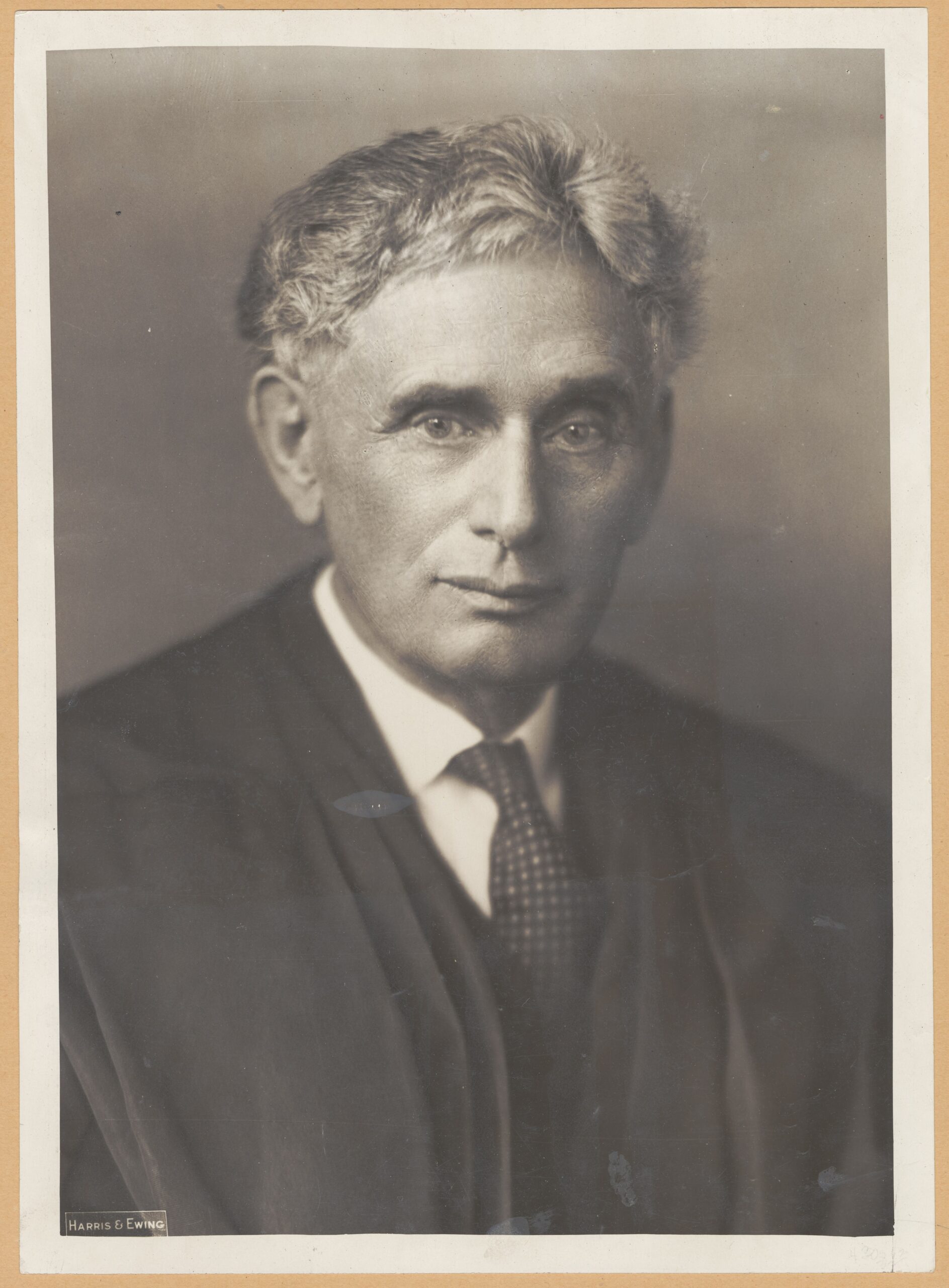
Louis Brandeis was born in Louisville, Kentucky, in 1856 and lived there until he was sixteen, growing up in a house on Broadway with an older brother he adored, a debating society he barely qualified for, and a household staff that remembered him fondly decades later. He went on to become one of the most influential justices in Supreme Court history and, in 1916, the first Jewish American to sit on the nation’s highest court.
Brandeis spent his career fighting concentrated economic power, defending workers’ hours in court, and writing opinions on privacy and free speech still cited today. Kentucky’s oldest law school now carries his name, and he and his wife are buried beneath its portico, a final tie to the city where his life began.
A Louisville Childhood
Brandeis was born on November 13, 1856, to Adolph and Frederika Dembitz Brandeis, Jewish immigrants from Prague who had settled in Louisville so Adolph could open a grain trading firm, Brandeis & Crawford. Louis was the youngest of four children, and the family lived in a home on Broadway where he and his older brother, Alfred, spent much of their boyhood.
He attended the German and English Academy and the Louisville Male School, and by his own account was an unremarkable student in his early years, more interested in neighborhood mischief than scholarship. That changed by his teens, when he was awarded the school’s gold medal for excellence across all his subjects.
Boyhood Stories from Broadway
Decades later, after Brandeis’s Supreme Court nomination made headlines, his longtime secretary Alice Grady traveled to Louisville to interview his childhood friends, cousins, and the family’s former cook for a newspaper feature. The stories that resulted describe a boyhood full of ordinary mischief: fireworks accidents on the back veranda, a straw-man prank gone wrong, and a debating society that took itself far too seriously for boys not yet in their teens.
“I don’t see why I should have to find the source of every damned river in Europe.”
— Louis Brandeis, as a teenager, tired from a mountain hike with his brother Alfred
The same interviews describe a boy devoted to his older brother, quick to fight neighborhood bullies on principle, and, according to family legend, still willing decades later to be teased about a childhood fondness for his sisters’ dollhouse.
At sixteen, Brandeis won the school’s gold medal for excellence and was expected to deliver a brief speech at the graduation ceremony. According to the family’s own account, he was so overcome with stage fright that his voice vanished entirely on the morning of the event, sparing him from having to speak and leaving him free to simply enjoy watching the rest of the program from his seat.
Leaving Louisville for Harvard
In 1872, when Brandeis was sixteen, his family left Louisville for a three-year stay in Europe, where he studied at the Annen-Realschule in Dresden, Germany, mastering an unfamiliar school system entirely on his own after arriving without his family. He returned to the United States in 1875 and entered Harvard Law School the same year, not yet nineteen years old.
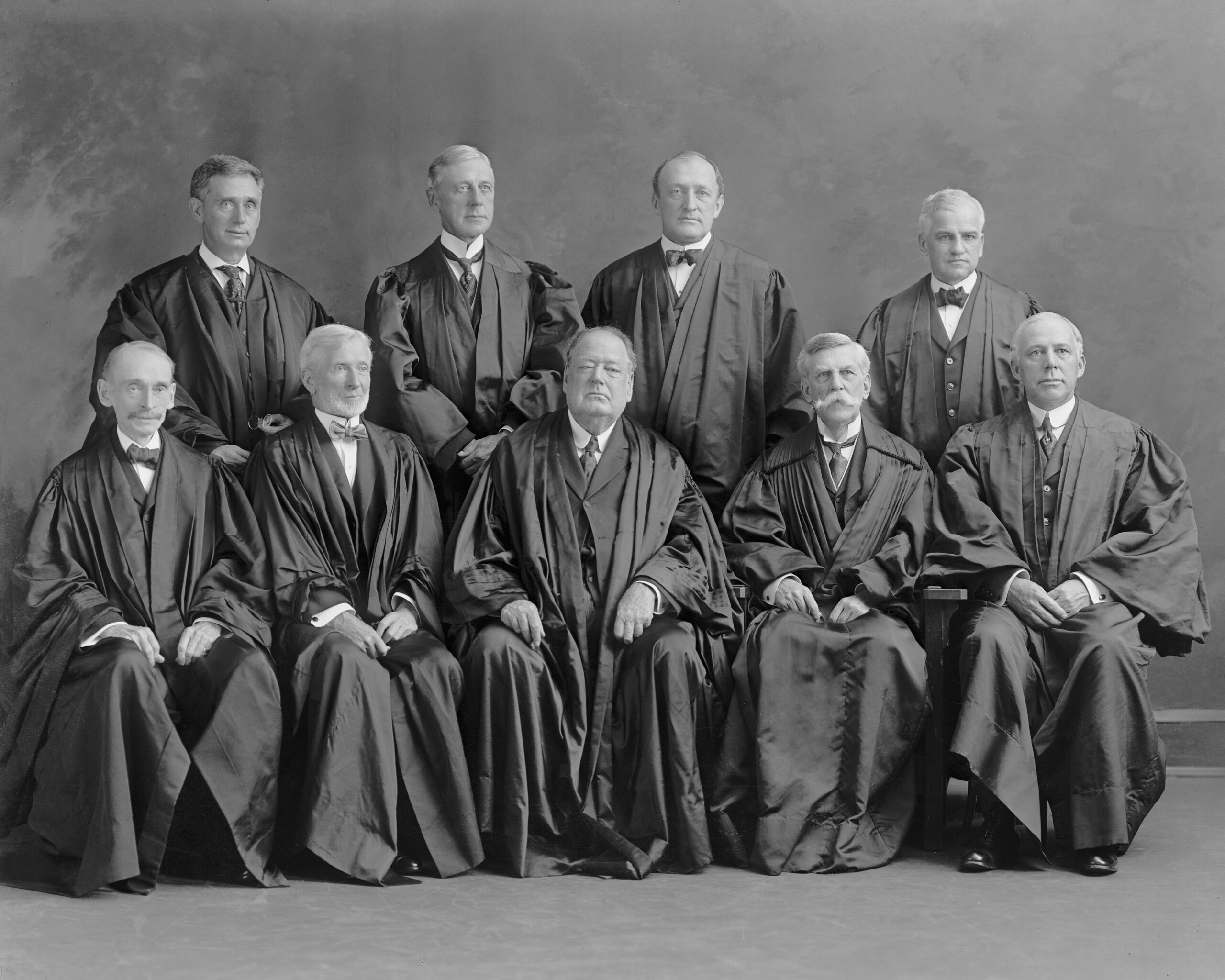
Brandeis graduated in 1877 with the highest grade average in the law school’s history to that point, and remained closely tied to Harvard as a founder of the Harvard Law Review and its student association before beginning a private practice in Boston.
The People’s Attorney
Brandeis built a reputation in Boston as a lawyer willing to take on cases without a fee when he believed the public interest was at stake, earning him the nickname “the People’s Attorney.” His 1908 defense of an Oregon law limiting women’s working hours, Muller v. Oregon, introduced the “Brandeis Brief,” a legal filing built around social science and economic data rather than legal precedent alone, a method that reshaped how courts weighed public welfare arguments and remains a standard tool of constitutional litigation today.
He also became a leading voice in the Progressive Era’s fight against concentrated corporate and financial power, publishing widely on antitrust policy, banking reform, and the dangers of what he called “the curse of bigness.” His 1914 book, Other People’s Money and How the Bankers Use It, argued that concentrated financial control threatened both economic competition and democratic self-government, and it remained influential in debates over financial regulation for decades afterward.
A Landmark Nomination
In 1916, President Woodrow Wilson nominated Brandeis to the Supreme Court, setting off one of the most contentious confirmation fights in the Court’s history, driven in part by open antisemitism among his critics. The Senate confirmed him on June 1, 1916, by a vote of 47 to 22, making him the first Jewish justice in the Court’s history.
“Publicity is justly commended as a remedy for social and industrial diseases. Sunlight is said to be the best of disinfectants; electric light the most efficient policeman.”
— Louis Brandeis, “What Publicity Can Do,” Harper’s Weekly, 1913
On the bench, Brandeis became known for opinions defending free expression, privacy, and the autonomy of individual states, memorably describing “the right to be let alone” as “the most comprehensive of rights, and the right most valued by civilized men” in his dissent in Olmstead v. United States.
Marriage and a Late-Blooming Zionism
In 1891, Brandeis married Alice Goldmark of New York, a distant cousin, and the couple had two daughters, Susan and Elizabeth. Relatively late in his career, in his mid-fifties, Brandeis became a committed advocate for Zionism, eventually leading the Provisional Executive Committee for General Zionist Affairs in the United States and arguing that support for a Jewish homeland was fully compatible with American patriotism.
He argued that the Jewish people’s historic experience of self-government and communal responsibility made the Zionist cause a natural extension of the same democratic ideals he had spent his legal career defending in American courts, a position that surprised many colleagues who had known him mainly as a secular reformer.
Namesake of a Louisville Law School
Brandeis served on the Court until his retirement in 1939, at age eighty-two, and died on October 5, 1941, at his home in Washington. In 1997, the University of Louisville’s law school, Kentucky’s oldest and the nation’s fifth-oldest in continuous operation, was renamed the Louis D. Brandeis School of Law in his honor, following an effort led by then-dean Don Burnett.
Brandeis had donated his personal library and papers to the school during his lifetime and helped arrange for it to receive original Supreme Court briefs. He and his wife, Alice, are buried beneath the school’s portico, fulfilling what the school describes as his wish to remain permanently connected to the Kentucky city where his story began.