
Mary T. Meagher swam the 100- and 200-meter butterfly so far ahead of her competition in 1981 that her world records stood for nearly two decades, a gap so unusual in a sport measured in hundredths of a second that swimmers still refer to her as one of the greatest butterfly specialists ever to compete. She did it as a teenager from Louisville, Kentucky, the tenth of eleven children in a family that measured achievement in fractions of a second and never made much fuss about it at home.
The Youngest of Eleven
Mary Terstegge Meagher was born October 27, 1964, in Louisville, the tenth of eleven children of James L. Meagher Jr. and Floy Terstegge Meagher. Her father had lettered twice in basketball at Notre Dame, and the household was large and athletic by default, with that many siblings cycling through local pools, courts, and fields. Meagher started competitive swimming young, training with the Lakeside Swim Club in Louisville under coaches who quickly noticed that her stroke technique, particularly her feel for the butterfly, was unusual for her age.
She set her first world record at just 14 years old, in the 200-meter butterfly at the 1979 Pan American Games, announcing herself to international swimming before most of her competitors had finished high school.
Her nickname within swimming circles, “Madame Butterfly,” followed almost immediately, a reflection of how completely she had claimed the stroke as her own at an age when most swimmers are still finding their best event. Coaches who worked with her in Louisville described a stroke technique that looked effortless compared to competitors who visibly strained to keep pace, a smoothness that let her hold speed later into races than swimmers who had gone out faster.
Records That Would Not Fall
In 1981, at 16, Meagher set world records in both butterfly events that reshaped how the sport understood the distance. Her 100-meter butterfly time of 57.93 seconds and her 200-meter butterfly time of 2:05.96 were not just fast for the era, they were fast enough to remain unbeaten for 18 and 19 years respectively, a span long enough that swimmers who eventually broke them had been in diapers when Meagher set them. Sports historians and swimming analysts have since ranked those two swims among the greatest individual performances in the sport’s history, not because of how they compared to the field at the time, but because of how long they held up against swimmers who trained with better equipment, better nutrition science, and better pools.
To put the longevity in context, Meagher’s 200-meter butterfly record outlasted multiple full generations of Olympic swimmers. Athletes who eventually broke her marks in the late 1990s and early 2000s were children, in some cases not yet born, when she swam those times in 1981. Swimming analysts have periodically revisited the performances using contemporary rankings systems that adjust for changing pool technology and suit design, and Meagher’s swims continue to place among the highest-rated in the sport’s history under those adjusted metrics, not just the raw clock.
I don’t think people realize how far ahead of her time she really was.
— commentary on Meagher’s 1981 world records, widely echoed in retrospective swimming coverage
A Boycott, Then Los Angeles
Meagher’s records came in 1981, but the Olympics where she might have first showcased them, the 1980 Moscow Games, were boycotted by the United States over the Soviet invasion of Afghanistan, keeping her off the biggest stage at what would have been her physical peak for that cycle. She had to wait until the 1984 Los Angeles Olympics for her Olympic debut, four years after her rise to world-record status.
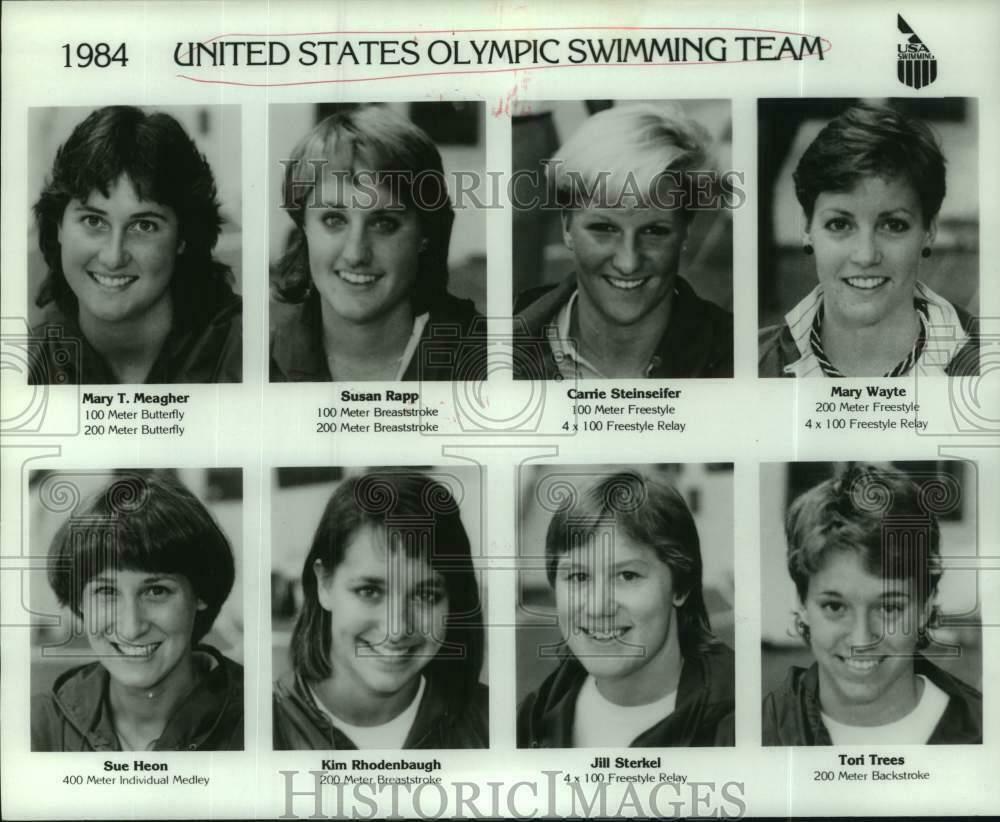
The wait paid off. At the 1984 Games, Meagher won gold in the 100-meter butterfly, gold in the 200-meter butterfly, and a third gold as part of the 4×100-meter medley relay, swimming the butterfly leg. She followed that with two more Olympic medals at the 1988 Seoul Games, a silver and a bronze, giving her five Olympic medals across two Games and three golds in an event she had already redefined years earlier.
A Career Measured in Titles
Beyond the Olympics, Meagher’s career included nine world championship medals and 24 national swimming titles across her competitive years, a volume of hardware that reflected consistent dominance rather than a single standout meet. She competed for the University of California, Berkeley, adding NCAA-level competition to an amateur career that had already made her one of the most recognizable names in American swimming.
That combination of collegiate and international success was not the norm for elite swimmers of her generation, many of whom either turned professional-adjacent through endorsement opportunities or scaled back competitive intensity once they enrolled in school. Meagher balanced Cal’s demanding program with a national and international competition schedule for years, a workload that later swimmers and coaches cited as part of what made her longevity at the top of the sport so unusual.
Meagher was inducted into the International Swimming Hall of Fame and USA Swimming’s Hall of Fame, recognitions that placed her among the sport’s permanent elite rather than a single-Olympics story. Her records’ longevity, in particular, became a recurring reference point in swimming journalism whenever a new generation of butterfly swimmers approached her marks, with writers repeatedly noting how many Olympic cycles had passed since a 16-year-old from Louisville set the bar.
A Pool Named for Her
Louisville named the Mary T. Meagher Aquatic Center, in the city’s Crescent Hill neighborhood, in her honor, a public facility that trains the next generation of Louisville swimmers under the name of the city’s most decorated one. Local coverage marking anniversaries of her career has consistently returned to the same theme: a swimmer who set records so far ahead of the competition that the sport spent two decades trying to catch up to a teenager from Kentucky.
Meagher has remained connected to Louisville and to swimming in the years since her competitive retirement, appearing at local events and giving interviews around anniversaries of her Olympic performances and world records. She has generally deflected the framing of herself as an untouchable legend, crediting her Lakeside Swim Club coaches and her large, sports-oriented family for the discipline that built her career, even as the broader swimming world continued to treat her 1981 times as a kind of high-water mark against which later butterfly swimmers measured themselves.
Sources and further reading
- Biographical details and record history — the USA Swimming Hall of Fame, Wikipedia, and Olympics.com
- 1981 world record longevity and analysis — Sports Illustrated’s “The Cal 100” retrospective and Kentucky Monthly’s “Butterfly, Reinvented”
- 1984 and 1988 Olympic results — Olympics.com and encyclopedia.com
- Mary T. Meagher Aquatic Center naming and Louisville legacy — LOUtoday’s “Meet Louisville’s greatest swimmer” and louisville.com