
Patty Smith Hill is best known outside Louisville as half of the sister act behind “Happy Birthday to You,” the words to match Mildred Hill’s melody. But that song was a byproduct of Patty’s real life’s work: she was one of the most influential early-childhood educators in American history, a founder of the field now called early childhood education, and the first president of the organization that became the National Association for the Education of Young Children.
Born just outside Louisville in 1868, Hill spent decades reshaping how American children were taught, replacing rigid, desk-bound kindergarten drills with play, free movement, and child-led learning. Much of what looks unremarkable in a kindergarten classroom today — painting easels, building blocks, nap time, snack time — traces back to methods she pioneered first in Louisville and later at Columbia University.

A Minister’s Daughter Near Louisville
Patty Smith Hill was born March 27, 1868, in Anchorage, Kentucky, just outside Louisville, to the Reverend William Wallace Hill and Martha Jane Smith Hill. Her father, a Presbyterian minister and Princeton graduate, founded the Bellewood Female Seminary and believed strongly that women deserved economic independence.
My father had a horror of girls marrying ‘just for a home,’ and he said that the only way to avoid this catastrophe was to prepare every young woman to ‘stand on her own feet’ economically.
— Patty Smith Hill, 1927
“This was a radical thing everywhere fifty years ago, particularly in the South,” Hill recalled in a 1927 interview, describing how she and her five siblings were all expected to plan a vocation from an early age. Her mother, Martha, was a writer for the Louisville Courier-Journal who had been privately tutored to college level but denied a formal degree because of her sex — and who raised her children on a philosophy of unstructured, joyful play.
“My mother’s philosophy of life was a happy one,” Hill said in 1925. “She said children should have every pleasure that there was not some good reason that they should not have… We children each had our own small garden. We were also allowed to play with hammer and nails.” That freedom to build, dig, and experiment shaped everything Hill later brought into the kindergarten classroom.
Louisville’s Experimental Kindergarten
Hill graduated from the Louisville Collegiate Institute in 1887 and immediately enrolled at the newly opened Louisville Kindergarten Training School, run by Anna Bryan, one of the first American educators to challenge the rigid, symbol-heavy kindergarten system designed decades earlier by German educator Friedrich Froebel.
When Bryan left to study with philosopher John Dewey in Chicago, Hill took over as principal of the Louisville Experimental Kindergarten School. In 1893, she mounted an exhibit on her new kindergarten methods at the Chicago World’s Fair, drawing national attention to Louisville as a center of progressive early-childhood education.
Bryan had encouraged Hill to interpret Froebel’s ideas freely rather than follow them by rote, and by the early 1900s the two women’s work had made Louisville a nationally watched laboratory for early-childhood teaching methods — years before Hill ever set foot at Columbia.
Good Morning to All, and a Party at the Little Loomhouse
It was at that same Louisville kindergarten that Patty and her older sister Mildred, a composer, wrote a simple morning greeting song for their students in 1893. Mildred wrote the melody; Patty wrote the words, “Good Morning to All,” published that year in Song Stories for the Kindergarten, a book that went through more than twenty editions and was translated into seven languages.
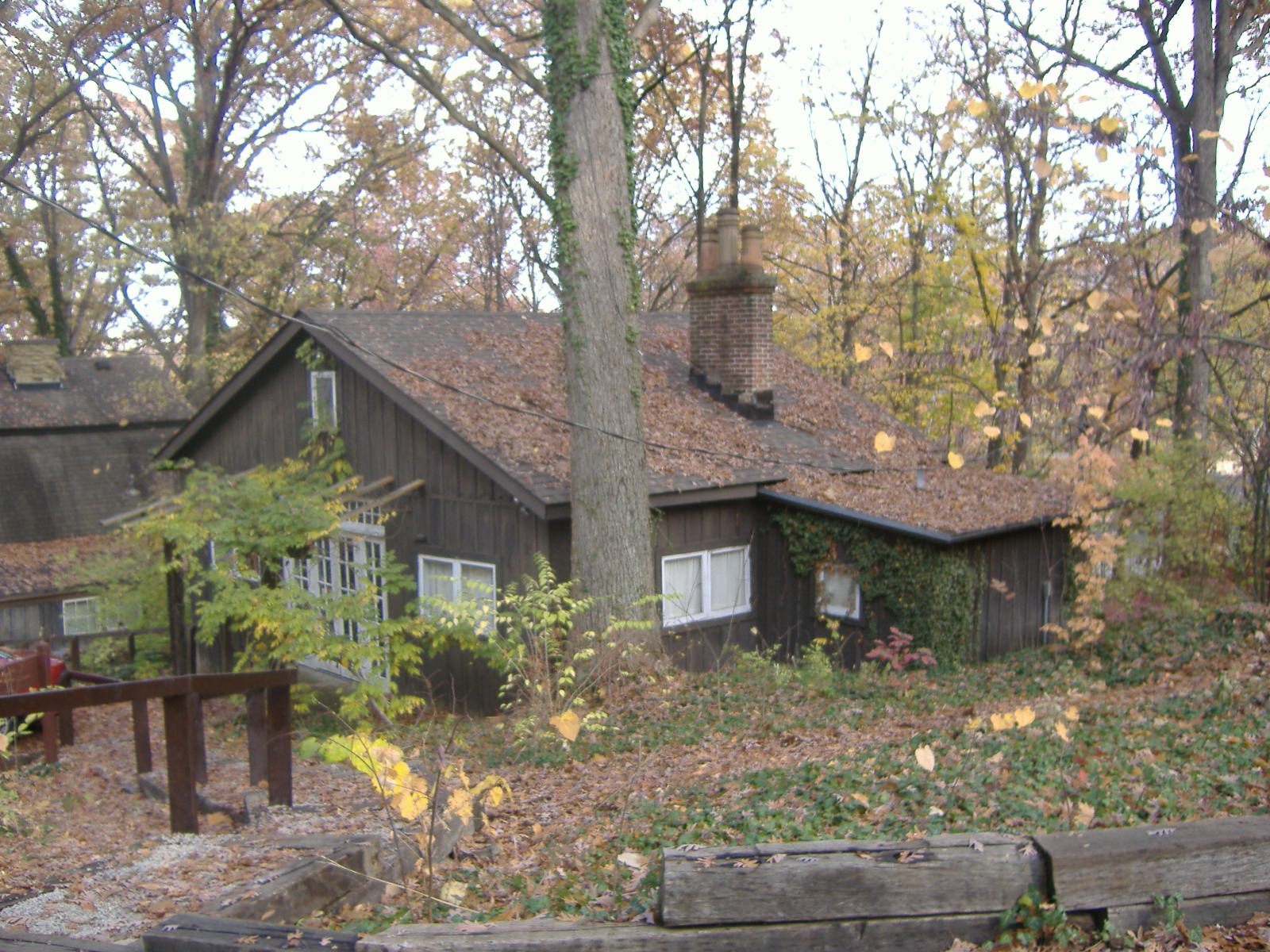
According to a Kentucky Historical Society marker dedicated in 2009, the new lyrics were born during a birthday party at a cabin on the sisters’ Kenwood Hill property, now part of Louisville’s Little Loomhouse historic site, when Patty suggested changing the words to “Happy Birthday to You.” The song appeared in print with the new lyrics in 1912, uncredited, and it would take copyright battles decades later to establish the sisters as its authors.
From Louisville to Columbia
Hill’s work in Louisville caught the attention of two of the era’s most influential thinkers: psychologist G. Stanley Hall, who invited her to study child development at Clark University, and John Dewey, who brought her to the University of Chicago. In 1906, Columbia University’s Teachers College recruited her to a full-time faculty position.
Concentration inspired by enthusiasm for a job.
— Patty Smith Hill, describing how children learn best, 1927
At Teachers College, Hill was given an experimental playroom at the Speyer School to test her methods on children with no prior kindergarten experience. There she invented the oversized building blocks now known as Patty Hill blocks — “much larger, some being a yard in length, and made of heavier wood, in order to call into use the large fundamental muscles of the child’s whole body,” as she described them, designed so that moving them required children to cooperate.
By 1910 Hill headed a new kindergarten department at Columbia, overseeing the experimental Horace Mann Kindergarten. She became a full professor and head of the Department of Kindergarten Education by 1922, having spent nearly three decades turning her Louisville classroom experiments into the foundation of a national profession.
Building a Profession
Hill became president of the International Kindergarten Union in 1908 and, in 1913, authored one of three competing philosophical reports commissioned by its Committee of Nineteen, staking out the child-led, Dewey-influenced position against more traditional Froebelian methods. The debate helped define early-childhood education as a distinct academic field.
In 1926, Hill founded and became the first president of the National Association for Nursery Education — the organization that, decades later, became the National Association for the Education of Young Children (NAEYC), still the leading professional body in the field. Columbia awarded her an honorary doctorate in 1929.
Hill’s commitment to poor and immigrant families ran through her whole career. She had witnessed child labor, malnutrition, and high child mortality firsthand working with impoverished families in the Reconstruction-era South, and it left her with a lifelong belief that self-directed play and early education could help children overcome poverty’s worst effects.
The Manhattanville Project and a Final Chapter
During the Great Depression, Hill worked with the federal government’s Emergency Nursery Schools program and organized the Manhattanville Project, a collaboration among Teachers College and several New York seminaries to bring health care, teacher training, and childhood programs to a struggling Manhattan neighborhood.
After retiring from Columbia in 1935, Hill used donated space and furniture to found the Hilltop Community Center, serving children from low-income families near the campus where she had spent her career. She never married, and she continued lecturing and advising on child welfare until her death in New York on May 25, 1946, at age 78.
Hill was returned to Louisville and buried beside Mildred in Cave Hill Cemetery. The sisters were posthumously inducted together into the Songwriters Hall of Fame on June 12, 1996 — a strange coda for a woman whose actual legacy is written into nearly every kindergarten classroom in the country, in blocks, easels, and playtime she fought to make part of American childhood.