
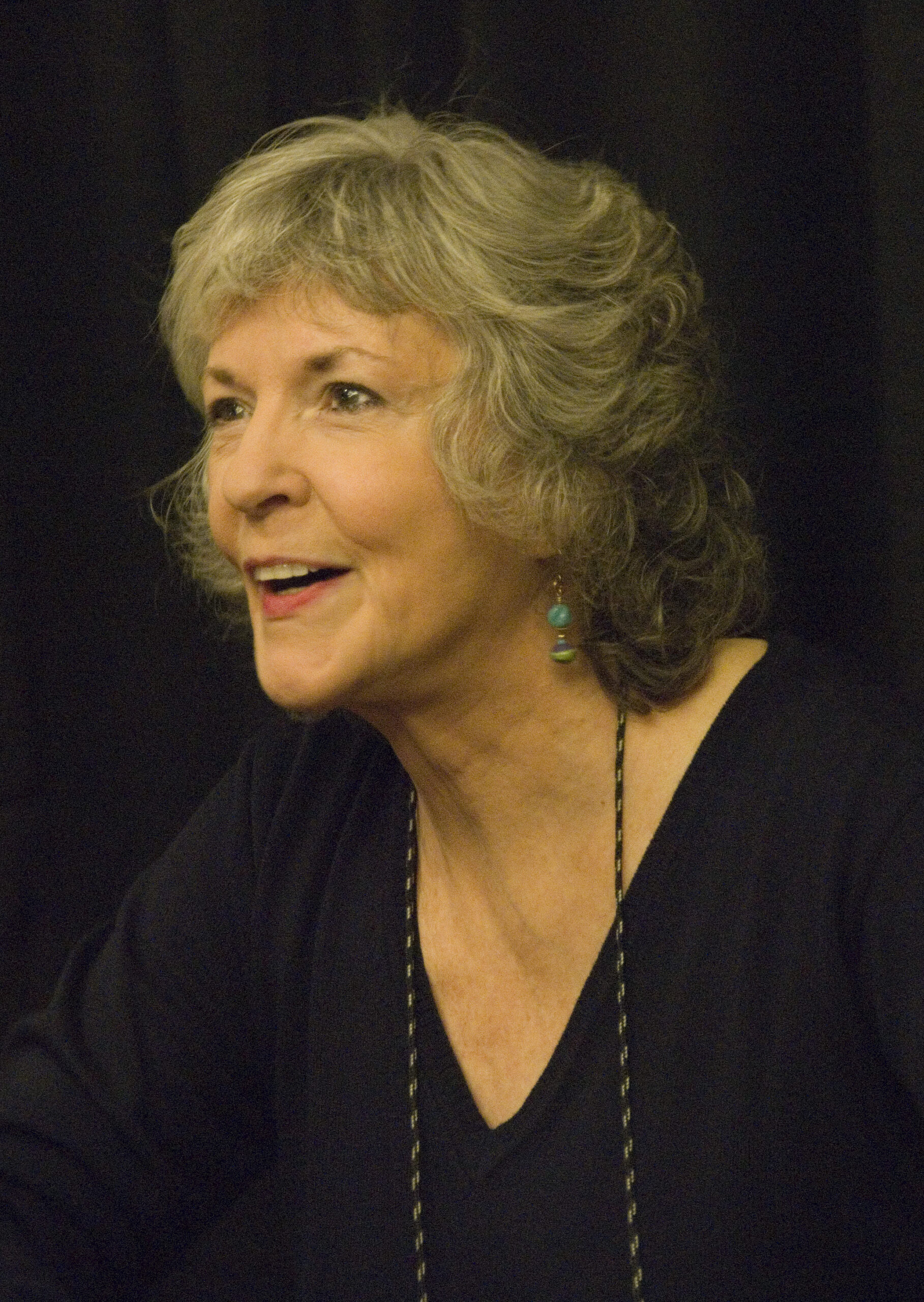
Sue Grafton spent her first twenty-one years in Louisville, Kentucky — and kept coming back for the rest of her life. Born there in 1940 to a municipal bond attorney who moonlighted as a mystery novelist, Grafton went on to become one of the best-selling crime writers in American history, famous for the “alphabet series” that ran from “A” Is for Alibi to “Y” Is for Yesterday. Decades after she left for California, she and her husband bought back a piece of the city, restoring a historic Louisville estate they split their time in for the rest of her life.
“Because of him, I not only became a writer, but I developed a real passion for the mystery genre,” Grafton wrote of her father, C.W. Grafton, in a 1993 essay. Her childhood in Louisville was not an easy one, and she often said it shaped both her fiction and her fierce independence. “From the age of five onward,” she said, “I was left to raise myself.”
A Louisville Childhood, Interrupted
Sue Taylor Grafton was born April 24, 1940, in Louisville, to Cornelius Warren “C.W.” Grafton, a municipal bond lawyer and part-time mystery novelist, and Vivian Harnsberger, a former high school chemistry teacher. Both of her parents were themselves children of Presbyterian missionaries, and both loved detective fiction — a passion they passed on to their two daughters, Ann and Sue.
Her father enlisted in the Army when Sue was three and did not return until she was five. “While I was growing up, he often talked about his love of crime fiction and his passion for writing,” Grafton later told novelist Kym Roberts. But the postwar years were harder. Both of her parents became alcoholics, and home life in Louisville unraveled.
“That’s when life started to fall apart at home,” Grafton told The Wall Street Journal in 2017. “My father would start his day with two jiggers of whiskey and he’d polish off a fifth by day’s end. Yet he practiced law without a flaw.” She later summed up her childhood bluntly: “From the age of five onward, I was left to raise myself.”
Atherton High, and On to the University of Louisville
Grafton and her older sister grew up in Louisville, where Sue attended Atherton High School. Her parents, for all their troubles, encouraged reading without restriction; her mother would bring home used paperbacks and label each one “dirty,” “dull,” or “good,” letting her daughters pick freely from the pile.
She spent her first year of college at the University of Louisville, then two years at Western Kentucky State Teachers College, before returning to graduate from the University of Louisville in 1961 with a degree in English literature. She was a member of the Pi Beta Phi sorority. That same year, her mother died of an overdose of barbiturates after a losing battle with esophageal cancer — on Sue’s twentieth birthday.
Her Father’s Daughter
After graduating, Grafton worked as a hospital admissions clerk, a cashier, and a medical secretary in Santa Monica and Santa Barbara, California — but writing was never far from her mind. Her father had groomed her for it since childhood, teaching her lessons on editing and structure at the family home.
“Keep it simple… pay attention to the basics. Most of all, he stressed transitions.”
— Sue Grafton, recalling her father’s advice, 1995
“My father always used to tell me, ‘Keep it simple,’” Grafton told a Worcester, Massachusetts newspaper in 1995. “He would say spell correctly, use proper punctuation, pay attention to the basics. Most of all, he stressed transitions.” Inspired, she began writing at eighteen and finished her first novel four years later — the first of seven she would write before finding real success.
Seven Novels, Two Published, Then Hollywood
Only two of Grafton’s early novels were published: Keziah Dane in 1967 and The Lolly-Madonna War in 1969. She later destroyed the manuscripts of the five that were rejected. The Lolly-Madonna War sold to Hollywood, and Grafton co-wrote its 1973 film adaptation, released as Lolly-Madonna XXX and starring Rod Steiger and Jeff Bridges.
Unable to sustain a fiction career, Grafton turned to television screenwriting for the next fifteen years, writing TV movies including Sex and the Single Parent and Nurse, and earning a Christopher Award in 1979 for Walking Through the Fire. With her third husband, Steven Humphrey, she adapted two Agatha Christie novels for television.
A Custody Battle That Became a Plot
Grafton married three times: first at eighteen, to James L. Flood, divorced by 1961; second to Al Schmidt, a marriage that ended in what she called a “bitter divorce and custody battle that lasted six long years” over their daughter. During that fight, she later admitted, she found herself imagining ways to kill or maim her ex-husband.
The fantasies were so vivid, she decided to write them down.
— from Sue Grafton’s account of her second divorce
Those dark daydreams became a kind of writing exercise, and Grafton credited the ordeal with pushing her back toward crime fiction after years away from it. She married her third husband, Steven Humphrey, in 1978; the marriage lasted the rest of her life.
The Alphabet Begins
Her screenwriting years taught Grafton the mechanics of plot and dialogue, and by the early 1980s she felt ready to return to novels. She had long admired mystery series with linked titles — John D. MacDonald’s color-coded Travis McGee books, Harry Kemelman’s day-of-the-week Rabbi Small series — and after reading Edward Gorey’s alphabet picture book The Gashlycrumb Tinies, she decided to build a series around the alphabet itself.
She sat down and listed every crime-related word she knew. The result was Kinsey Millhone, a private investigator in the fictional California city of Santa Teresa — a stand-in for Santa Barbara borrowed from novelist Ross Macdonald. “A” Is for Alibi was published in 1982, the same year Sara Paretsky introduced her own hard-boiled heroine, V.I. Warshawski. Of another pioneering female private-eye novelist, Marcia Muller, Grafton wrote: “Marcia Muller is the founding ‘mother’ of the contemporary female hard-boiled private eye.”
Kinsey Millhone Becomes a Household Name
The alphabet series grew steadily. After 1990’s “G” Is for Gumshoe, Grafton was finally able to quit screenwriting and write novels full time. Her books, described by scholars Natalie Hevener Kaufman and Carol McGinnis Kay as “laconic, breezy, wise-cracking,” spent an aggregate of roughly 400 weeks on The New York Times Best Seller list, with 1995’s “L” Is for Lawless debuting at number one.
Grafton refused to sell the film or television rights to the series — her years in Hollywood, she said, had “cured” her of wanting to work with the industry again — and reportedly told her children her ghost would haunt them if they ever sold the rights after her death. She won the Mystery Writers of America’s Edgar Grand Master Award in 2009 and the Crime Writers’ Association’s Diamond Dagger in 2008, among dozens of other honors.
Home Was Always Partly Louisville
Even as Kinsey Millhone made her Santa Barbara stand-in famous, Grafton never fully left Louisville. She and Steven Humphrey, who taught at universities in both cities, split their time between Santa Barbara and Kentucky for decades. In 2000, the couple bought Lincliff, a 28-acre Louisville estate once owned by hardware baron William Richardson Belknap, and spent years restoring it.
The person I might have been had I not married young and had children.
— Sue Grafton, describing her alter ego, Kinsey Millhone
Grafton described Kinsey Millhone as exactly that kind of alter ego — the unmarried, childless, independent woman she might have become had her own life gone differently. It was a life she nonetheless built between two places, one of them the Kentucky city where she was born and raised.
The Alphabet Ends at Y
In 2009, Grafton told an interviewer she was “just trying to figure out how to get from ‘U’ is for Undertow to ‘Z’ Is for Zero.” She never made it. Grafton died in Santa Barbara on December 28, 2017, after a two-year battle with cancer of the appendix, four months after publishing “Y” Is for Yesterday.
Grafton had always refused to let a ghostwriter continue the series in her name. Her daughter confirmed the family’s decision: “As far as we in the family are concerned, the alphabet now ends at Y.” In 2019, publisher G.P. Putnam’s Sons established the Sue Grafton Memorial Award under the Mystery Writers of America in her honor.
Grafton’s novels have been published in 28 countries and 26 languages, and Kinsey Millhone remains one of the most influential private investigators in American crime fiction. But in Louisville, where her father once dictated his own mysteries to law-office stenographers, she is remembered simply as a hometown writer who never really left — not for good, anyway.