
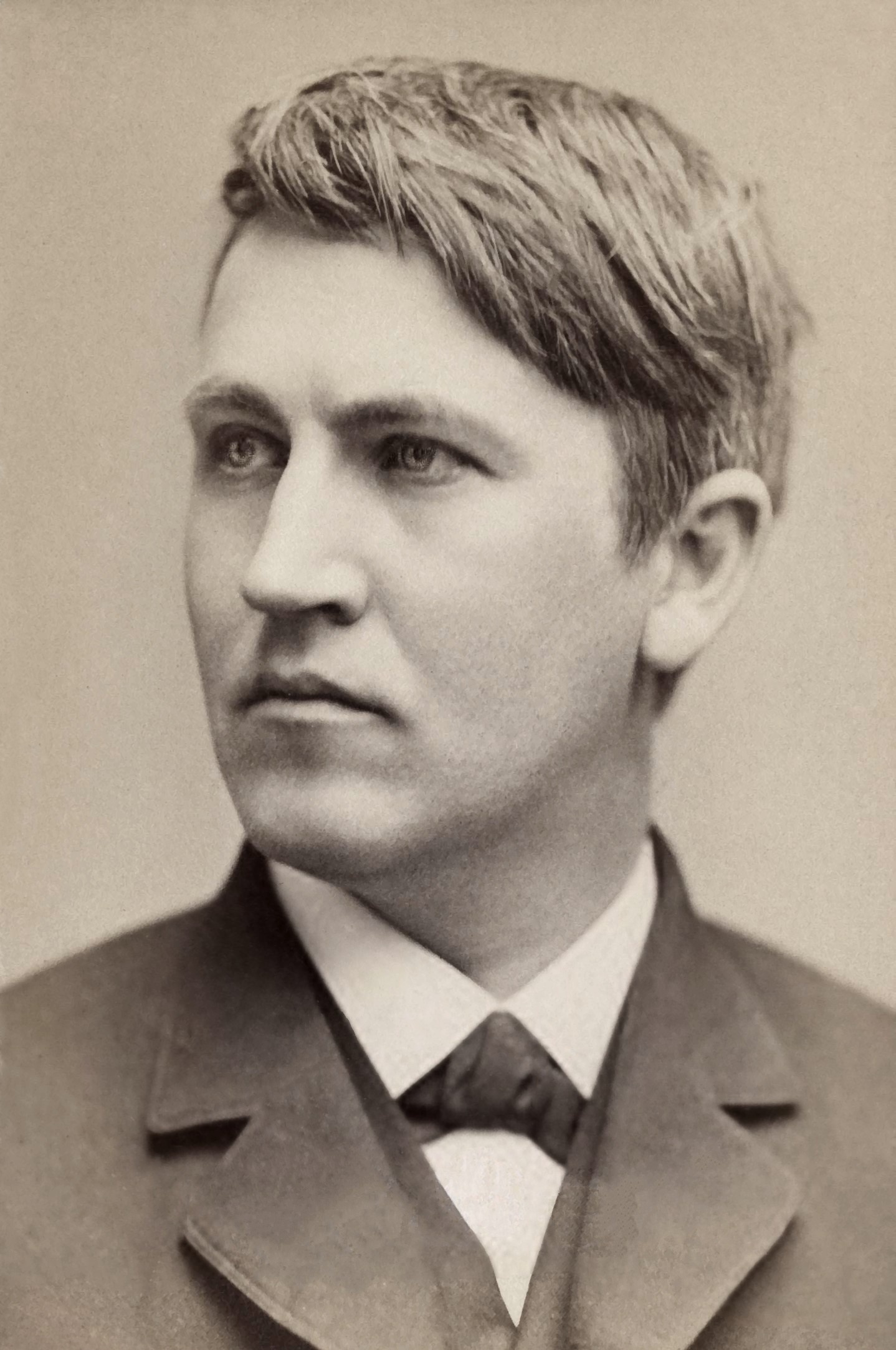
Long before Thomas Edison held a single patent, he was a broke, half-deaf nineteen-year-old telegraph operator wandering the South in search of a job, and in the winter of 1866 that search ended, for a while, in Louisville, Kentucky. He arrived with almost nothing, talked his way into a position with Western Union within hours, and spent roughly two years in the city reading everything he could find, teaching himself the fundamentals of electricity, and getting fired at least once for experimenting on company time.
A Cold Arrival in Kentucky
I arrived at Louisville on a bitterly cold day, with ice in the gutters. I was wearing a linen duster and was not much to look at, but got a position at once, working on a press wire.
— Thomas Edison, recalling his 1866 arrival, quoted in “The Boys’ Life of Edison” by William H. Meadowcroft
Edison had already worked telegraph keys in Indianapolis, Cincinnati, and Memphis by the time he was twenty, bouncing from office to office the way itinerant operators did in the years after the Civil War. A dispute with a superintendent in Memphis left him fired without so much as a train pass, and he made his way north with a traveling companion, nearly starving in Alabama before scraping together enough for passage to Louisville.
Western Union’s Louisville office sat at the southwest corner of Main and Second Streets, and Edison was hired there almost the moment he walked in, a reflection of just how short-handed telegraph offices were in the disorganized years right after the war. He would stay in the city, with interruptions, for roughly two years.
Nights on the Louisville Wire
Edison found lodging in a double shotgun cottage on East Washington Street, in what is now Louisville’s Butchertown neighborhood, and deliberately requested the night shift at the telegraph office. Working after dark meant lighter traffic and, more importantly to Edison, long empty stretches of time between messages that he could spend reading or tinkering with apparatus.
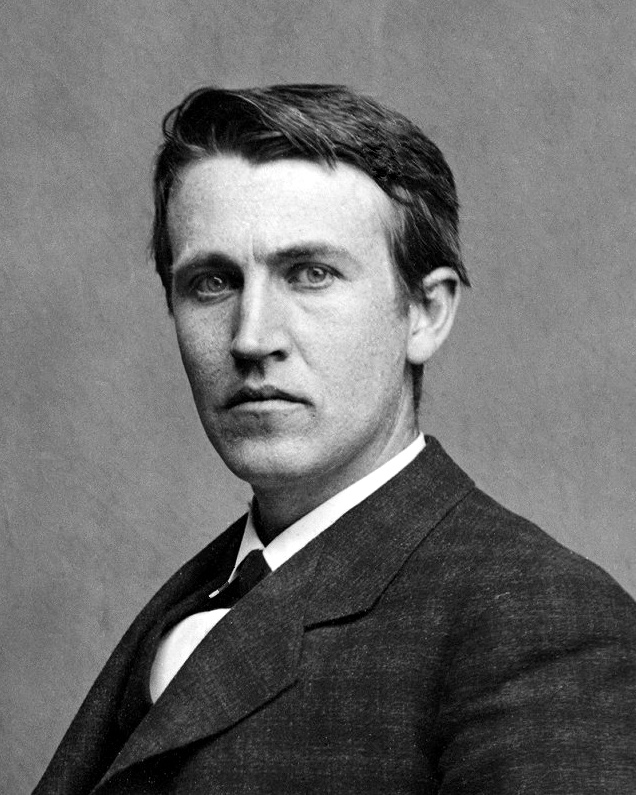
Discipline in the office was loose in those years, and Edison later described a workplace where drunk operators wrecked switchboards, stranded soldiers slept on desks, and a shortage of trained hands meant a nineteen-year-old with a knack for the key could work his way up quickly. Kentucky was, by his own later account, an unusually formative classroom for a young man with almost no formal education.
A Style Born on the Wire
It was in Louisville that Edison developed the distinctive vertical, unadorned handwriting he used for the rest of his life, a direct consequence of the specific, flawed wire he was assigned to work. He later explained the mechanical problem, and his solution to it, in detail.
I developed this style in Louisville while taking press reports. My wire was connected to the ‘blind’ side of a repeater at Cincinnati, so that if I missed a word or sentence, or if the wire worked badly, I could not break in and get the last words, because the Cincinnati man had no instrument by which he could hear me. I had to take what came. … so I started to find the fastest style. I found that the vertical style, with each letter separate and without any flourishes, was the most rapid, and that, the smaller the letter, the greater the rapidity.”
— Thomas Edison, “The Boys’ Life of Edison”
An Education in the Newsroom
Edison’s job put him inside the wire feeding the local press, and he later said the intellectual life of Louisville’s newspaper world left as deep a mark on him as any book. After the paper went to press each night, he would linger to listen to two of the city’s most prominent newsmen argue philosophy over whiskey and crackers.
“I remember the discussions between the celebrated poet and journalist George D. Prentice, then editor of the Courier-Journal, and Mr. Tyler, of the Associated Press. … After the paper had gone to press Prentice would generally come over to Tyler’s office, where I heard them arguing on the immortality of the soul, etc. I asked permission of Mr. Tyler if, after finishing the press matter, I might come in and listen to the conversation, which I did many times after.”
— Thomas Edison, on his nights at the Louisville Courier-Journal, “The Boys’ Life of Edison”
The same newspaper connections fed his voracious reading habit. Louisville reporters let him take home the out-of-town exchange papers each night after deadline, and Edison built an entire education for himself out of what he found in them.
“The newspaper men allowed me to come over, after the paper went to press, at 3 A.M., and get all the exchanges I wanted. These I would take home and lay at the foot of my bed. I never slept more than four or five hours, so that I would awake at nine or ten and read these papers until dinner-time. I thus kept posted, and knew from their activity every member of Congress, and what committees they were on, and all about the topical doings.”
— Thomas Edison, “The Boys’ Life of Edison”
Fired for Curiosity
Edison’s habit of experimenting on company equipment, strictly against Western Union’s rules, eventually cost him his Louisville job for good. Operators were forbidden from touching batteries and instruments outside their assigned work, a rule Edison treated as an inconvenience rather than a boundary.
I went one night into the battery-room to obtain some sulphuric acid… The carboy tipped over, the acid ran out, went through to the manager’s room below, and ate up his desk and all the carpet. The next morning I was summoned before him, and told that what the company wanted was operators, not experimenters. I was at liberty to take my pay and get out.
— Thomas Edison, on being fired in Louisville, 1867, “The Boys’ Life of Edison”
From Louisville to Menlo Park
Edison drifted through Cincinnati and Port Huron before landing in Boston and then New York, where his career as an inventor properly began.
Within a decade of leaving Louisville, he had patented an improved stock ticker, developed the quadruplex telegraph capable of sending four messages over a single wire, and, in 1877, introduced the phonograph, the first machine able to record and play back sound.
Two years later, working out of his Menlo Park, New Jersey laboratory, Edison demonstrated a practical incandescent light bulb, an achievement that would define the rest of his career and eventually reshape how the entire country lived after dark, including the city where he had once been fired for spilling acid on his boss’s floor.
A Return to Light the City
Sixteen years after leaving Louisville in disgrace, Edison returned in triumph. The city’s Southern Exposition opened on August 1, 1883, with President Chester A. Arthur presiding, and the Louisville Board of Trade had contracted with Edison’s own company to illuminate it, the largest installation of incandescent lighting attempted anywhere up to that time.
Fifteen dynamos powered roughly 4,600 incandescent lamps across the exposition grounds and another 400 in its Music Hall, letting the fair stay open and lit well into the evening for the first time. More than 770,000 visitors came through in the first eighty-eight days alone, many of them seeing electric light indoors for the first time in their lives, in the same city that had once fired the man responsible for it.
Legacy
The Butchertown cottage where Edison boarded during his Louisville years still stands on East Washington Street. Restored and opened as the Thomas Edison House, it now operates as a small museum holding period phonographs, incandescent lamps, and early motion-picture equipment, telling the story of the two formative, unglamorous years a future giant of American invention spent as an anonymous telegraph operator in Kentucky.
Edison went on to hold more than a thousand U.S. patents and to remake daily life through recorded sound, motion pictures, and electric power, but the reading habits, the rapid handwriting, and the restless tinkering that defined his approach to invention were all sharpened, by his own account, during the nights he spent alone on the Louisville wire.
Sources and further reading
- Sources and further reading: “The Boys’ Life of Edison,” by William H. Meadowcroft, Project Gutenberg
- “The Life of Thomas Edison,” Thomas Edison House
- Thomas Edison House, Kentuckiana Heritage Consortium
- “Did You Know One of the Most Famous Inventors Once Lived in KY?” WBKR, March 29, 2024
- Southern Exposition, Wikipedia
More from Louisville
Edwin Hubble
Another scientist whose formative years in Louisville predate the discoveries he’s remembered for.
Louisville Year-Round: Things to Do Beyond Derby Week
The city Edison passed through as a young telegraph operator, worth exploring well past Derby week.
Historical Timeline of Louisville
See Edison’s 1866 stint in Louisville alongside the rest of the city’s history.