
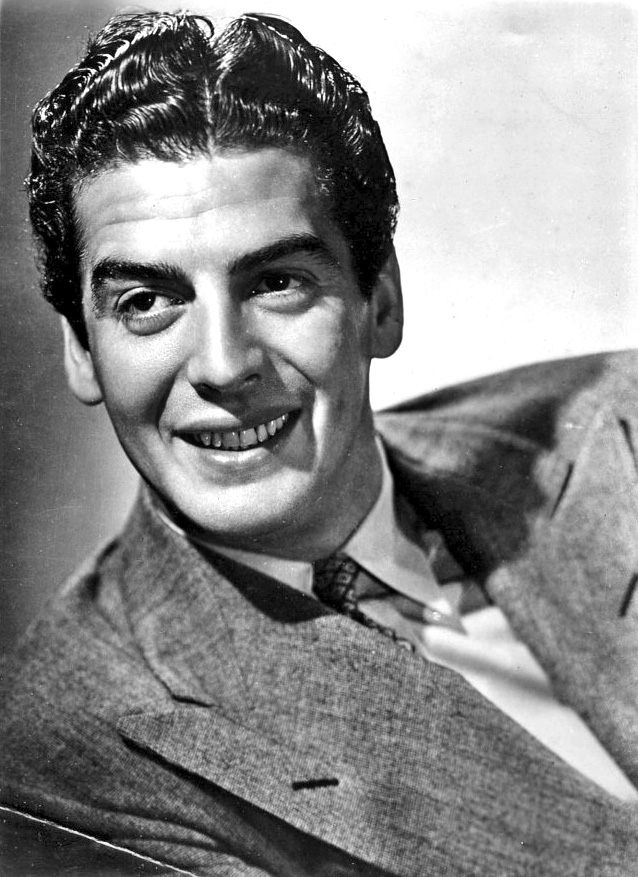
Victor Mature spent decades as one of Hollywood’s biggest box-office draws while cheerfully insisting he was not really an actor at all. Born in Louisville in 1913 to a knife sharpener who had emigrated from the Italian Alps, Mature built a career on sheer physical presence, headlining biblical epics and film noirs through the 1940s and 1950s before walking away from the business at the height of his earning power, unbothered by critics who never took him seriously and content to let the box-office numbers make his case for him.
A Knife Sharpener’s Son in Louisville
Victor John Mature was born January 29, 1913, in Louisville, Kentucky. His father, Marcello Gelindo Maturi, later anglicized to Marcellus George Mature, was a cutler and knife sharpener who had emigrated from Pinzolo, in the Italian-speaking part of the former County of Tyrol. His mother, Clara Ackley, was Kentucky-born and of Swiss heritage. The combination gave Mature an unusual look for a Depression-era Kentucky kid, dark, broad-shouldered, and strikingly handsome, that Hollywood would later market aggressively.
He attended St. Xavier High School in Louisville, then the Kentucky Military Institute, and finally the Spencerian Business School, a commercial college that trained students for office and clerical work rather than the arts. Before acting entered the picture, Mature tried his hand at more conventional trades, briefly selling candy and operating a small restaurant, ordinary jobs for a young man with no clear indication yet that he would spend his life in front of a camera.
That changed when Mature left Kentucky for California in the early 1930s and enrolled at the Pasadena Community Playhouse, a training ground that had already produced or would go on to produce a number of future Hollywood names. It was there, acting in a stage production of To Quito and Back, that he was spotted by Charles R. Rogers, an agent working for producer Hal Roach, setting in motion the deal that would bring him to the movies.
Pasadena to Hollywood
Mature’s film career began in 1939 and accelerated quickly. His breakout role came the following year in Hal Roach’s caveman adventure One Million B.C. (1940), a film that traded on his physique as much as any dialogue, establishing the template, oversized spectacle built around Mature’s presence, that would define much of his career. World War II interrupted his rise; Mature served aboard troop transport ships in the U.S. Coast Guard before returning to Hollywood and resuming his career with even greater momentum.
The postwar years produced his most critically respected work. He played Doc Holliday opposite Henry Fonda in John Ford’s My Darling Clementine (1946), then took the lead in the film noir Kiss of Death (1947), roles that showed a rangier actor than the beefcake casting of his earlier films had suggested. For a brief stretch, Mature appeared to be building toward a reputation as a serious dramatic actor rather than simply a strong jaw and a good physique.
Mature also built a substantial career in movie musicals during this period, starring opposite Rita Hayworth and Betty Grable in a string of Twentieth Century-Fox productions. That versatility, moving between musicals, noir thrillers, and adventure pictures, kept him in near-constant work through the mid-1940s, even before the role that would define his public image arrived at the end of the decade.
I’m not an actor, and I’ve got 64 films to prove it.
— Victor Mature, after being rejected from a country club for being an actor
Samson and the Biblical Epics
In 1949, director Cecil B. DeMille borrowed Mature from Twentieth Century-Fox to star opposite Hedy Lamarr in Samson and Delilah at Paramount, a $3.5 million biblical spectacular that became the defining role of his career. Mature reportedly hesitated before accepting, worried the part might undercut the more serious dramatic reputation he had begun building with My Darling Clementine and Kiss of Death, but he ultimately took the role. DeMille described the character of Samson as “a combination Tarzan, Robin Hood, and Superman,” and Mature won the part over Burt Lancaster, who was then sidelined by a back injury and considered too young for the role regardless.
Samson and Delilah earned more than $12 million during its original theatrical run, making it the highest-grossing film of the 1940s and helping usher in a wave of ancient-world spectacles that Hollywood studios would chase for the next decade. The film’s success reshaped Mature’s career, and he followed it with another major biblical epic, The Robe (1953), one of the first films released in the widescreen CinemaScope format, cementing his standing as Hollywood’s go-to leading man for large-scale historical and religious productions.
Across his career Mature appeared in roughly seventy films, working with major directors and opposite some of the biggest female stars of the era. Yet even at the height of his commercial success, reviewers routinely dismissed his acting ability, treating him as a physical specimen rather than a craftsman, a critical judgment Mature seemed to find more amusing than wounding.
The Self-Deprecating Star
Mature’s most famous line came not from a film but from real life. After the exclusive Los Angeles Country Club rejected his membership application on the grounds that the club did not admit actors, Mature fired back with the joke that would follow him for the rest of his career: “I’m not an actor, and I’ve got 64 films to prove it.” The remark captured something genuine about how Mature approached his own fame, treating the persistent critical dismissal of his talent as a punchline rather than a grievance.
That self-deprecating streak set Mature apart from many of his leading-man contemporaries, who tended to bristle at suggestions they lacked range. Mature instead leaned into the reputation, giving interviews throughout his later career that poked fun at his own work rather than defending it, an approach that arguably extended his commercial appeal even as critics continued to write him off.
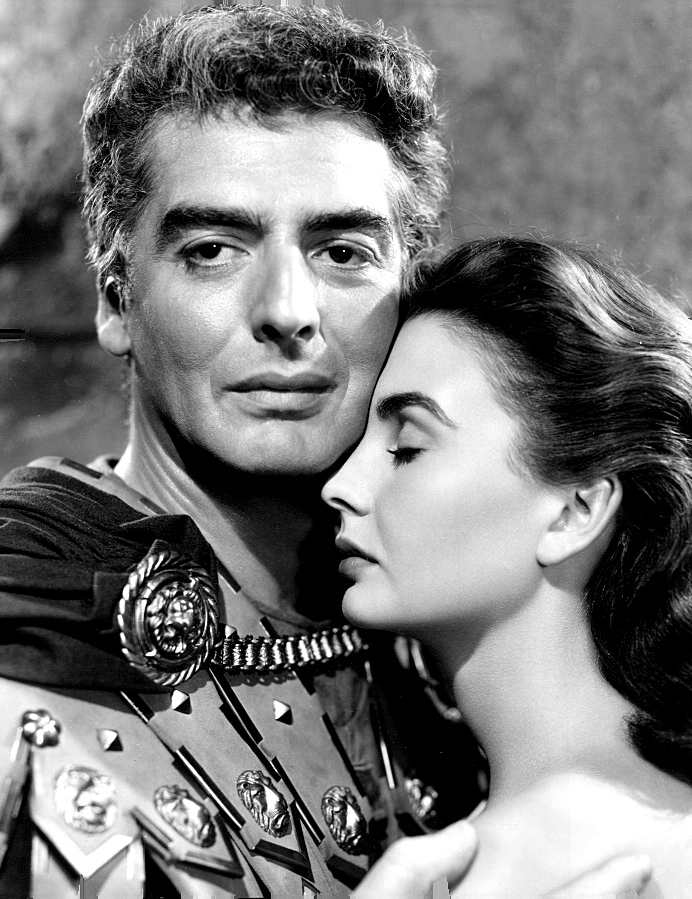
Looking back on his filmography in a 1980 interview, Mature offered a characteristically frank assessment: he said he was “pretty proud of about 50% of my motion pictures,” singling out The Robe and Samson and Delilah as the films that “weren’t bad,” while acknowledging plainly that he had made 72 pictures and roughly $18 million doing it. That mix of candor and commercial pragmatism, treating his career as a business rather than an art form to be defended, ran through nearly every interview he gave in his later years.
Retirement and Louisville Legacy
Mature largely stepped back from film acting in the mid-1950s and effectively retired from the business around 1958, at age 46, while still commercially viable and financially secure.
Asked decades later why he walked away, Mature said simply that it had stopped being fun: “It wasn’t fun anymore. I was okay financially so I thought what the hell, I’ll become a professional loafer.” He made occasional later appearances, including a comedic cameo in “Head” (1968) and a final acting role playing Samson’s father Manoah in a 1984 television remake of Samson and Delilah, a fitting bookend to the role that had made him famous thirty-five years earlier.
Mature spent his later years largely out of the spotlight at his home in Rancho Santa Fe, California, far from the Louisville streets where he grew up as the son of an immigrant knife sharpener. He died there of leukemia on August 4, 1999, at age 86.
He remains one of Louisville’s most commercially successful entertainment exports, a leading man who spent a decade at the top of the box office while treating his own stardom, and the critics who never quite respected it, as one long running joke he was in on from the start.
Sources and further reading
- Birth, family background, and education — Wikipedia and the Rancho Santa Fe Historical Society
- Early career and Pasadena Community Playhouse discovery — IMDb
- Samson and Delilah production history — Wikipedia and Cecil B. DeMille production accounts
- Career retrospective quotes — published interviews cited on Wikipedia and Kentucky Monthly
- Retirement and death — Rancho Santa Fe Historical Society and Kentucky Monthly