Not every street in Louisville has always gone by the name it carries today. Some were renamed to honor a mayor, a civil rights leader, or a local distillery. Others were renamed to shed an old reputation, or to fit a bigger city as neighborhoods were annexed and street grids straightened out.
Here are some Louisville streets and expressways that once carried a different name, and the stories behind why the signs changed.
Muhammad Ali Boulevard
Formerly Walnut Street and Michigan Drive, renamed 1978
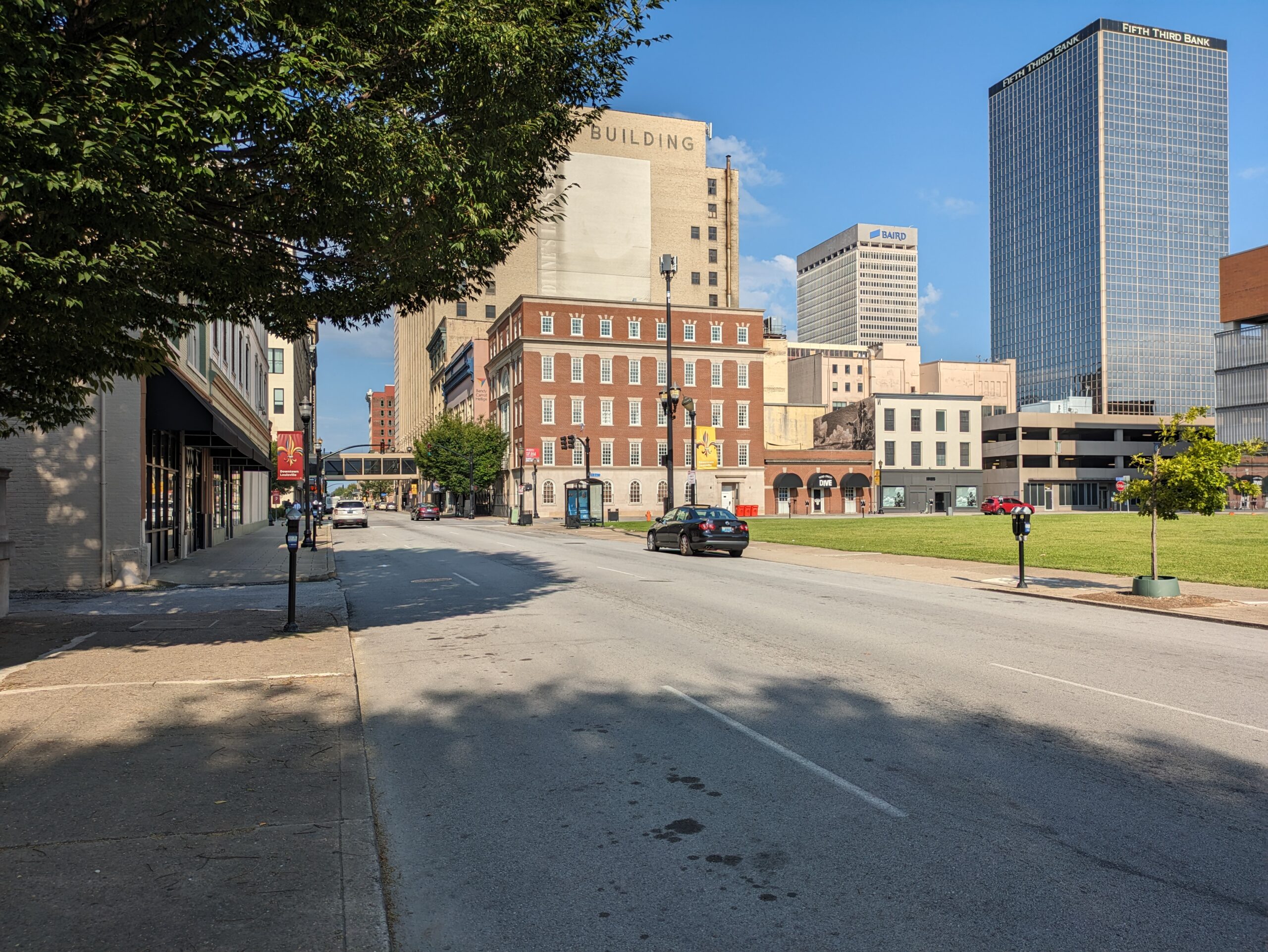
Muhammad Ali Boulevard runs nearly five miles from downtown Louisville into the West End, but for most of its history it carried two separate names: Walnut Street from downtown out to 28th Street, and Michigan Drive beyond that. Walnut Street was the heart of Louisville’s Black business district for decades, a corridor of Black-owned shops, clubs, and offices sometimes called the city’s own Harlem, before failed urban renewal projects gutted much of it in the 1960s and 70s.
In November 1978, Louisville’s Board of Aldermen voted 6 to 5 to rename the street for Ali, the three-time heavyweight champion who grew up nearby, while he was still fighting professionally. Mayor William Stansbury signed the ordinance into law that same month.
The Muhammad Ali Center, which houses his legacy, actually sits several blocks north on Main Street, not on the boulevard itself. In 2023, the city lined Muhammad Ali Boulevard with banners of his image, 45 years after his name first went up on the signs.
Liberty Street
Formerly Green Street, renamed 1918
Liberty Street downtown started out as Green Street, reportedly named for a grassy strip once used to graze horses. By the early 20th century the name had come to mean something else entirely. Green Street had built a reputation as a red-light district lined with burlesque theaters, and city leaders wanted a cleaner image for a downtown corridor.
The renaming to Liberty Street arrived in 1918, timed to the wave of World War I patriotism sweeping the country, though the new name also let the city put some distance between the street and its rougher past.
The eastern stretch of the street, near Preston, carried yet another name, Fehr Avenue, well into the 20th century before it was folded into Liberty Street too.
Broadway
Formerly Prather Street and Dunkirk Road, renamed 1850s
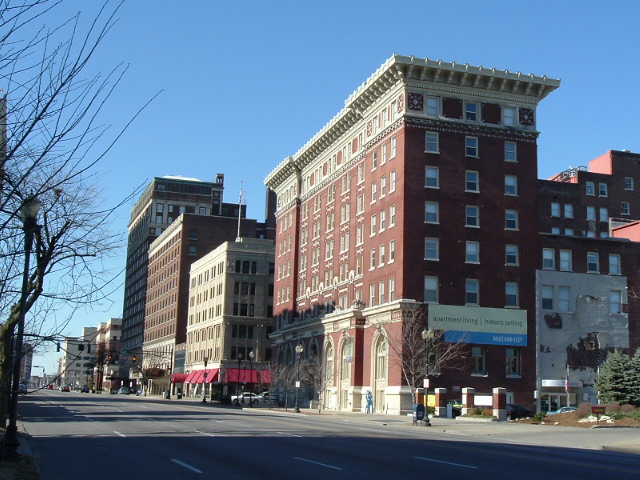
Long before it became Louisville’s grandest east-west boulevard, Broadway was known as Prather Street, named for Thomas Prather, one of the city’s earliest merchants. Portions of the road also carried the name Dunkirk Road on the city’s earliest plats.
As Louisville grew through the 1840s and 50s, the city widened the corridor and gave it the more ambitious name Broadway, a naming trend borrowed from larger cities like New York. The new name stuck. Today Broadway carries traffic across the entire city, running from the Highlands and Old Louisville through downtown and out into the West End, with barely a trace of Thomas Prather left on the map.
Grinstead Drive
Formerly Transit Avenue and Daisy Lane
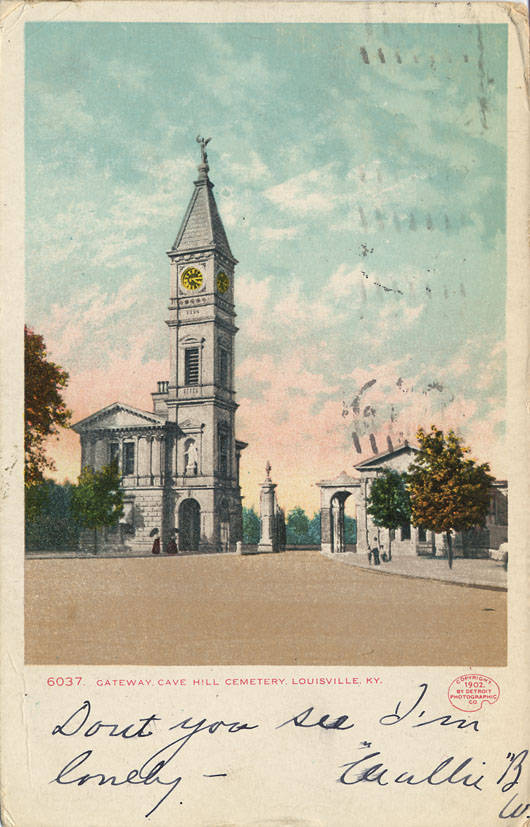
Grinstead Drive, which runs past Cave Hill Cemetery in the East End, has carried three names in its history. It started out as Transit Avenue, then became Daisy Lane, reportedly named for daisy fields that once bloomed near what’s now the Cherokee Golf Course, drawing carriage riders out to see them in bloom.
The street was renamed a final time for James Fontleroy Grinstead, the Louisville mayor nicknamed “Honest Jim” who completed Paul Barth’s disputed term in 1907 after the Kentucky Court of Appeals threw out Barth’s election. Grinstead lost his own re-election bid in 1909 and died in 1921. His name now marks one of the East End’s busier connector streets.
Barret Avenue
Formerly Underhill Street, renamed 1923
The stretch of Barret Avenue between Baxter Avenue and Broadway used to be called Underhill Street, one of several small, disconnected Highlands streets that didn’t line up neatly with Louisville’s older street grid as the neighborhood grew up around them.
In 1923, as the city worked to straighten out the Highlands grid, Underhill Street was renamed Barret Avenue, tying it to the rest of the corridor and to Louisville’s prominent Barret family, whose members included judge and politician Alex G. Barret.
Barret Avenue is now one of the busiest commercial streets running through the Highlands, connecting Baxter Avenue to Broadway. Barret Traditional Middle School, built in 1930 several miles away on Grinstead Drive, carries the same family name.
Mellwood Avenue
Formerly Southall Street and Reservoir Avenue, renamed 1895
Mellwood Avenue in Butchertown started out as Southall Street before being renamed Reservoir Avenue in 1884, a plain name for its route near the Louisville Water Company’s reservoir grounds.
By 1895, the Mellwood Distillery, built in 1865 by George Swearingen’s firm, had grown to occupy nearly a full block along both sides of the street, and the city renamed Reservoir Avenue in the distillery’s honor.
Swearingen had originally wanted to call his distillery Millwood, but a misspelling on an early order turned it into Mellwood, and he decided to keep it. The distillery closed during Prohibition and reopened after Repeal as General Distilling Company, and its name has outlived the business itself on the street sign.
Zorn Avenue
Formerly Pipe Line Lane
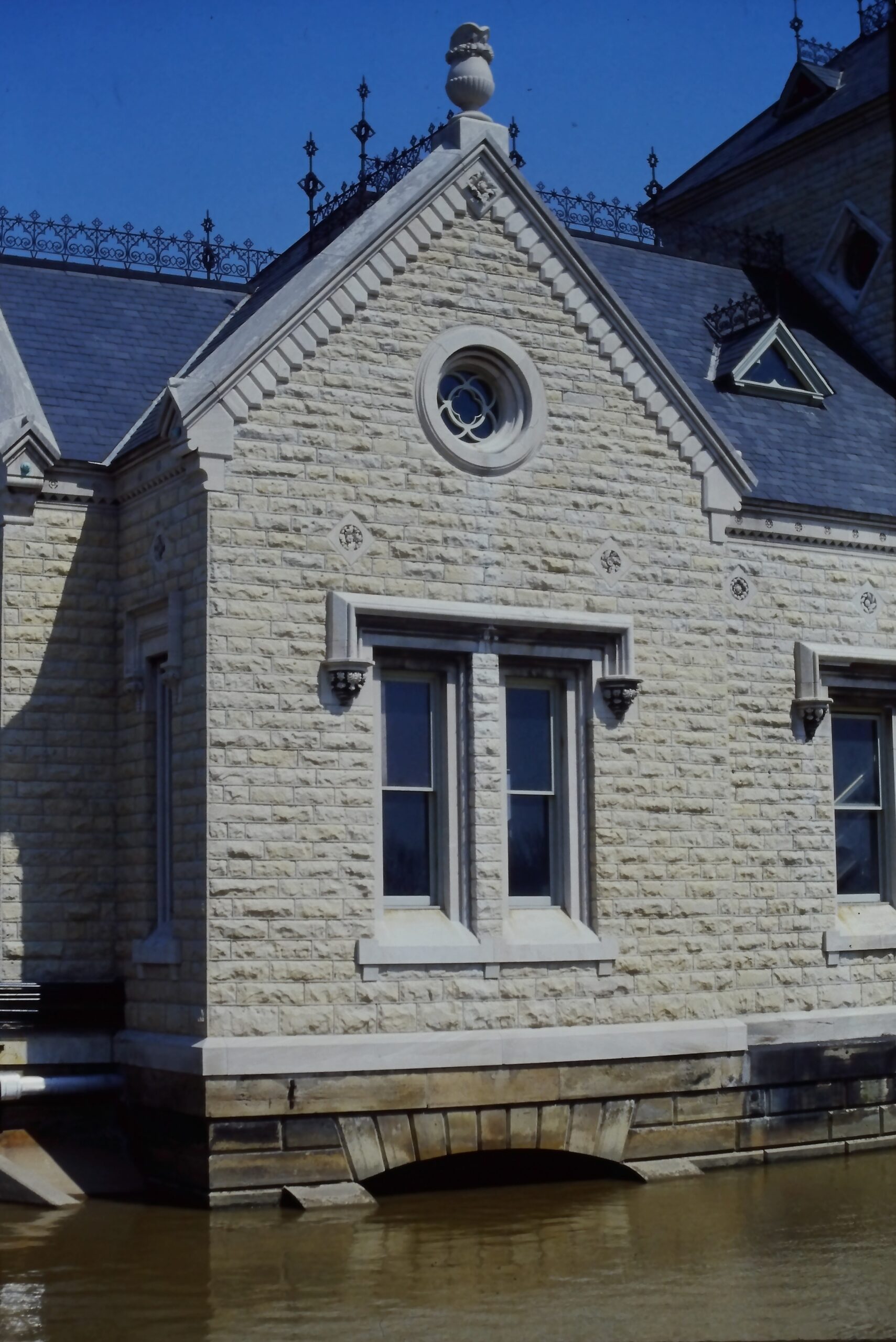
Zorn Avenue in northeast Louisville started life with about as plain a name as a street can have: Pipe Line Lane, for the Louisville Water Company pipeline running alongside it.
The street was renamed for Sebastian Zorn, who served as the water company’s president around the turn of the 20th century, keeping the tribute connected to water even after the old utilitarian name was retired.
Residential development along the corridor picked up around 1911, and Zorn Avenue grew into a main route connecting northeast Louisville to downtown, running past what’s now the Louisville VA Medical Center.
Unity Place
Formerly Confederate Place, renamed 2003
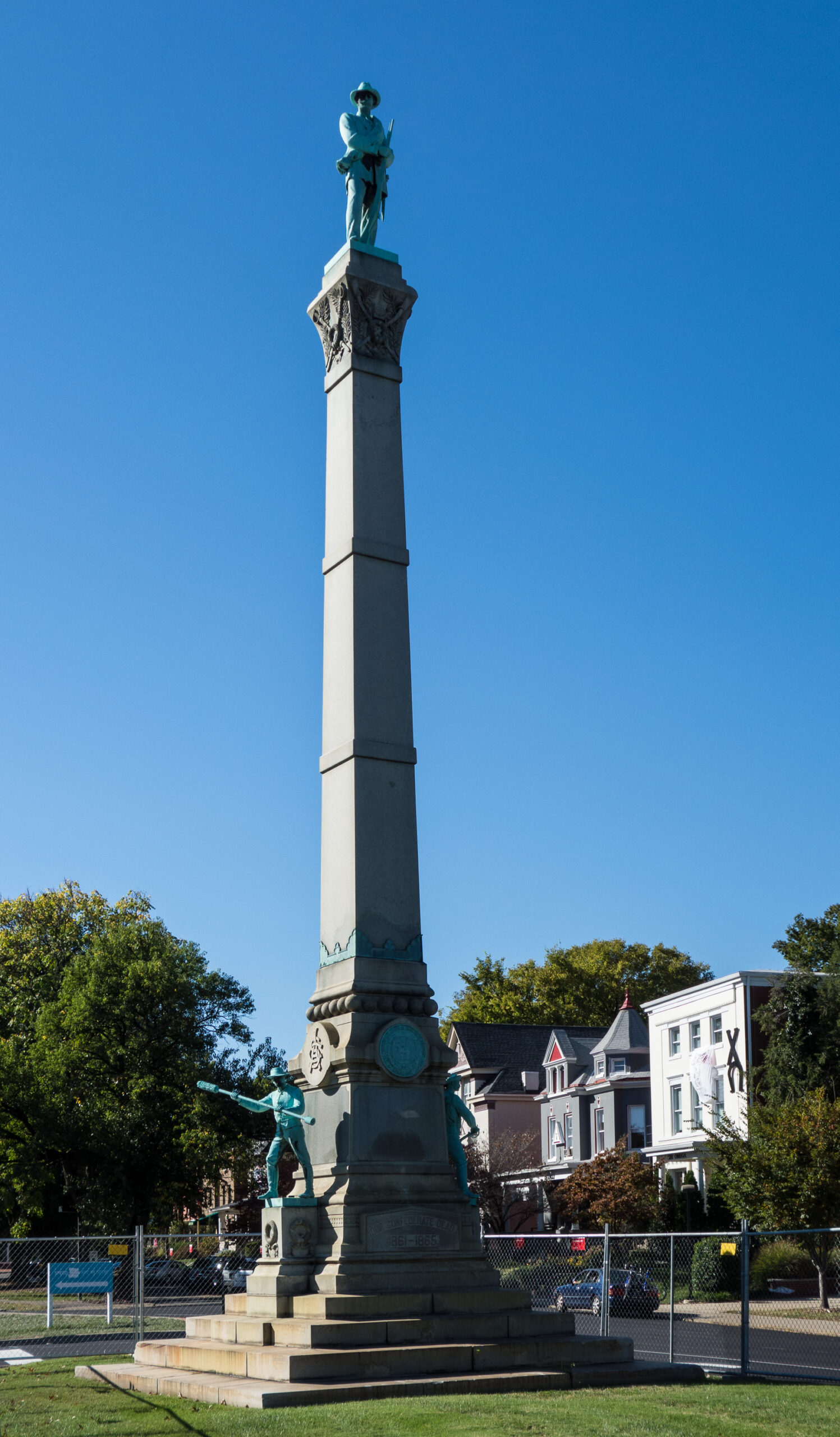
Confederate Place, a short street near the University of Louisville’s Belknap campus, took its name from the 70-foot Confederate Monument that stood nearby from 1895 onward. University student leaders first asked for the street to be renamed as far back as 1989.
Planning for the change picked up in 2002, as part of a broader effort to build Freedom Park nearby, a civil rights memorial meant to balance the Confederate monument’s presence.
The street officially became Unity Place in 2003, a name the university said would better reflect its goals of inclusiveness. The monument itself stayed in place until 2016, when it was dismantled and relocated to Brandenburg, Kentucky, after a lawsuit and a court ruling cleared the way for its removal.
Georgia Davis Powers Expressway
Formerly Shawnee Expressway, renamed 2010
The western leg of I-264, running between the Sherman Minton Bridge and Dixie Highway through the West End, was originally called the Shawnee Expressway, a plain geographic name for the neighborhood it passes through.
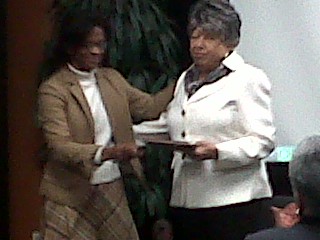
In 2010, Kentucky’s General Assembly passed a resolution renaming the stretch the Georgia Davis Powers Expressway, honoring the first woman and first African American to serve in the Kentucky State Senate.
Powers served more than two decades in Frankfort and was a lifelong civil rights advocate. She said the renaming moved her to think of “the pioneers, some of whom sacrificed their lives for equality and justice.” She died in 2016 at age 92, having lived to see her name carried across the expressway.
Dr. W. J. Hodge Street
Formerly 21st Street
South 21st Street, running through Louisville’s West End, was renamed Dr. W. J. Hodge Street in honor of the Reverend Dr. Willie James Hodge, who arrived in Louisville in 1957 to lead the Fifth Street Baptist Church.
Hodge became president of the Louisville NAACP the following year and of the Kentucky Conference of the NAACP in 1962, helping organize the 1964 March on Frankfort that pushed for the state’s civil rights law. In 1977 he became the first African American president of the Louisville Board of Aldermen.
Hodge later led Simmons Bible College until his death in 2000, and the street that carries his name today runs through the Russell neighborhood, just west of downtown.
Dr. Martin Luther King Jr. Place
Formerly Federal Place
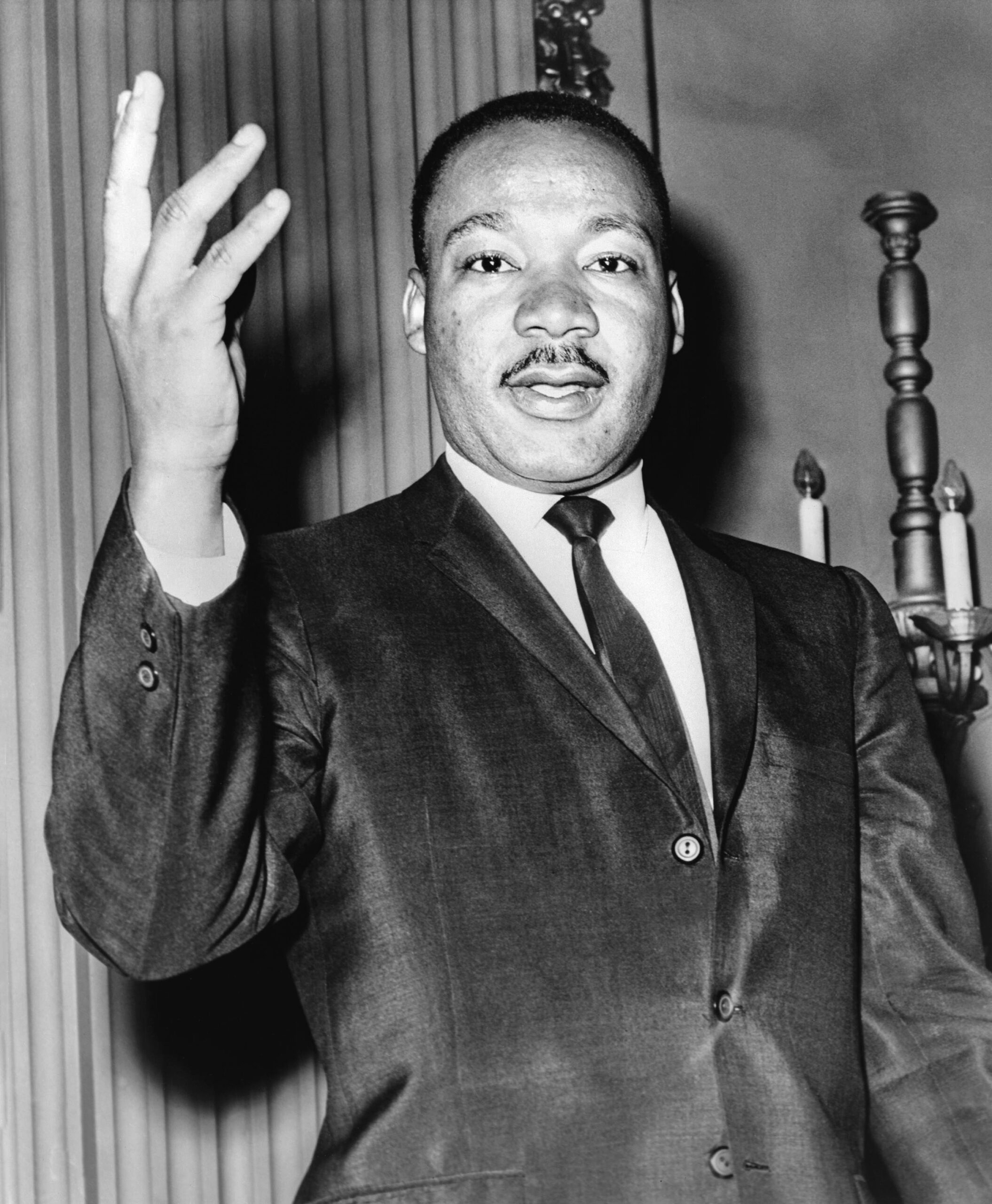
Dr. Martin Luther King Jr. Place is a short downtown street running in front of Louisville’s federal courthouse and office building, a stretch once known simply as Federal Place for the government buildings lining it.
By 1995, when Congress renamed the building itself the Romano L. Mazzoli Federal Building after Louisville’s longtime congressman, the street outside was already carrying King’s name, one of hundreds of streets across the country renamed for the civil rights leader after his 1968 assassination.
Louis Coleman Jr. Drive
Formerly South 34th Street, renamed 2011
Portland’s 34th Street had already been renamed once, from Commercial Street to 34th Street, when Louisville annexed the Portland neighborhood in 1837. In 2011, part of it changed again.
Metro Council members Judy Green and Cheri Bryant Hamilton sponsored an ordinance renaming a stretch of 34th Street for the Reverend Louis Coleman, the longtime director of the Justice Resource Center, who died in 2008 at age 64. Coleman was known for leading bullhorn-in-hand protests over economic and social justice for decades.
The proposal drew objections from some Portland-area residents, either worried about confusion or unwilling to honor a figure who had often been a controversial presence in city politics.
The two sponsors compromised: the six blocks running through Portland kept the name 34th Street, while the stretch from Market Street south through the Park DuValle neighborhood became Louis Coleman Jr. Drive.