George Devol was born in Louisville, Kentucky, in 1912 into an upper-middle-class family, and grew up tinkering with electricity and machines well before anyone imagined a factory floor run by robotic arms. He never attended engineering school, choosing instead to start a company right out of prep school. Four decades and dozens of patents later, his 1954 design for a programmable mechanical arm became Unimate, the world’s first industrial robot.
Devol’s invention, developed with entrepreneur Joseph Engelberger, went to work on a General Motors assembly line in 1961, stacking hot die-cast metal parts too dangerous for workers to handle by hand. It launched an industry that now spans nearly every corner of global manufacturing, and Devol was inducted into the National Inventors Hall of Fame the same year he died, at age ninety-nine.
An Inventive Childhood in Louisville
George Charles Devol Jr. was born on February 20, 1912, into a well-off Louisville family. He attended Riordan Prep, where he gained hands-on experience helping run the school’s electric light plant, an early education in practical engineering that shaped the rest of his career. From boyhood he was drawn to boats, airplanes, and engines, the same mechanical curiosity that would eventually lead him to a mechanical arm that could think for itself. Rather than pursue an engineering degree, Devol skipped college entirely and went straight into business.
A Career Built on Invention Before Robots
In 1932, Devol formed United Cinephone Corporation to develop sound recording technology for the new “talkies,” but larger competitors like RCA and Western Electric quickly outpaced him. He pivoted to a device that used photocells and vacuum tubes to open doors automatically, licensing it to Yale & Towne, which sold it commercially as the “Phantom Doorman.”
During World War II, Devol worked at Sperry Gyroscope developing radar systems, then founded General Electronics Industries in Connecticut, which became one of the war’s largest producers of radar and counter-radar equipment for Allied forces, including systems used on D-Day.
After the war, Devol moved through a series of roles at RCA and Remington Rand, developing digital magnetic recording systems intended for business data processing and early high-speed printing systems. He also helped develop the Speedy Weeny, an early commercial microwave device that automatically cooked and dispensed hot dogs at locations including New York’s Grand Central Terminal. The recording technology he built for Remington Rand proved too slow for office use, but Devol repurposed it as the control system that would eventually become the “brains” of the Unimate robot.
The Invention of Unimate
In 1954, building on years of work with digital magnetic recording and machine control, Devol filed a patent for a “Programmed Article Transfer” device, a mechanical arm that could be taught a sequence of movements and repeat them indefinitely. His wife, Evelyn, suggested the name Unimate, combining “universal” and “automation,” much as George Eastman had once coined “Kodak.”
“Makes available for the first time a more or less general purpose machine that has universal application to a vast diversity of applications where cyclic digital control is desired.”
— George Devol, describing his robotic arm patent
Devol found his business partner, Joseph Engelberger, at a cocktail party in 1956. Engelberger, an engineer with a fondness for science fiction, was captivated by the idea and helped rename the “programmed article transfer” concept a “robot” to make it easier to sell to skeptical manufacturers.
Onto the Factory Floor
In 1961, Devol personally oversaw the sale and installation of the first Unimate at a General Motors plant in Ewing Township, New Jersey, where it lifted red-hot die-cast parts from a casting machine and stacked them, a job too hazardous for human workers to perform safely at the same pace. The machine ran on vacuum tubes acting as digital switches, and Unimation engineers had to design and machine nearly every component themselves, since off-the-shelf parts of the era could not meet the robot’s demands. Chrysler, Ford, and Fiat soon followed with their own orders.
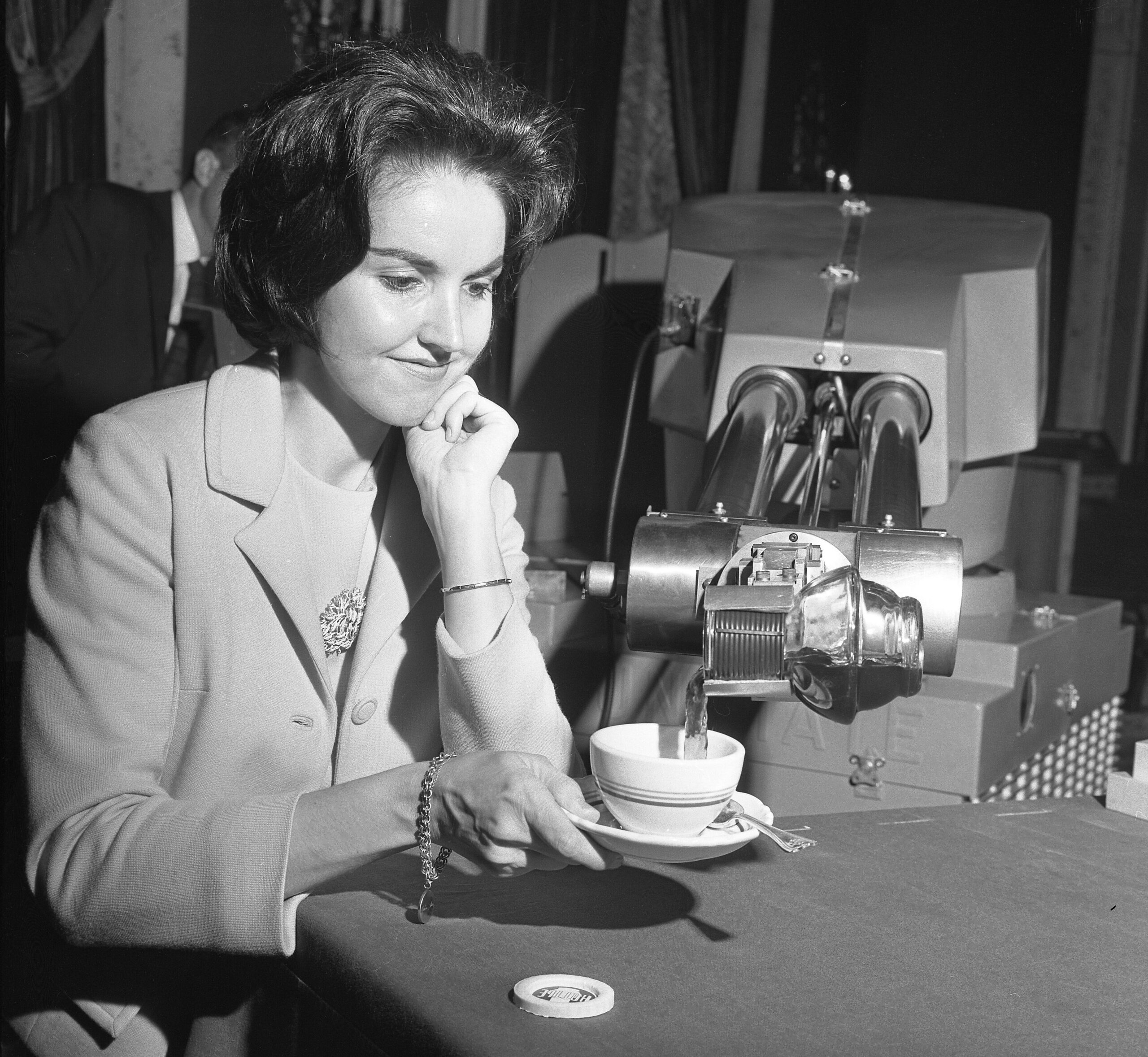
To demonstrate the machine’s precision and safety to a public unfamiliar with robotics, Unimation staged public exhibitions such as pouring coffee and golfing, showing that a 3,500-pound industrial machine could handle delicate tasks with total control.
A Prolific and Modest Inventor
Devol held more than forty patents over his lifetime, and journalist Bob Malone, who interviewed him repeatedly over the years, recalled him as humble and endlessly curious about new technology rather than boastful about his own legacy.
“Being in his presence, I felt like I was interacting with one of those minds that only come along very rarely, a world-changing inventor like Edison or Tesla.”
— Bob Malone, IEEE Spectrum, recalling his interviews with George Devol
At a 1997 Automation Hall of Fame ceremony, an entertainment robot named Sico rolled up to Devol during the reception and said, “Father, so good to see you!”, prompting a rare, broad smile from the famously reserved inventor.
Honors and Family
Unimation’s business grew slowly at first; the company did not turn its first profit until 1975, more than two decades after Devol’s original patent filing. By 1978, the company had partnered with engineer Victor Scheinman to develop the PUMA, or Programmable Universal Machine for Assembly, with backing from General Motors, extending the Unimate line into a new generation of factory robots.
Devol was elected an honorary member of the Society of Manufacturing Engineers in 1985 and was later inducted into the Automation Hall of Fame. He was married to Evelyn Jahelka, who suggested the Unimate name, and the couple raised four children. He was survived by two daughters, two sons, five grandchildren, and five great-grandchildren when he died in 2011.
Legacy
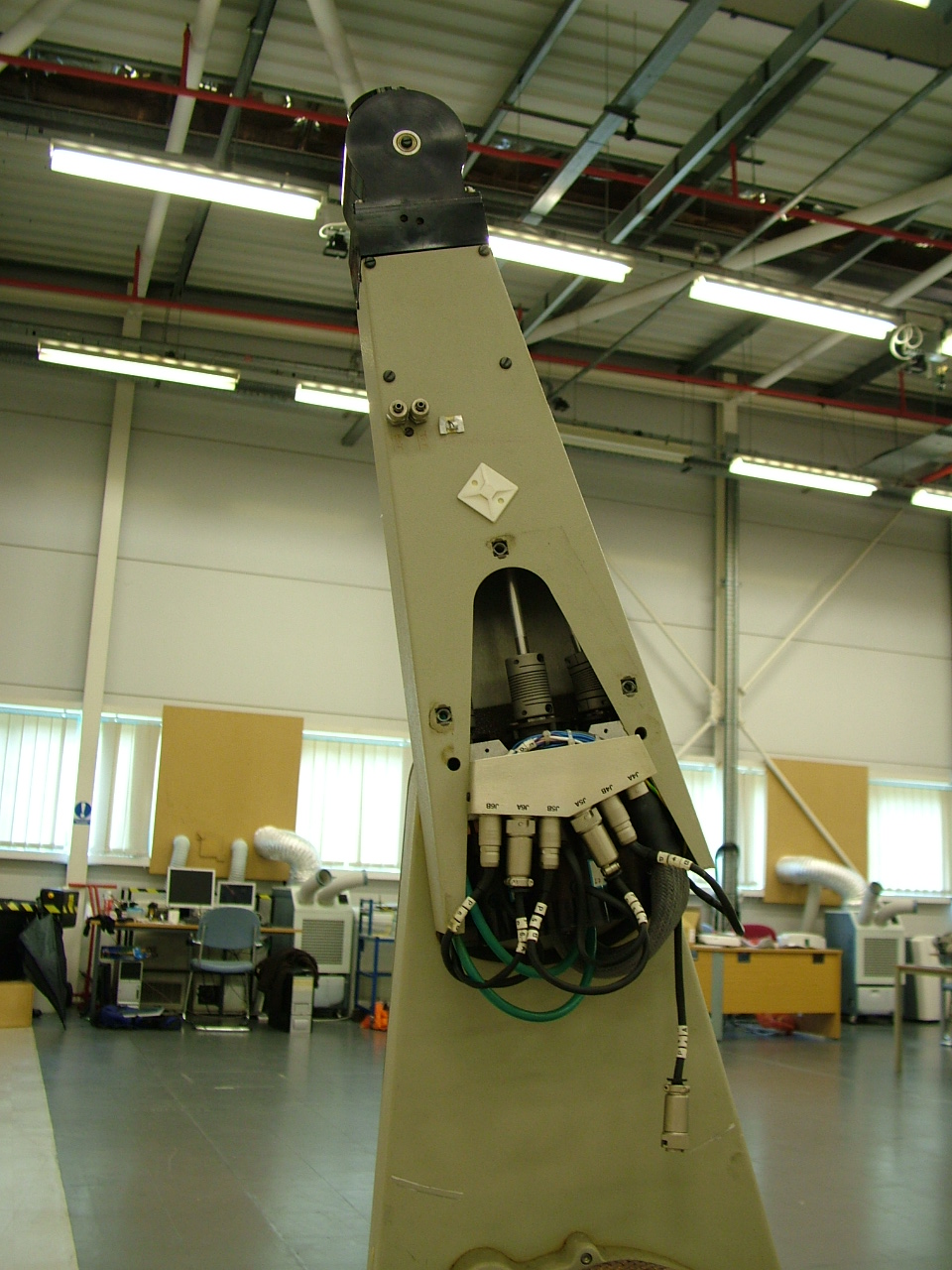
Devol died on August 11, 2011, at his home in Wilton, Connecticut, at the age of ninety-nine, and was inducted into the National Inventors Hall of Fame later that year. In 2005, Popular Mechanics named his Unimate one of the top fifty inventions of the previous half-century, and examples of the robot are preserved today in the collections of the Henry Ford Museum and the Smithsonian Institution.
Nearly a century after he left Louisville to chase opportunities in film sound, radar, and eventually robotics, the Kentucky-born engineer who never finished college is now remembered as the father of the modern industrial robot, an entire manufacturing industry traced back to a patent he filed almost by instinct.