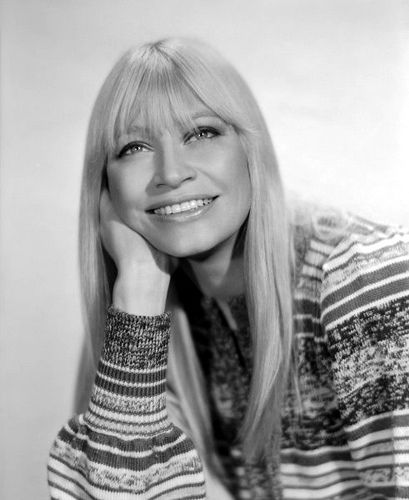
Mary Travers was born in Louisville, Kentucky, on November 9, 1936, though she left before she was two years old and never really knew the city as a child. Her parents were journalists and union organizers, and when her father’s newspaper folded in 1938, the family moved east, eventually settling in New York’s Greenwich Village. There, Travers grew up amid the folk revival, became the striking blond voice of Peter, Paul and Mary, and helped turn topical folk songs into some of the biggest pop hits of the 1960s.
She sang “If I Had a Hammer” and stood near the podium at the 1963 March on Washington, helped introduce Bob Dylan’s songwriting to mainstream radio, and remained a visible political voice until her death in 2009. Louisville was not where she grew up, but it was where her story, and her parents’ fight for the rights of working journalists, began.
A Louisville Newspaper Family
Travers’s parents, Robert Travers and Virginia Coigney, were both journalists and active organizers for the Newspaper Guild, the trade union representing reporters and editors, during their time in Louisville. Robert worked for the Louisville Herald-Post. When the paper closed in 1938, the family left Kentucky, eventually making their way to New York City’s Greenwich Village, then the center of American folk music and left-wing politics.
Growing Up in Greenwich Village
Travers attended the progressive Little Red School House, where she met Pete Seeger and heard Paul Robeson, who sang her lullabies as a child. She left school in the eleventh grade to join the Song Swappers, a folk group that backed Seeger on a series of reissue albums for Folkways Records in 1955. She worked full-time as a dental technician and considered singing a hobby rather than a career.
Forming Peter, Paul and Mary
In 1961, manager Albert Grossman spotted a photograph of Travers on the wall of New York’s Folklore Center and suggested to folksinger Peter Yarrow that the two of them form a group. Travers was reluctant; she had recently given birth to her first daughter, Erika, and had little interest in performing professionally.
“To me, folk music was more like a social thing you did. It was not something I wanted to do for a living.”
— Mary Travers, recalling her early reluctance to perform
Grossman brought in a third singer, Noel Stookey, who agreed to perform under the name Paul, and the trio took its name from a line in the folk song “I Was Born 10,000 Years Ago.” Signed to Warner Bros. Records, the group scored an immediate hit with its 1962 debut album, built around “If I Had a Hammer” and “Lemon Tree.” The record eventually sold more than two million copies.
Hits and the March on Washington
Peter, Paul and Mary’s recordings of Bob Dylan’s “Blowin’ in the Wind” and “Don’t Think Twice, It’s All Right” reached the pop Top 10 in 1963 and helped push Dylan’s own album, The Freewheelin’ Bob Dylan, onto the charts. That August, the trio performed at the March on Washington, singing shortly before Martin Luther King Jr. delivered his “I Have a Dream” speech.
“This was the first time I’d ever seen that many people, and they were all hoping for social change and for something good. It was probably the most pivotal moment of my life.”
— Mary Travers, recalling the 1963 March on Washington
Puff the Magic Dragon and a Persistent Rumor
The trio’s 1963 recording of “Puff the Magic Dragon,” written by Yarrow with a college classmate, became one of its best-known songs and, for decades, the target of a rumor that it was secretly about marijuana. Travers and her bandmates repeatedly and publicly denied the claim, insisting the song was simply about the end of childhood innocence, and the writers’ account has held up under scrutiny by folklorists and journalists ever since.
From a Number-One Hit to a First Breakup
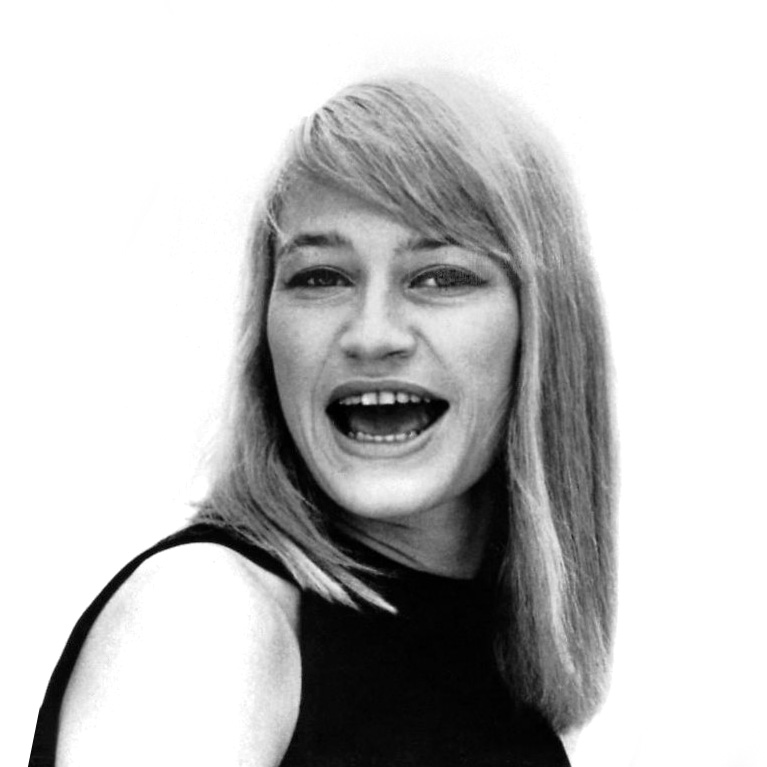
The group’s only number-one single arrived in 1969 with John Denver’s “Leaving on a Jet Plane,” a hit on both sides of the Atlantic and the biggest seller of the trio’s career. Peter, Paul and Mary disbanded the following year, not long after that song’s success, as each member pursued solo projects and, in Travers’s case, a growing interest in radio and print journalism, including a stint hosting her own radio program.
A Solo Career and Reunions
Travers recorded five solo albums between 1971 and 1978, beginning with Mary, which included a modest hit cover of John Denver’s “Follow Me.” Her 1972 record Morning Glory featured “Conscientious Objector (I Shall Die),” based on a poem by Edna St. Vincent Millay. That same year, the trio briefly reunited for a Madison Square Garden fundraiser for presidential candidate George McGovern.
By 1978 the group had reformed permanently, touring and recording together for the rest of Travers’s life. Peter, Paul and Mary were inducted into the Vocal Group Hall of Fame in 1999, and continued performing at benefit concerts and political rallies well into the following decade.
Marriages and Family
Travers was married four times over the course of her life and had two daughters, Erika and Alicia, from her first two marriages. Both daughters occasionally joined their mother on stage in later years, and Travers spoke often in interviews about balancing motherhood with a touring and recording career that kept her away from home for long stretches.
An Activist On and Off Stage
Travers used her platform for political causes throughout her life, performing at rallies against apartheid, nuclear proliferation, and homelessness alongside her bandmates. She was also an early and outspoken supporter of civil rights legislation and campaigned for several Democratic presidential candidates over the decades. Paul Stookey later described her as fearless in defending those she believed had been wronged, even when it meant correcting her own bandmate onstage.
“As an activist, she was brave, outspoken and inspiring, especially in her defense of the defenseless. Once I was attempting to defend Ronald Reagan’s educational policy. She interrupted me with, ‘Oh, for heaven’s sake, do your homework!,’ turned on her heel and walked away. Need I say it turned out she was right?”
— Paul Stookey, on his bandmate Mary Travers
Final Years and a Legacy Rooted in Louisville
Travers was diagnosed with leukemia in 2004 and received a bone marrow transplant in 2006, which brought a temporary remission. She died on September 16, 2009, at Danbury Hospital in Connecticut, at age seventy-two. A memorial service was held that November at New York’s Riverside Church, where feminist Gloria Steinem recalled that Travers’s poise onstage “seemed to us to be a free woman, and that helped us to be free.”
Nearly seven decades after her family left Louisville, Travers was remembered less for where she was born than for what she did with the voice she found in New York — but the Kentucky newsroom her parents fought to unionize, and the paper that folded when she was still a toddler, marked the true beginning of a life spent making dissent beautiful.