
Tori Murden McClure spent eighty-one days alone in a twenty-three-foot rowboat before she became the first woman and first American to row solo across the Atlantic Ocean. By the time she reached Guadeloupe in December 1999, she had already skied to the South Pole, summited a peak in Antarctica, and earned degrees in psychology, divinity, and law, a resume that reads less like one person’s life than several. She would go on to lead a Louisville university for fourteen years, but the rowboat is still where most people start the story.
From Florida to Louisville
Victoria “Tori” Murden was born March 6, 1963, in Brooksville, Florida. Her family moved first to Connecticut and then to Pennsylvania during her childhood, an unsettled early life that ended when, at fifteen, she moved in with her grandmother in Louisville, Kentucky. She attended the Louisville Collegiate School, graduating in 1981, and the city became the fixed point she returned to across a career that would otherwise take her to Antarctica, the middle of the Atlantic, and university administration.
She went on to Smith College in Massachusetts, earning a bachelor’s degree in psychology in 1985. From there her education kept branching in directions that had little obvious relationship to each other: a Master of Divinity from Harvard Divinity School in 1989, a law degree from the University of Louisville School of Law in 1995, and, later still, a Master of Fine Arts in writing from Spalding University. Few adventurers accumulate that particular combination of credentials, and fewer still would go on to put all of them to use in the same city.
Divinity School, Law School, and the Call of Adventure
Between degrees, Murden worked as a chaplain at Boston City Hospital and as executive director of a shelter for homeless women, work that reflected the pastoral half of her Harvard training. She later served as a public policy analyst for the Mayor of Louisville and worked for the boxer and humanitarian Muhammad Ali, giving her a foothold in Louisville civic and philanthropic life well before her rowing career made her a household name in the city.
Her taste for extreme physical challenge surfaced early. In 1988 she became the first woman and first American to reach the summit of the Lewis Nunatak in Antarctica, and the following year she became the first woman and first American to ski to the geographic South Pole, a 700-mile trek. Those expeditions, undertaken while she was still working toward her Harvard and Louisville degrees, established a pattern that would define the next decade of her life: formal academic and pastoral work in Louisville, punctuated by expeditions to some of the most remote and physically punishing places on Earth.
“In the end, I know I rowed across the Atlantic to find my heart, but in the beginning, I wasn’t aware that it was missing.”
— Tori Murden McClure, A Pearl in the Storm: How I Found My Heart in the Middle of the Ocean
Rowing the Atlantic
In June 1998, Murden set out to row solo across the Atlantic in a twenty-three-foot plywood boat with no motor or sail. She lost communication with shore within days, and 1998 turned out to be the worst hurricane season on record in the North Atlantic; the attempt was cut short and she was rescued mid-ocean, a setback that would have ended most people’s ambitions for the crossing entirely.
She tried again the following year. Thirty-six years old, Murden departed from the Canary Islands and rowed for eighty-one days, covering 4,767 kilometers before reaching Guadeloupe on December 3, 1999. Her boat, a twenty-three-foot, four-foot-high vessel named Pearl that weighed about 1,800 pounds, made her the first woman and first American to row solo across the Atlantic Ocean, a feat of sustained physical and psychological endurance with almost no modern precedent among American athletes.
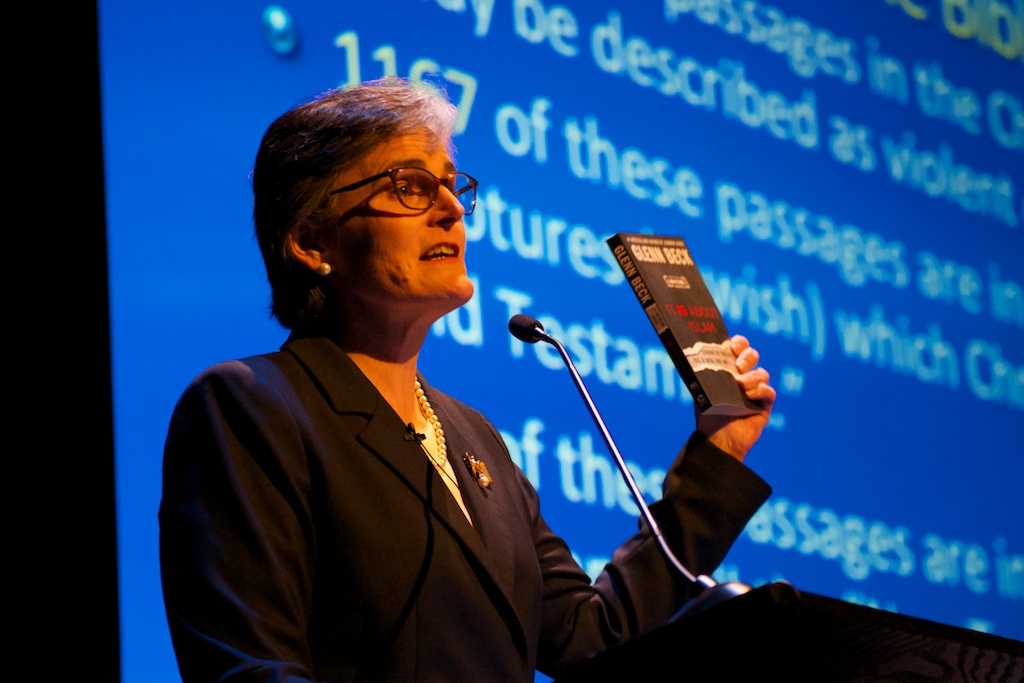
The achievement brought her national recognition. In 1999 she received the Kentucky Derby Festival’s Silver Horseshoe Award for courage, determination, and community service, and in 2000 she was given a special Victor Award by the National Academy of Sports Editors along with the Peter Bird Trophy for Tenacity and Perseverance from the Ocean Rowing Society International, an award named for a rower who died attempting a similar Pacific crossing. That same year she was also honored by the European Academy of Sport, extending recognition of the row well beyond the United States.
A Pearl in the Storm
A decade after the crossing, Murden McClure published a memoir about the experience, A Pearl in the Storm: How I Found My Heart in the Middle of the Ocean, through HarperCollins in 2009. The book reframed the Atlantic crossing less as a straightforward feat of athletic endurance and more as a personal reckoning, an account of what eighty-one days of isolation forced her to confront about her own life that the achievement itself, taken alone, did not fully explain.
That reframing set the memoir apart from a typical adventure narrative. Reviewers and readers who came to the book expecting primarily a survival story instead found an account preoccupied with the emotional and psychological dimensions of the row, a choice that reflected the same combination of physical daring and reflective, pastoral sensibility that had run through her Harvard Divinity School training and her earlier work as a hospital chaplain.
Spalding University and Louisville Life
On June 1, 2010, Murden McClure became president of Spalding University, a private Catholic university in Louisville where she had earned her MFA, a role she held until retiring in 2024. Her fourteen-year tenure gave her a second, quieter kind of prominence in the city, distinct from the international attention the Atlantic crossing had generated a decade earlier, rooted instead in the ordinary, sustained work of running a university.
She also chaired the board of the National Outdoor Leadership School, an outdoor education organization headquartered in Lander, Wyoming, that emphasizes environmental ethics and wilderness excursions, a natural extension of her own expedition background into an institutional role. In May 2016, she moderated a Festival of Faiths panel discussion on Islamophobia in Louisville featuring the theologian Ingrid Mattson, the activist Linda Sarsour, and the scholar Imam Zaid Shakir, one of many instances in which her Harvard Divinity School training resurfaced in her public work long after she left the pulpit-adjacent world of hospital chaplaincy.

Between the Antarctic summit, the ski to the South Pole, the two attempts at the Atlantic, the Harvard and Louisville degrees, and fourteen years leading a university, Murden McClure’s career resists easy summary. What ties it together is less any single achievement than a consistent willingness to take on projects that most people would consider a lifetime’s worth of ambition on their own, and to keep Louisville as the place she returned to in between them.
Sources and further reading
- Biography, education, and career timeline — Wikipedia, citing Smith College and National Outdoor Leadership School alumni materials
- Atlantic crossing details — WHAS11’s 20th-anniversary retrospective and the Ocean Rowing Society International
- A Pearl in the Storm — HarperCollins and Oprah.com
- Read the memoir — A Pearl in the Storm: How I Found My Heart in the Middle of the Ocean (HarperCollins)
- Spalding University presidency — Spalding University’s Office of the President
- 2016 Festival of Faiths panel — Festival of Faiths / The Center for Interfaith Relations