Fifty-one people have served as mayor of Louisville since the office was created in 1828. But how they got the job has changed more than once.
The earliest mayors weren’t elected by the public at all. An election produced two finalists, and the governor picked one to serve a single year.
The City Council took over the choice briefly in the late 1830s before the state legislature rewrote the charter in 1838 to allow direct election by voters. Initially, there were three-year terms, later two, then back to three, and finally to four-year terms starting in 1893.
The office changed again in 2003, when the city merged with Jefferson County and the mayor began leading the consolidated Louisville Metro government.
Over two centuries, Louisville has had a penchant for electing the same person to multiple nonconsecutive terms. In fact, seven mayors left office only to return later.
Frederick Kaye, John Delph, Phil Tomppert, John Baxter, Harvey Sloane, and Jerry Abramson all came back for more. Charles Jacob came back twice!
Their multiple terms are indicated by superscript numbers (¹, ²) next to their names.
John C. Bucklin
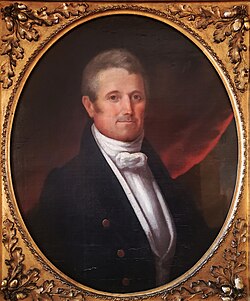
1828 – 1833
Bucklin, a Rhode Island-born ship owner and militia veteran, became Louisville’s first mayor in March 1828, a month after the legislature created the office. Under the original charter, an election produced two finalists who were then presented to the governor, who made the actual appointment. Bucklin beat William T. Tompkins by just 20 of roughly 650 votes cast, then served six consecutive one-year terms.
The mayor couldn’t even vote on the more powerful City Council except to break ties. Regardless, he pushed through the city’s first public school, tackled the drainage of Louisville’s early ponds, and steered the city through a destructive flood in February 1832.
John Joyes
1834 – 1835
Joyes, the son of one of Louisville’s pioneer settlers, studied law and served in the state legislature before winning the mayor’s office in March 1834. He served two one-year terms under the same governor-appointment system that had elevated Bucklin, then spent 14 years as city court judge starting in 1837. His tenure came as Louisville’s river trade and population were both expanding rapidly, cementing the city’s role as a Ohio River shipping hub.
W.A. Cocke
1836
Cocke’s single year in office marked a genuine shift in how Louisville picked its mayor: rather than being appointed by the governor from two finalists, he was the first mayor elected outright by the City Council, a process so contentious it took three weeks to settle. He tried for a second term in 1841 under yet another new method, direct election by citizens, but lost after a contested revote sent the job to David L. Beatty instead.
Frederick A. Kaye¹
1837 – 1840
Kaye, a Whig, was chosen for his first term by the City Council on March 15, 1837, after a grueling 13 ballots — he’d turn out to be the last Louisville mayor picked that way. In 1838, the state legislature rewrote the charter to allow direct election by voters and stretched terms from one year to three, though it barred him from immediately seeking another. Kaye also served as president of the Board of Aldermen from 1855 to 1856.
David L. Beatty
1841 – 1843
Beatty arrived in Louisville at 17 to work as a machinist, rose to foreman of an iron foundry, and later ran his own steam-engine business before entering politics. Elected mayor in 1841, his administration established the State Institute for the Blind in Louisville and built one of the city’s first waterworks systems. He is buried, like many of his contemporaries, in Cave Hill Cemetery, which the city had begun developing as its municipal burying ground.
Frederick A. Kaye²
1844 – 1846
Kaye returned to the mayor’s office in 1844 for a second, nonconsecutive term — an early instance of the pattern that would define 19th-century Louisville politics, in which voters kept recycling the same handful of men. It came under the newly lengthened three-year-term charter he’d helped bring about during his first stint, part of a broader move toward more stable, direct city governance.
William R. Vance
1847 – 1849
Vance, a Whig attorney who’d already served three terms in the Kentucky House and one in the state Senate, took office as Louisville grew into one of the largest cities in the western United States ahead of the 1850 census. His most lasting act in office was conveying the tract of land that became Cave Hill Cemetery, still the city’s most prominent burial ground and the resting place of many of the mayors who followed him.
John M. Delph¹
1850 – 1852
Delph, a carpenter turned wealthy real-estate investor, became the first mayor to serve under a new charter allowing two-year terms rather than one. His first term coincided with a cholera epidemic, and he led a push for better sanitation across Louisville in response. A Whig at the time, he later became a committed Unionist, a shift that defined the more consequential second term he’d serve a decade later as the Civil War began.
James S. Speed
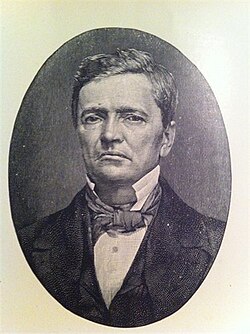
1853 – 1854
Speed, whose family lent its name to one of 19th-century Louisville’s most prominent clans, took office in 1852 under charter rules so confusing that he was re-elected by popular vote every year of his term yet never issued an official election certificate. He argued his original election entitled him to serve until 1856, but a legislative resolution forced a new election in 1855, which the nativist Know-Nothing party won with John Barbee as its candidate.
John Barbee
1855 – 1856
Barbee, elected on the anti-immigrant, anti-Catholic Know-Nothing ticket, is chiefly remembered for “Bloody Monday,” the August 6, 1855 election-day violence against German and Irish immigrants in Louisville’s Butchertown and Irish-dominated Eighth Ward. Despite warnings of unrest, Barbee provided no security at polling places; rioters beat and killed immigrants and burned a row of houses before he finally intervened to protect the city’s Catholic cathedral. Officially 22 people died, though some estimates run far higher.
William S. Pilcher
1857 – Aug. 1858
Pilcher, born to a wealthy Virginia manufacturing family, came to Louisville in 1833 to study law and later ran unsuccessfully for lieutenant governor before winning the mayor’s race in a landslide on the Know Nothing ticket in 1857. He didn’t get much chance to govern: by May 1858 he was too ill to continue his duties, and he died in office that August, one of two Louisville mayors of the era to die while serving.
Thomas W. Riley
Aug. 1858 – 1859
Riley, a prominent Whig lawyer who’d served as Speaker of the Kentucky House before moving his practice to Louisville, was elected by the council to fill out Pilcher’s term after the sitting mayor fell too ill to continue. He served less than a year, stepping down in April 1859 to return to practicing law, and later served on the bench before his death in 1872.
T.H. Crawford
1859 – 1860
Crawford, a Know Nothing elected in 1859, became a strong supporter of the Union as war approached and later ran unsuccessfully for a second term on the Unionist ticket in 1863. His mother had made history of her own decades earlier as the first woman in Kentucky to undergo an ovariectomy. Crawford was among the first Kentuckians to install gas lighting in his home — and died there in 1871 when the gas exploded.
John M. Delph²
1861 – 1862
Delph returned to the mayor’s office for a second, nonconsecutive term just as the Civil War began, with Louisville remaining under Union control despite Kentucky’s deeply divided loyalties. Having governed as a Whig during his first term two decades earlier, he now served as a committed Unionist, part of a broader realignment among Louisville’s political class as the war forced old party lines to collapse.
Willliam Kaye
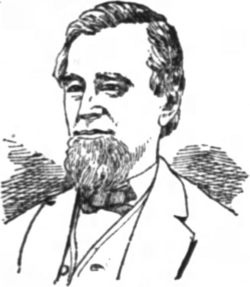
1863 – 1864
Kaye, an English immigrant who founded a Louisville brass and bell foundry (its work still audible today in the bell of the Cathedral of the Assumption), was elected mayor as a Democrat in 1863 over former mayor Thomas H. Crawford, who ran on the Unionist platform. Kaye was not an open Confederate sympathizer, but he drew support from some local secessionists, making his term one of the more politically fraught of the war years.
Phil Tomppert¹
1865 – Dec. 1865
Tomppert, a German immigrant elected mayor in 1865, was removed from office after just eight months in a genuine impeachment: he refused to sign a City Council-approved street railway law after learning a councilman had been bribed to secure its passage, and the council voted 10–2 to oust him for “neglect of duty.” He would be vindicated and returned to office less than two years later.
James S. Lithgow
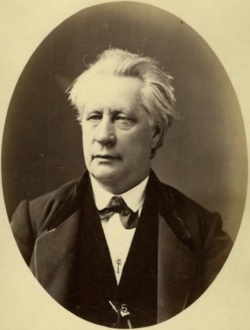
Dec. 1865 – Feb. 1867
Lithgow, a Pittsburgh-born coppersmith who built a successful Louisville metals company on Market Street, held the mayor’s office between Tomppert’s two terms. He resigned in February 1867 after the Kentucky Court of Appeals ruled that Tomppert’s impeachment and removal had been improper and ordered him reinstated. Lithgow’s firm later built its headquarters at what became the city’s Board of Trade Building, one of Louisville’s largest and most expensive commercial buildings of its era.
Phil Tomppert²
Feb. 1867 – 1868
Tomppert returned to office in February 1867 after the Court of Appeals sided with him in the dispute over his earlier impeachment, becoming mayor again just fourteen months after being voted out by the council. His return capped an unusually turbulent stretch for the office: a German-born Democrat who advocated ending the Civil War with slavery intact, reinstated a decade after Bloody Monday’s violence against Louisville’s German and Irish immigrants.
Joseph H. Bunce
1869
Bunce, a former steamboat captain who founded a wholesale grocery firm, upset both the Democratic Party’s own endorsed candidate and future mayor John G. Baxter to win office in 1869 by 300 votes. His two-year term was cut short when the city charter changed in 1870 to allow three-year terms; he ran again but lost to Baxter. In 1888 he built Louisville’s first area school, still known today as the Bunce School.
John G. Baxter¹
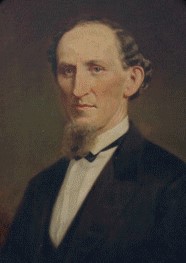
1870 – 1872
Baxter, the son of Scottish immigrants who built a successful Louisville stove company, won his first term in 1870 after years on the city council and Board of Aldermen. His administration built a new city hall, city hospital, and almshouse. Barred from immediately seeking re-election under the charter’s incumbency rules, he lost a comeback bid in 1875 to Charles Donald Jacob before finally winning a second, nonconsecutive term in 1879.
Charles D. Jacob¹
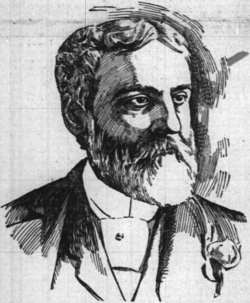
1873 – 1878
Jacob, born to one of Louisville’s wealthiest families — his father was the city’s first millionaire, his brother a Kentucky lieutenant governor — defeated John G. Baxter in 1872 to begin the first of what would be four total terms as mayor, more combined time in office than all but a handful of Louisville mayors. He would later serve as U.S. minister to Colombia between his second and third terms, and go on to leave a lasting mark on the city’s park system.
John G. Baxter²
1879 – 1881
Baxter returned for a second, nonconsecutive term in 1879 after losing a comeback attempt to Charles Donald Jacob four years earlier. His return came as Louisville continued the postwar growth his first administration had helped manage, though Jacob would go on to reclaim the office from him again in the following election.
Charles D. Jacob²
1882 – 1884
Jacob won a second, nonconsecutive term in 1882, defeating John G. Baxter to reclaim the office he’d first held in the 1870s. His term included the August 1883 opening of the Southern Exposition, a downtown industrial fair opened by President Chester A. Arthur and lit at night by 5,000 Edison incandescent bulbs — more than all of New York City had installed at the time, and considered the largest electric lighting display in the world. Edison himself had briefly lived in Louisville as a young telegraph operator years earlier.
P. Booker Reed
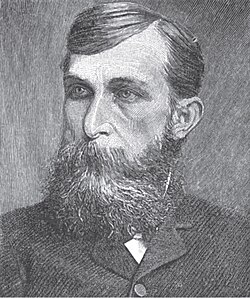
1885 – 1887
Reed served a single term between Jacob’s second and third stints as mayor. A Centre College student whose studies were interrupted by the Civil War, he served four years in the Confederate Army’s Orphan Brigade before completing medical school in Europe and building a successful Louisville manufacturing business — an unusual path to the mayor’s office even by the standards of the era.
Charles D. Jacob³
1888 – 1890
Jacob won a third, non-consecutive term in 1888 as an independent, defeating both the Democratic and Republican nominees by nearly 4,000 votes. In this term he established the city’s Park Commission and purchased a plot of land called “Burnt Knob,” landscaped by famed designer Frederick Law Olmsted into what is today Iroquois Park — probably his most lasting contribution to the city, capping the longest combined mayoral tenure of 19th-century Louisville.
William L. Lyons (pro tem)
May 12, 1890
Lyons, later a co-founder of the investment firm that became Hilliard Lyons, served as mayor pro tem for about four months in 1890 while the ailing Charles Donald Jacob traveled overseas for medical treatment. He’d go on to lead the Louisville Stock Exchange and chair the city’s Board of Public Safety under a later mayor before his brief brush with the top office.
Henry S. Tyler
1891 – Jan. 14, 1896
Tyler, heir to one of Louisville’s founding families, was elected in 1891 and became the first mayor elected to a four-year term after helping draft the charter that created it. In December 1893, a man named Phil Schwarz — convinced his father’s death had wrongly been ruled a suicide — walked into Tyler’s office and drew a concealed revolver; Tyler disarmed him with help from others nearby. Tyler died in office in January 1896; Louisville’s Tyler Park neighborhood is named for him.
Robert Emmet King (pro tem)
Jan.14 – 31, 1896
King, an undertaker and president of the Board of Aldermen, was appointed mayor pro tem after Henry S. Tyler died in office, making him Louisville’s first Republican mayor — for all of seventeen days. He returned to the aldermen’s board once a permanent successor was chosen, and later retired to a farm in Indiana.
George D. Todd
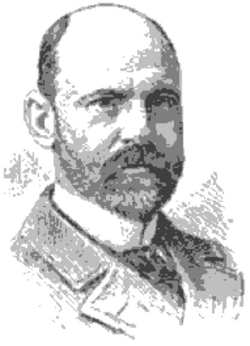
Jan. 31, 1896 – Nov. 1897
Todd, whose father had been a two-term Franklin County sheriff, came to Louisville at 18 to work for what became Belknap Hardware before starting his own iron company. In 1896 he became the first Republican elected mayor of Louisville — chosen by the General Council rather than a general vote — as the state Republican Party’s treasurer, a brief foothold for the GOP in an overwhelmingly Democratic city.
Charles P. Weaver
Nov. 1897 – Nov. 1901
Weaver won the 1897 race against George D. Todd in Louisville’s first mayoral election pitting a Democrat directly against a Republican, aided by political boss John Whallen’s machine and dogged by accusations of voter fraud. As mayor, he secured the financing to buy Dupont Square and begin developing it into what became Central Park, though the project wasn’t finished until 1904, years after he left office.
Charles F. Grainger
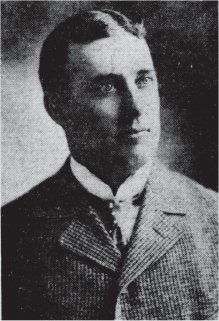
Nov. 1901 – Nov. 1905
Grainger, head of his family’s iron foundry, was already a powerful Democratic Party figure before winning the mayor’s office in 1901. His term produced the Jefferson County Armory, a new jail, and the main branch of the Louisville Free Public Library. Afterward he ran the Louisville Water Company and became president of the Louisville Jockey Club, buying Churchill Downs in 1905 and managing the track — home of the Kentucky Derby — until his death in 1923.
Paul C. Barth
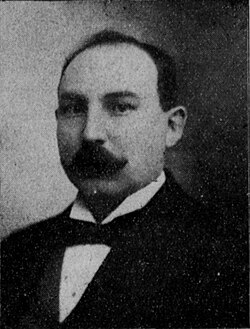
Nov. 1905 – July 1907
Barth, who’d built the Ohio River Sand Company after starting his career selling lime, won the mayor’s office in 1905 with the backing of Democratic boss John Henry Whallen’s political machine, beating a reform-minded Fusionist candidate by nearly 4,800 votes. His opponents alleged rampant ballot tampering and voter intimidation, and after a lengthy legal fight the Kentucky Court of Appeals threw out the election in 1907, ending his term early.
Robert W. Bingham
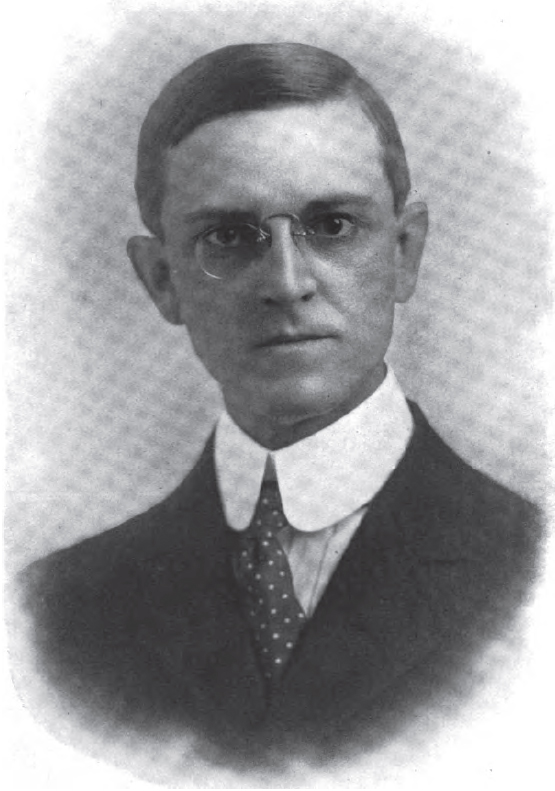
July 1907 – Nov. 1907
Bingham was appointed interim mayor after Barth’s removal and used his brief term to overhaul a corrupt police department; he later became a federal judge, newspaper publisher, and U.S. Ambassador to the United Kingdom.
James E. Grinstead
Nov. 1907 – Nov. 1909
Grinstead, a wholesale grocer nicknamed “Honest Jim,” had actually declined the Republican mayoral nomination once before, in 1901, after learning his own backer had used underhanded tactics to round up votes. He finally took office in 1907 to complete Barth’s voided term, becoming the first Republican mayor of Louisville elected by the general public rather than the council. He lost his 1909 re-election bid to Democrat William O. Head.
William O. Head
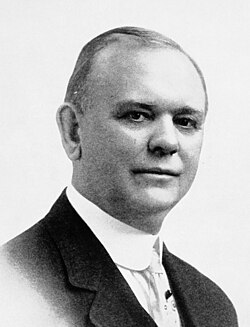
Nov. 1909 – Nov. 1913
Head, who’d worked his way up through Louisville’s tobacco warehouses after arriving from a farm near Providence, Kentucky, defeated James F. Grinstead in 1909 with the backing of the Whallen Democratic machine. As mayor, he pushed through tenement housing reforms that outlawed a range of abusive landlord practices, and his administration marked the beginning of city funding for the University of Louisville.
John H. Buschemeyer
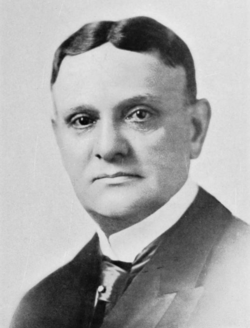
Nov. 1913 – Nov. 1917
Buschemeyer, a physician who’d practiced medicine in Louisville since 1893, was elected in 1913 with Whallen machine support. His administration is remembered for a 1914 city ordinance barring Black and white residents from moving into blocks where the other race predominated. That law was challenged by the local NAACP that became Buchanan v. Warley, the 1917 U.S. Supreme Court case that struck down government-mandated residential segregation nationwide. Voters removed him from office that same year, the last of Louisville’s machine-era Democratic mayors.
George Weissinger Smith
Nov. 1917 – Nov. 1921
Smith, whose grandfather had once published the paper that became the Courier-Journal, ran on an anti-corruption platform in 1917 after longtime boss John Henry Whallen’s death left the Democratic machine without its old muscle.
He shut down brothels and gambling along the once-seedy Green Street, which the city renamed Liberty Street in 1918 after a newspaper naming contest. His administration also helped stand up Camp Zachary Taylor, one of the country’s largest World War I training camps, on the city’s outskirts.
Huston Quin
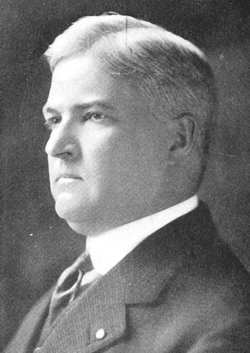
Nov. 1921 – Nov. 1925
Quin, a former Kentucky Court of Appeals judge elected mayor in 1921, pushed unsuccessfully for funding of what became the Clark Memorial Bridge and is credited with first championing a bridge linking Louisville to Jeffersonville, Indiana.
He was the first mayor to appoint Black officers to the police and fire departments, brought Downtown Louisville its first traffic lights, motorized the fire department, and helped move the University of Louisville from scattered buildings around the city onto its current Belknap Campus.
Arthur A. Will
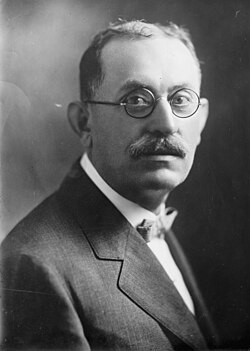
Nov. 1925 – June 1927
Will, a Portland-neighborhood building contractor who’d put up hundreds of homes there, won a narrow 1925 victory after his Democratic opponent’s replacement was named just a week before the election amid revelations the original candidate had belonged to the Ku Klux Klan.
Democrats challenged the results, and the Kentucky Court of Appeals removed Will from office in 1927 after ruling the election fraudulent — echoing the ouster of Paul Barth two decades earlier.
Joseph T. O’Neal
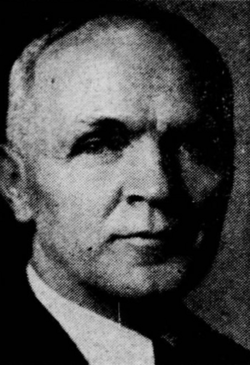
June 1927 – Nov. 1927
O’Neal, whose own father had lost a similarly fraud-tangled mayoral race to Paul C. Barth in 1905, was tapped as an emergency replacement candidate a week before the 1925 election after his opponent’s KKK membership became public, and narrowly lost anyway.
When the Kentucky Court of Appeals voided that election in 1927, the governor appointed O’Neal to fill the remainder of the term until a special election, which he then lost to William B. Harrison.
Willliam B. Harrison
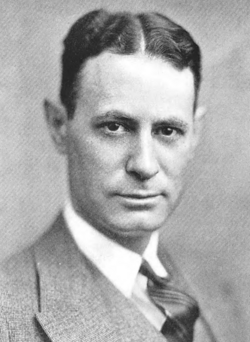
Nov. 1927 – Nov. 1933
Harrison, a World War I Army captain and refrigeration company executive, won the 1927 special election after the Kentucky Court of Appeals voided Arthur Will’s term. As mayor, he arranged private financing to build the Municipal Bridge — later renamed the George Rogers Clark Memorial Bridge — after a bond initiative failed, and backed the purchase of the Von Zedtwitz estate that became Bowman Field, Louisville’s first airport. He ran for governor in 1931 but lost to Democrat Ruby Laffoon.
Neville Miller
Nov. 1933 – Nov. 1937
Miller, the first dean of the University of Louisville‘s law school, narrowly won the mayor’s office in 1933, ending fifteen years of Republican control. He’s remembered as the “flood mayor” for his leadership during the catastrophic Ohio River flood of January 1937, directing evacuations and relief efforts and making nationwide radio appeals for donations and volunteers. The exposure made him a minor national celebrity; he went on to lead the National Association of Broadcasters through World War II.
Joseph D. Scholtz
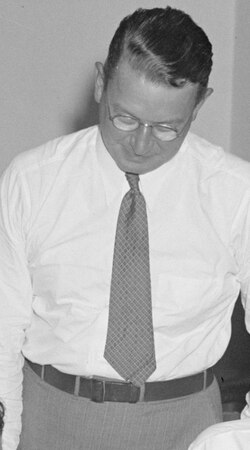
Nov. 1937 – Nov. 1941
Scholtz, a produce-company executive who’d served in World War I at Camp Taylor, was the lone Democrat in Republican mayor William B. Harrison’s administration before winning the top job himself in 1937.
His term saw the planning of what became Standiford Field (now Louisville Muhammad Ali International Airport), the city’s switch from streetcars to buses, and higher pay for Black teachers in city schools. He left office a week before Pearl Harbor and went on to earn the Legion of Merit for wartime service in North Africa and Italy.
Wilson W. Wyatt
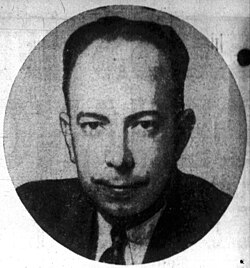
Nov. 1941 – Nov. 1945
Wyatt, who’d served as principal counsel for the Bingham family’s Courier-Journal before entering politics, took office in 1941 just after Pearl Harbor and made civil defense his top priority. He created Louisville’s first planning and zoning commission, and in 1946 President Truman appointed him the country’s first federal Housing Expediter, tasked with easing the postwar housing shortage. He later served as Kentucky’s lieutenant governor.
E. Leland Taylor
Nov. 1945 – Feb. 1948
Taylor, a University of Virginia-trained lawyer who’d moved into real estate, secured land for the expansion of Louisville’s road system during his brief tenure. He died in office in February 1948, prompting the rise of his successor, Charles Farnsley.
Charles P. Farnsley
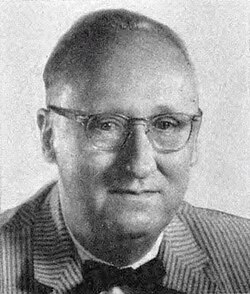
Feb. 1948 – Nov. 1953
Farnsley, a onetime leader of Kentucky’s campaign to repeal Prohibition, became one of Louisville’s most eccentric and beloved mayors — famous for weekly “beef sessions” where residents could air grievances directly to him and top city officials.
He founded the city’s Fund for the Arts, secured a Rockefeller Foundation grant for the Louisville Orchestra, and pushed through the desegregation of the public library and the University of Louisville, all while cultivating and funding Louisville artist Victor Hammer‘s work in the city.
Andrew Broaddus
Nov. 1953 – Nov. 1957
Broaddus, a Navy veteran who ran his family’s laundry business before entering politics, took office in 1953. His signature initiative, the Mallon Plan, was a failed attempt to annex large swaths of the rapidly suburbanizing parts of Jefferson County into the city. He had more lasting success in 1955, when he signed the order officially ending racial segregation in Louisville’s public parks and swimming pools.
Bruce Hoblitzell
Nov. 1957 – Nov. 1961
Hoblitzell, nicknamed “Mr. Hobby,” ran a realty and insurance business and served as Jefferson County sheriff before defeating Republican Robert B. Diehl by roughly ten thousand votes in 1957. His term oversaw early planning for downtown redevelopment as Louisville, like many American cities of the era, began grappling with how to revitalize its urban core against the pull of the growing suburbs.
William O. Cowger
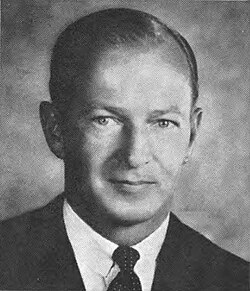
Nov. 1961 – Nov. 1965
Cowger, a Nebraska-born Navy veteran of World War II, became one of the few Republicans to hold Louisville’s mayoralty in the 20th century when he won in 1961, a period marked by early urban renewal efforts and rising civil rights-era tensions. State law barred him from seeking a second consecutive term; he later went on to represent Louisville in the U.S. House of Representatives.
Kenneth Albert Schmied
Nov. 1965 – Nov. 1969
Schmied, hand-picked by outgoing mayor William O. Cowger as his successor, remains the most recent Republican to hold the office. A $29.8 million bond issue during his term funded an expansion of the public library, a site for what became Jefferson Community College, and new medical and dental facilities at the University of Louisville. His term also included the 1967 gift of the King Louis XVI statue from Louisville’s sister city Montpellier, still standing outside the old courthouse today.
Frank L. Burke
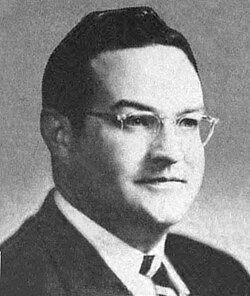
Nov. 1969 – 1973
Burke, a World War II Army veteran, had already served two terms in the U.S. House of Representatives — voting for the Civil Rights Act of 1960 — before losing re-election to Congress and turning to city hall, winning the mayor’s race in 1969. His term came during a period of continued suburban growth and the early discussions that would eventually lead to city-county governmental consolidation decades later.
Harvey I. Sloane¹
Nov. 1973 – Nov. 1977
Sloane, a physician who’d run a community health center in Louisville’s West End and served as a surgeon in Vietnam, upset the establishment favorite to win his first term in 1973. In office, he established TARC, Louisville’s mass transit system still running today, and the city’s modern Emergency Medical Service. His term also saw Louisville struck by a tornado during the historic April 1974 Super Outbreak, a sanitation workers’ strike, and a federal court order to desegregate city schools through busing.
William B. Stansbury
Nov. 1977 – 1981
Stansbury took office in 1977 after a career that included an unsuccessful Senate campaign appearance alongside Ted Kennedy and years chairing the county Democratic Party.
He brought the Louisville Redbirds minor-league baseball team to the city, began construction on the Kentucky Center for the Arts, and renamed downtown’s Walnut Street as Muhammad Ali Boulevard in 1978 to honor the newly crowned three-time heavyweight champion. His tenure later unraveled amid a campaign-finance probe and public backlash after he was found to have misled the city about his whereabouts during a firefighters’ strike.
Harvey I. Sloane²
1981 – 1985
Sloane won a second, nonconsecutive term in 1981, defeating Republican Louie Guenthner by nearly two to one, and helped establish the Louisville Galleria downtown redevelopment project during his time back in office. He later served as Jefferson County Judge-Executive and made two runs for Kentucky governor and one for the U.S. Senate against Mitch McConnell, all unsuccessful.
Jerry E. Abramson¹
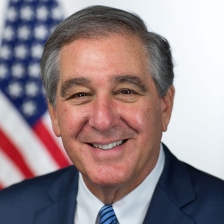
1986 – 1999
Abramson began an unprecedented run in 1986, becoming the only person to serve three consecutive terms as Louisville’s mayor and, in the process, its first Jewish mayor.
His enormous popularity — Bluegrass Poll approval ratings once reached 91 percent — earned him the local nickname “mayor for life” from radio personality Terry Meiners. He served as president of the U.S. Conference of Mayors in 1993–94 before term limits ended his first run in the office.
David L. Armstrong
1999 – 2002
Armstrong, a former Kentucky Attorney General and longtime Jefferson County Judge-Executive, became the last mayor of the old, pre-merger city of Louisville in 1999. He championed downtown revitalization projects including Fourth Street Live!, Louisville Glassworks, and an expansion of the medical district, and backed the ballot measure that merged the city with Jefferson County near the end of his term. The Louisville Extreme Park was renamed in his honor in 2015.
Jerry E. Abramson²
2003 – 2011
Abramson returned to office in 2003 as the first mayor of the newly consolidated Louisville Metro government, adding a fourth term to his earlier three and extending his singular hold on the office to two decades total. He later became Kentucky’s lieutenant governor and, under President Obama, Director of Intergovernmental Affairs at the White House.
Gregory E. Fischer
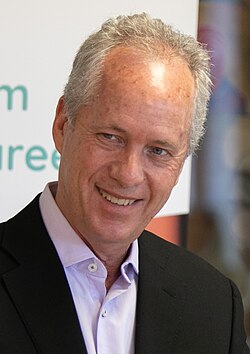
2011 – 2023
Fischer, a businessman and entrepreneur elected in 2010, served three terms as Louisville Metro mayor and led the U.S. Conference of Mayors in 2020. Under his tenure the city added roughly 80,000 jobs and attracted $24 billion in capital investment, including a renovated convention center and a wave of bourbon-tourism development.
Politico named him the country’s most innovative mayor in 2016. His later terms were defined by the 2020 protests following the police killing of Breonna Taylor and the COVID-19 pandemic.
Craig Greenberg
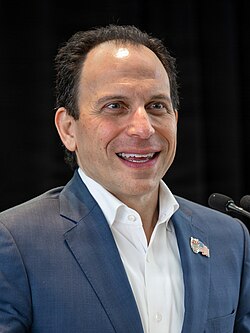
2023 – present
Greenberg, a Harvard-trained lawyer who co-founded the Louisville-based 21c Museum Hotels chain and later bought the pro wrestling promotion Ohio Valley Wrestling, survived a shooting at his own campaign headquarters during the 2022 mayoral race. He took office in January 2023 as just the third mayor of the consolidated Louisville Metro government.