How Louisville’s oldest private club became forever linked to a cocktail it almost certainly didn’t invent
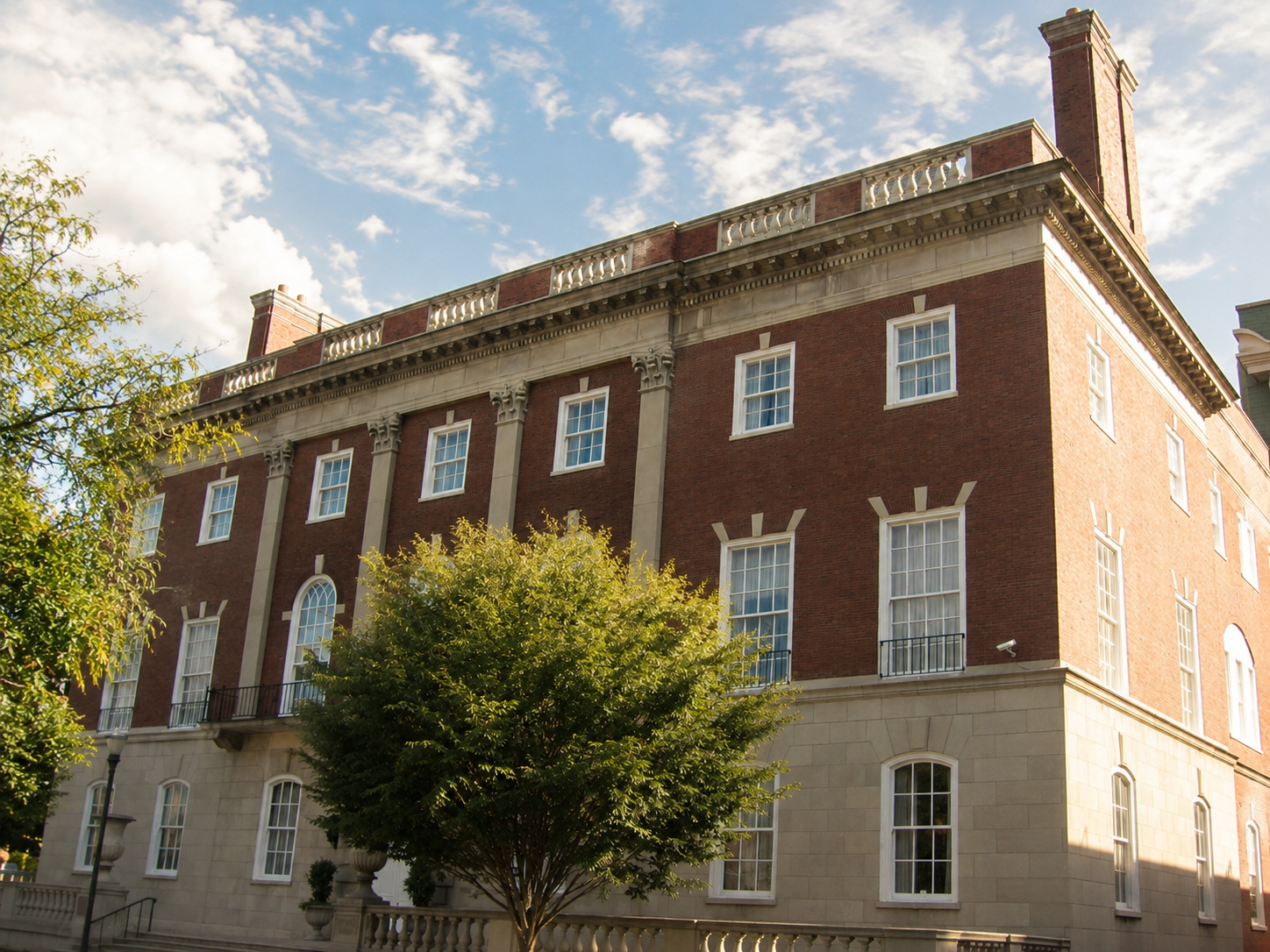
On a downtown Louisville street named for the city’s most famous son, there stands a Georgian clubhouse most people will never get inside. It is the Pendennis Club, founded in 1881, and for more than a century it has carried a reputation as the birthplace of the Old Fashioned.
That story is charming, widely repeated, and almost certainly not true. But the real history of the Pendennis Club is stranger, and better documented, than the legend it gets credit for.
A Club Named for a Novel
Thomas Wilson Todd, Levi Bloom, John Smith Noyes, and William Whits Hite called the first organizing meeting in Todd’s office at Louisville City Hall on June 28, 1881. Twenty other men showed up. Within two months they had a name, a motto, and rented rooms above a grocery store at 4th and Walnut streets, on the spot where the Seelbach Hotel stands today.
The name came from a novel. The founders chose to honor Arthur Pendennis, the hero of an 1850 novel by William Makepeace Thackeray, as their model of a proper “club man.” They adopted his fictional coat of arms and motto, nec tenui penna, or “with unfailing wings,” and stamped the crest onto bottles of bourbon sold to members.
The club’s first president, Major John Montgomery Wright, was a West Point graduate and a Union Civil War veteran. He later served as Clerk of the United States Supreme Court. By 1883, the growing membership had outgrown the rented rooms and bought a proper home: the Walnut Street residence of William Burke Belknap, founder of Belknap Hardware.
Presidents, Dukes, and a Legendary Maître d’
The new clubhouse opened on August 1, 1883, the same day Louisville opened its Southern Exposition. President Chester A. Arthur was a guest of honor that night, dining alongside Robert Todd Lincoln. Other presidents followed over the years: Theodore Roosevelt, William Howard Taft, and Woodrow Wilson all visited. Taft, a native of Cincinnati, reportedly felt more at home at the Pendennis than at any club in the country.
If the term “gentleman” is held to its proper definition, to mean a civilized, educated, well-mannered man, then no club in the United States numbered more such persons proportionate to its size than the Pendennis.
— Arthur Krock, Pulitzer Prize-winning journalist
A young Frederick Law Olmsted, the landscape architect behind Central Park, dined at the club in 1891 while pitching Louisville’s own park system to the city’s civic leaders. Four years later, the Duke of Marlborough paid a visit. But the club’s most beloved figure wasn’t a guest at all. Henry Bain started as an elevator operator in 1884 and rose to become the club’s first maître d’. He was remembered for his perfect manners and his uncanny memory for names and faces. He is best known today for the steak sauce he invented, which the club still serves and which now sits on shelves in Louisville grocery stores.
A New Clubhouse for a New Era
By the 1920s, the club needed more room, and in 1927 it broke ground on the Georgian Revival building that still stands today at 218 West Muhammad Ali Boulevard. The Louisville firm of Nevin, Wischmeyer and Morgan designed the nearly 80,000-square-foot clubhouse, built at a cost of about $1 million. One of its architects wanted it to be “one of the finest club buildings in the country.” It opened to members on December 11, 1928.
Inside, two rooms are covered in rare hand-printed French wallpaper by Zuber et Cie. The walnut-paneled library, largely unchanged since it appeared in a 1948 issue of The New Yorker, still rises to a plaster ceiling lined with classic books. Squash was introduced to Louisville here in 1930, when the club converted one of its handball courts. The clubhouse’s facade was added to the National Register of Historic Places in 2003.
The Legend of the Old Fashioned
Here is the story most people know: sometime in the 1880s, a bartender at the Pendennis Club invented the Old Fashioned. Colonel James E. Pepper, a Lexington bourbon distiller and Pendennis Club member, carried the recipe to New York. He introduced it at the bar of the old Waldorf-Astoria, and it caught on from there.
The story comes from Albert Stevens Crockett, a Waldorf-Astoria bar historian who wrote it down in 1931, decades after the fact. He credited it to the Pendennis Club almost in passing, noting that Pepper had been a member there. It is a good story. It is also almost certainly wrong.
Busting the Myth
Cocktail historians have taken Crockett’s story apart piece by piece. The Chicago Daily Tribune was already writing about “old fashioned cocktails” in February 1880, a full year before the Pendennis Club even existed. Recipe books from Chicago and Cincinnati were printing whiskey Old Fashioned recipes by 1888, more than forty years before Crockett ever told his version of events.
The Pendennis Club’s own records don’t help the legend either. A 1911 book listing the club’s house drinks names six specialties: a champagne punch, the Lord Baltimore Cocktail, the Pendennis Cocktail, a Pendennis Mint Julep, and an eggnog. The sixth was something called an Old Fashioned Toddy, just sugar, ice, and whiskey, with no bitters at all. A 1913 manual by the club’s own former manager lists an Old Fashioned Cocktail recipe elsewhere in the book. It doesn’t call for whiskey, and it never mentions the Pendennis Club.
Two real bartenders who worked at the club did go on to publish early Old Fashioned recipes, just not at the Pendennis, and not for years. Jacques Straub tended bar and later managed the club before moving to Chicago’s Blackstone Hotel, where his 1913 cocktail manual appeared. Tom Bullock, a Louisville native, started at the Pendennis as a bellboy in the early 1890s and worked his way up to bartender. He later became head bartender at the St. Louis Country Club. In 1917, Bullock published The Ideal Bartender, becoming the first African American to publish a cocktail book. His father had fought for the Union Army after being enslaved; his son mixed drinks for some of the country’s wealthiest clubs. Neither man’s book credits the Pendennis Club with inventing anything.
Since the Chicago Daily Tribune was already discussing “old fashioned cocktails” in February of 1880, and the Pendennis Club wasn’t founded until 1881, I think it’s safe to pronounce this myth busted.
— David Wondrich, cocktail historian, in Imbibe!
What Was Actually in the Glass
Setting the invention story aside, the drink itself has changed more than most people realize. The earliest known recipe was printed in 1888 by a Chicago bartender named Theodore Proulx. It calls for a half lump of sugar dissolved in water, a dash of bitters, and a dash of absinthe. Add a twist of lemon peel, some ice, and a jigger of whiskey, then stir and strain into a fresh glass.
Notice what’s missing: no orange, no cherry, and no simple syrup, just a lump of sugar, water, and a dash of two very different things, bitters and absinthe. George Kappeler’s 1895 recipe, in his book Modern American Drinks, simplified it into something closer to what most people would still recognize. It called for sugar, water, two dashes of Angostura bitters, ice, a lemon peel twist, and whiskey, stirred with a small spoon left sitting in the glass.
The orange didn’t arrive until 1905, when a recipe in the Hoffman House Bartender’s Guide added an orange slice for the first time. Even then, the addition wasn’t universal for years. The cherry came later still, showing up in recipes only after 1930, part of a wave of new versions published once Prohibition ended. Sugar cubes replaced the loose sugar lump around 1900, though many bartenders kept using plain sugar and water well into the twentieth century.
Even as late as 1948, the influential bartender David Embury was still calling for a lemon peel twist, not orange. His recipe called for whiskey, simple syrup, and a few dashes of Angostura bitters. Muddling the orange and cherry into a mash at the bottom of the glass, a common bar habit today, didn’t catch on until the 1990s. That’s more than eighty years after Proulx’s original recipe.
So when the cocktail renaissance of the 2000s sent bartenders back to “authentic” versions, many dropped the muddled fruit and the cherry. They returned to something closer to the nineteenth-century original: spirit, sugar, bitters, and a plain citrus twist, lemon or orange or sometimes both. The Pendennis Club’s own current recipe, with its orange slice and cherry, is really a mid-twentieth-century standard, not a nineteenth-century one. It’s one more way the drink’s popular image turns out to be younger than its reputation suggests.
Louisville’s Cocktail Anyway
None of this seems to have hurt the drink’s reputation here. In 2015, Louisville named the Old Fashioned its official city cocktail, and every June the city celebrates Old Fashioned Fortnight, two weeks of bourbon events built around National Bourbon Day. The Pendennis Club still serves its own version today: bourbon, Angostura bitters, sugar, an orange slice, a cherry, and a lemon twist. It’s a recipe the club has used since at least the 1930s.
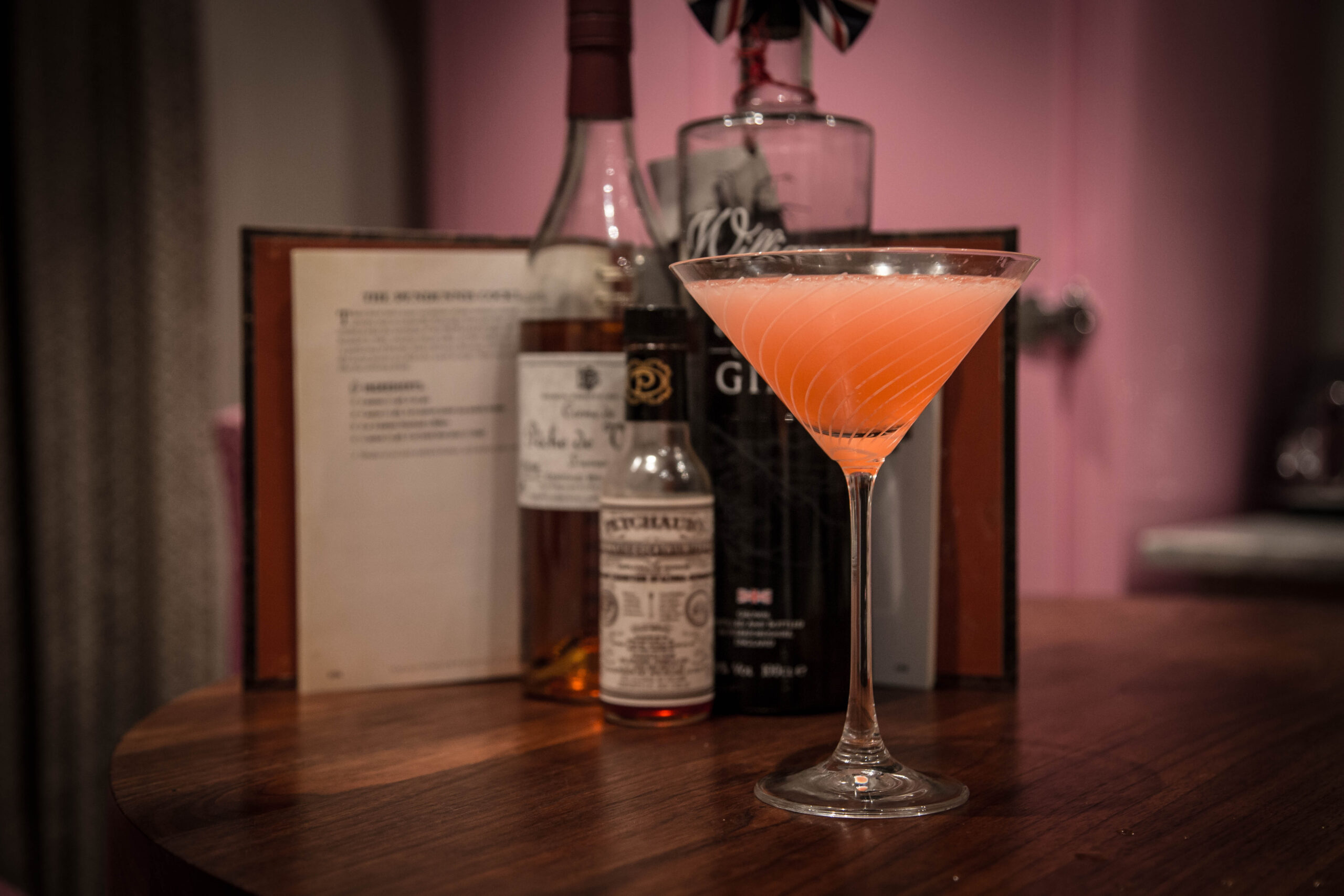
The irony is that the club really does have a cocktail named after it, just not the one everyone assumes. The Pendennis Club Cocktail is a gin drink built with apricot brandy, lime, and bitters. It was first served at the club, and it’s still poured at bars that take their cocktail history seriously. Readers curious about the fuller, tangled history can find it in Albert W. A. Schmid’s The Old Fashioned, a short guide published by the University Press of Kentucky.
Still Standing
The Pendennis Club remains a private club today, and most of what happens inside stays inside. But a few moments have leaked into the wider world. On February 19, 1960, a young Cassius Clay, later known as Muhammad Ali, fought a stag boxing match in the club’s Georgian ballroom. He won by third-round technical knockout, just months before he left for the Rome Olympics. At least five of the eleven Louisville businessmen who backed his early career were Pendennis Club members.
The club’s ballroom later stood in for the “Belmont Ball” in the 2010 Disney film Secretariat. Every year it fills again for parties tied to the Kentucky Derby, the biggest weekend on Louisville’s calendar.
The club’s history is not without its own reckoning. One of its founders, Levi Bloom, was Jewish, but the Pendennis did not admit another Jewish member for ninety-three years. It did not have a Black member as of 1991, when the civil rights pastor Louis Coleman Jr. protested outside its doors and filed a formal complaint against the club. A Kentucky Supreme Court case over the matter was still working its way through the courts more than a decade later.
None of that erases what the club got right, or built, over nearly a century and a half. It just means the Pendennis Club’s real story, like its most famous drink, is more complicated, and more interesting, than the version people usually tell.