
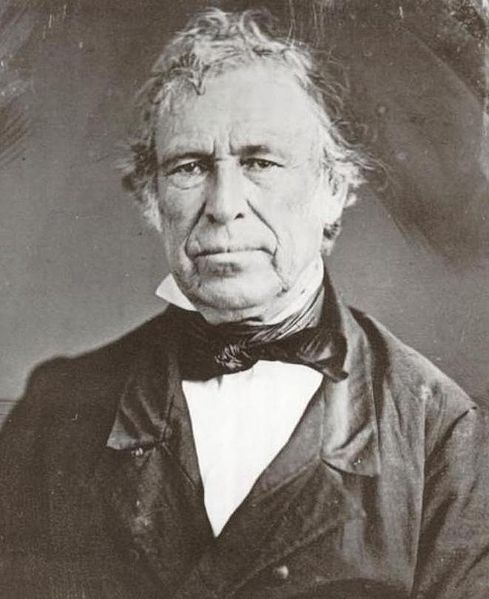
Zachary Taylor spent more of his childhood and early adulthood at a Louisville farm called Springfield than he spent anywhere else in his life, including the White House. He became the 12th president of the United States on the strength of battlefield victories rather than political experience, and he died sixteen months into a term he had barely begun, before the country ever got to see what kind of president the old general would have made.
A Virginia Family at Springfield
Zachary Taylor was born November 24, 1784, in Orange County, Virginia, to Richard Taylor and Sarah Dabney Strother, members of a prominent Virginia planting family with ties to the Lee family. He was still an infant, only eight months old, when his father purchased a 400-acre farm on the Muddy Fork of Beargrass Creek in what is now Jefferson County, Kentucky, and moved the family west to a home he called Springfield.
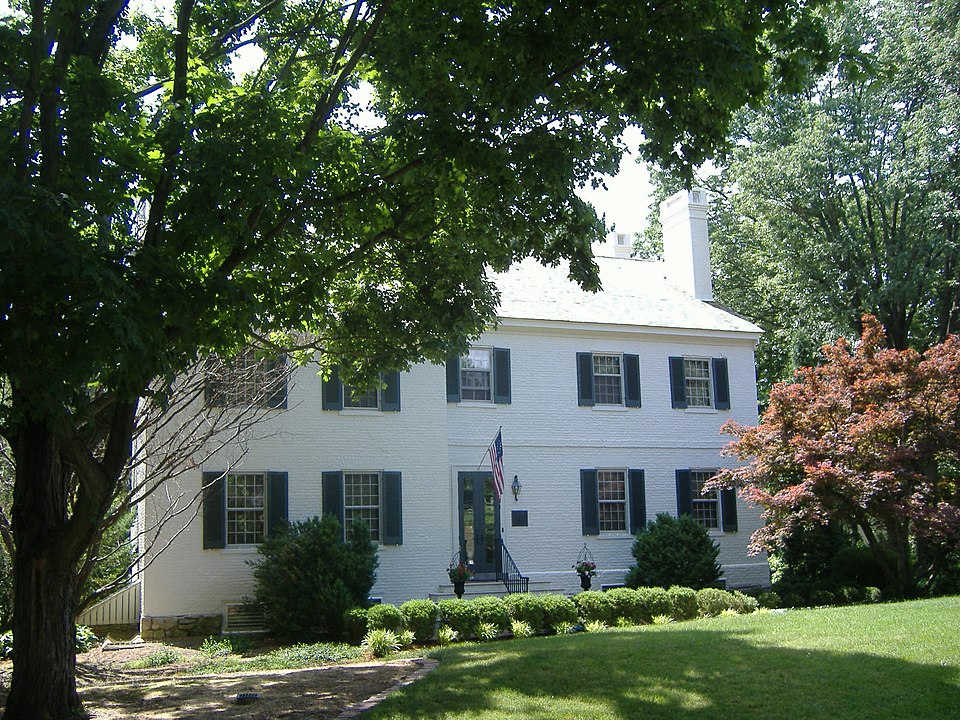
Taylor lived at Springfield from 1785 to 1808, longer than he would live anywhere else in his life, including the White House itself. He returned there in 1810 to marry Margaret “Peggy” Mackall Smith, and five of the couple’s six children were born in the house. That Louisville property, more than any battlefield or the presidency itself, was the fixed point of Taylor’s entire life.
Growing up on a working Kentucky farm gave Taylor a practical, unpolished upbringing quite different from the formal education more typical of Virginia’s planter class. He received relatively little formal schooling by the standards of the political elite he would later govern alongside, a gap political opponents occasionally needled him about in later years, though it did little to slow his rise through the military.
A Career Soldier
Taylor joined the United States Army as a first lieutenant in 1808 and spent the next four decades as a career officer rather than a politician, an unusual background for a future president. He served in the War of 1812, the Black Hawk War, and the Second Seminole War in Florida, where his willingness to share the same hardships as his soldiers, sleeping in the field and getting his boots dirty alongside them, earned him the nickname “Old Rough and Ready,” a label that stuck with him for the rest of his career.
That reputation for plain, unpretentious leadership set Taylor apart from more polished officers of his era. He rose steadily through the ranks over decades of frontier and wartime service without ever holding elected office, a career path that made his eventual jump into national politics all the more unusual when it came.
“My life has been devoted to arms, yet I look upon war at all times, and under all circumstances, as a national calamity to be avoided.”
— Zachary Taylor
War Hero
Taylor’s national fame came from the Mexican-American War, where he commanded American forces to major victories at Monterrey in 1846 and Buena Vista in 1847, the latter fought against a Mexican army roughly four times the size of his own. Those victories, widely covered in American newspapers, turned the plainspoken general into a household name and made him a major general and a genuine national hero almost overnight.
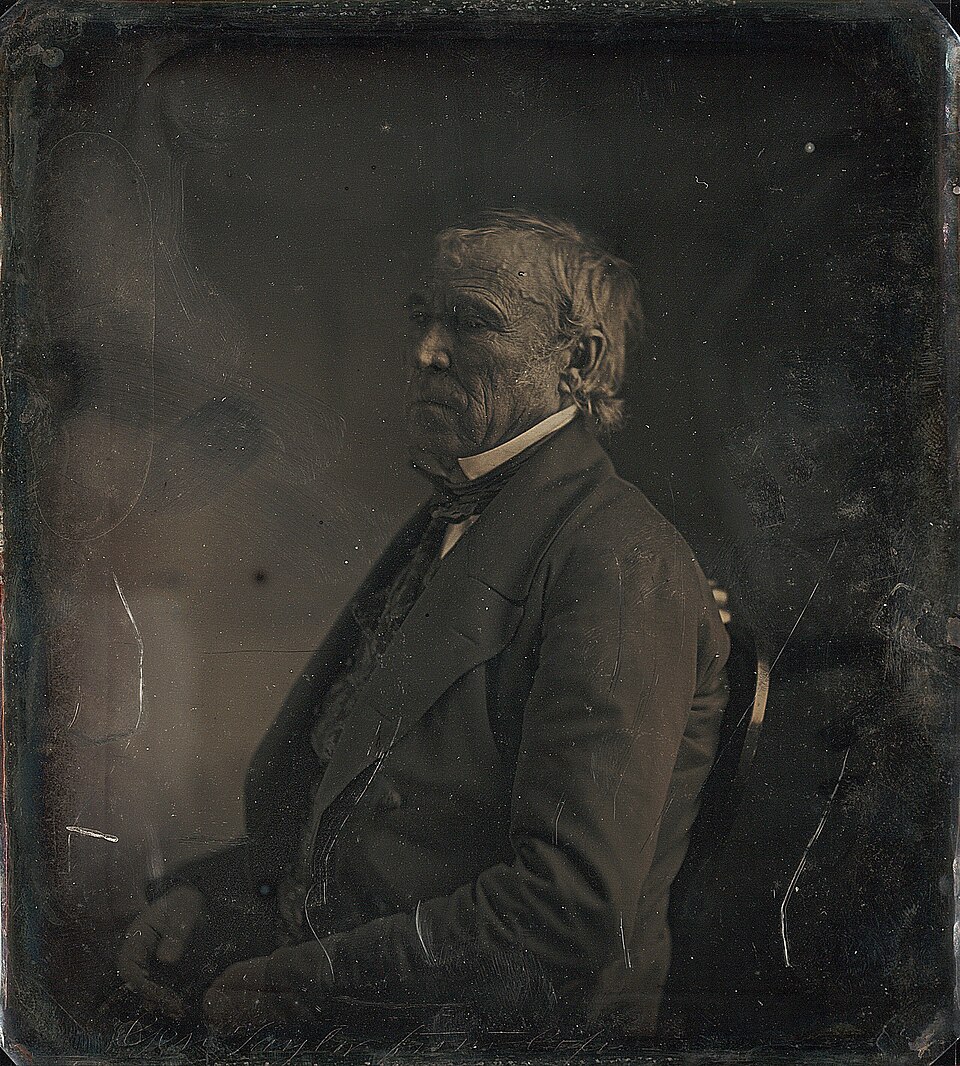
Whig Party leaders, watching Taylor’s popularity grow from the war, saw in him exactly the kind of nonpartisan war hero who could win a national election despite having never voted in a presidential race himself. That popularity, built entirely on the battlefield rather than in any legislature or governor’s mansion, carried him to the party’s presidential nomination in 1848 with almost no political résumé to speak of.
An Unlikely Presidency
Taylor won the 1848 election as the Whig candidate and took office in March 1849 as the 12th president of the United States, a career soldier with essentially no prior experience in elected government. His brief presidency was dominated by the growing sectional dispute over whether slavery would be permitted in the territories won from Mexico, a debate that would explode into the Compromise of 1850 shortly after his death.
Taylor’s time in office ended abruptly. After attending Fourth of July ceremonies at the Washington Monument in blistering heat in 1850, he fell seriously ill; within five days he was dead of an acute stomach ailment, likely gastroenteritis or cholera contracted from contaminated food or water. He had served only sixteen months, one of the shortest presidential tenures in American history, cut short before the country ever saw how his military instincts would translate into full-term governance.
Asked, according to later accounts, whether he feared death as illness set in, Taylor is reported to have responded with the same plain composure that had defined his military career.
“I have always done my duty. I am ready to die.”
— Zachary Taylor, reportedly said in his final days, July 1850
Louisville Legacy
Taylor was buried at his boyhood home, Springfield, in Jefferson County, ground that eventually became the Zachary Taylor National Cemetery, a federal burial ground that still operates today. The house itself, built in stages beginning around 1790, still stands in what is now a residential section of Louisville and has been designated a National Historic Landmark, one of relatively few presidential childhood homes preserved and open in this way.
Taylor’s family connections reached well beyond his own lifetime in ways that tie him further into American history: he was a distant relative of both James Madison and Robert E. Lee, and his daughter Sarah Knox Taylor’s brief first marriage was to Jefferson Davis, the future president of the Confederacy, making Taylor Davis’s father-in-law decades before the Civil War that would tear apart the country Taylor had spent his life defending.
Modern accounts of Taylor’s life have also had to reckon more directly with the fact that, like many Southern plantation-owning families of his era, the Taylors held enslaved people at Springfield and on their other properties, a part of the historical record that sits uneasily alongside the “Old Rough and Ready” folk-hero image that dominated his own lifetime’s press coverage. Louisville’s relationship with Taylor today reflects both threads: pride in a president whose formative years were spent on Kentucky soil, and a more complicated present-day reckoning with exactly what that plantation household looked like.
More than a century and a half after his death, Taylor remains one of Louisville’s most historically significant native sons, a president who spent barely a year and a half in office but whose Kentucky upbringing at Springfield, preserved today as both a historic house and a national cemetery, continues to anchor his memory to the city more firmly than his short, war-interrupted presidency ever could.
Historians ranking American presidents have generally placed Taylor toward the middle or lower tier of the list, less because of any specific failure than because he simply never got the chance to govern for long enough to leave much of a legislative or policy record behind. What he left instead was a military legacy built well before he ever took the presidential oath, and a Kentucky homestead that outlived both his brief administration and, in a sense, his own name recognition among later generations of Americans.
Sources and further reading
- Biography, military career, and presidency — Wikipedia, the Miller Center at the University of Virginia, and the White House Historical Association
- Springfield estate and the Zachary Taylor House — ExploreKYHistory, HistoricLouisville.com, and the National Park Service
- Quotes and published historical accounts — Wikiquote
- Family relations and death — Wikipedia and Wikidata